

Self-portraits / Autoportraits


Paris - Musée d'Art Moderne
Paris is the capital and largest city of France, with over 2 million inhabitants and more than 13 million in the greater metropolitan area.
The Musée d'Art Moderne de Paris (MAM Paris) is a municipal museum dedicated to modern and contemporary art of the 20th and 21st centuries.
In the summer of 2025, it hosted an exceptional exhibition of works by the German Expressionist artist Gabriele Münter, who was at the forefront of the Munich avant-garde in the early 20th century. She studied and lived with Wassily Kandinsky and was a founding member of the group "Der Blaue Reiter".
Gabriele Münter ( 1877 – 1962)
Autoportrait / 1909
Leipzig - Museum der bildenden Künste
The museum dates back to the founding of the "Leipziger Kunstverein" (Leipzig Art Association) by Leipzig art collectors and promoters in 1837.
In 1858 a museum building was inaugurated on Augustusplatz.
In 1937, the National Socialists confiscated 394 paintings and graphics, mainly of Expressionism, as part of the propaganda campaign "Degenerate Art". In 1943 the building was destroyed by a British air raid. A large part of the holdings had previously been brought to safety in the Leipzig area and in Leipzig itself.
In the mid-1990s, the city decided to give the museum a new building. On 4 December 2004, exactly 61 years after the destruction of the museum on Augustusplatz, the new museum opened at the former Sachsenplatz.
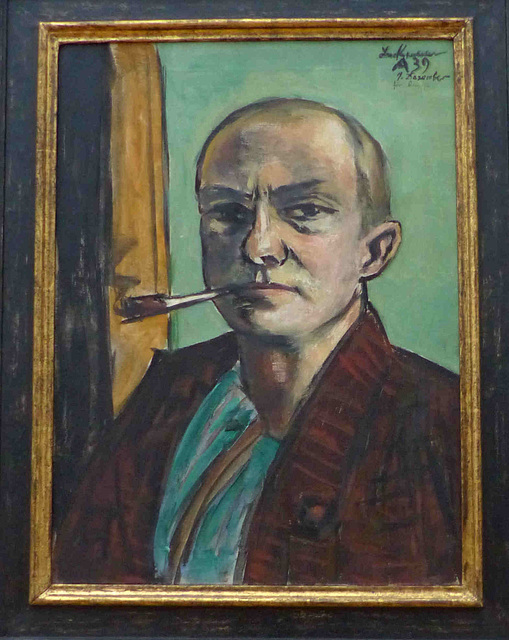
Max Beckmann (1884 - 1950)
Selbstbildnis auf Grün mit grünem Hemd / Self-Portait on Green with Green Shirt / 1938
Leipzig - Museum der bildenden Künste
The museum dates back to the founding of the "Leipziger Kunstverein" (Leipzig Art Association) by Leipzig art collectors and promoters in 1837.
In 1858 a museum building was inaugurated on Augustusplatz.
In 1937, the National Socialists confiscated 394 paintings and graphics, mainly of Expressionism, as part of the propaganda campaign "Degenerate Art". In 1943 the building was destroyed by a British air raid. A large part of the holdings had previously been brought to safety in the Leipzig area and in Leipzig itself.
In the mid-1990s, the city decided to give the museum a new building. On 4 December 2004, exactly 61 years after the destruction of the museum on Augustusplatz, the new museum opened at the former Sachsenplatz.
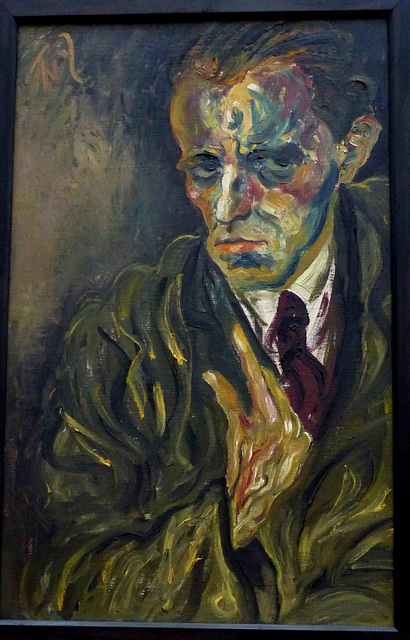
Fritz Zalisz (1893 - 1971)
Selbstbildnis/ Self-Portrait / 1923

Cardiff - National Museum
Cardiff is the capital and, with around 370,000 inhabitants, the most populous city in Wales.
In 1081, William the Conqueror had a castle built on the remains of a Roman fort. The first mention of Cardiff dates back to 1093, when the knight Robert Fitzhamon, a follower of William, was entrusted with a fief here. Cardiff was granted city rights in the 13th century, but remained a relatively small town.
In 1404, Owain Glyndŵr, a Welsh leader who led a 15-year Welsh revolt against English rule in Wales, burned Cardiff to the ground and took possession of the castle. The settlement was rebuilt. In 1538, Henry VIII closed the Dominican and Franciscan monasteries of Cardiff, the remains of which were used as building materials.
In the 19th century, the city experienced an unexpected growth spurt thanks to industrialisation and coal mining. The harbour was expanded and developed into the largest coal port in the world.
When the museum was founded, it had been collecting artefacts for 25 years. A predecessor institution called the Cardiff Museum of Natural History, Arts and Antiquities opened its first premises in 1882. Plans for the construction of a new building took many years before the foundation stone of the current museum building was laid in 1912. It was not fully completed until 1932.
Vincent van Gogh / 1853 - 1890
Portrait of the Artist / 1887
Madrid - Museo Thyssen-Bornemisza
Madrid is the capital and most populous city of Spain. The city has almost 3.4 million inhabitants and a metropolitan area population of approximately 6.7 million. Madrid is part of the historical landscape of Castile and is located in the middle of the Meseta, the plateau of Castile.
The site has been occupied since prehistoric times. The first document about the existence of an established settlement in Madrid dates from the Muslim age. In the second half of the 9th century Umayyad Emir Muhammad I built a fortress here. In 1083, Madrid was conquered by the Kingdom of Castile. In 1309, under Fernando IV, the Assembly of Estates (Cortes) of the Kingdom of Castile was convened for the first time in Madrid.
In 1561, Philip II moved the royal court from Valladolid to Madrid. It became the de facto capital of Spain, which it remains to this day. The War of the Spanish Succession ended in 1714 with the Bourbons taking over the Spanish throne. Today's royal palace was built under their rule. Particularly during the reign of Charles III the city's public infrastructure was modernized and numerous public buildings were built.
Museo Thyssen-Bornemisza
The museum is named after its founder, Baron Heinrich Thyssen-Bornemisza. With over 1,600 paintings, it was once the second-largest private collection in the world.
After Baron Thyssen, having unsuccessfully sought permission to enlarge his museum in Lugano, searched for a better-suited location elsewhere in Europe end of the 1980s. In 1985, the Baron had married Carmen "Tita" Cervera and introduced her to art collecting. Cervera's influence was decisive in persuading the Baron to relocate the core of his collection to Spain where the local government had a building available next to the Prado. The Thyssen-Bornemisza Museum officially opened in 1992, showing 715 works of art. A year later, the Spanish Government bought 775 works for $350 million.These pieces are now in the purpose-built museum in Madrid. After the museum opened, in 1999, Cervera loaned 429 works of her own art collection to the museum for 11 years. The loan was renewed annually for free from 2012.
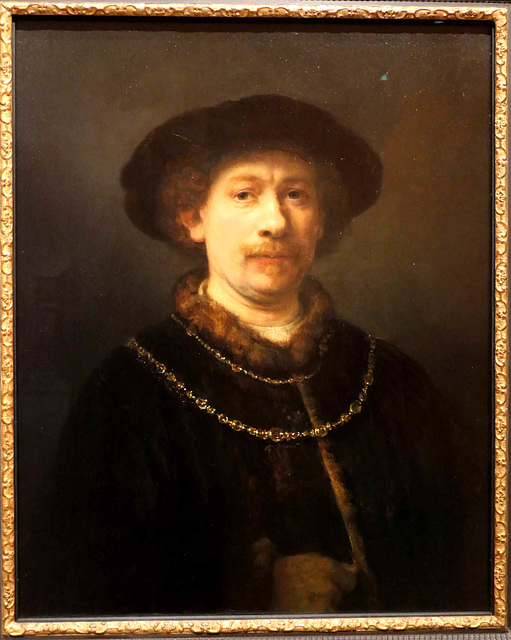
Rembrandt van Rijn / 1606 - 1669 /
Self-Portrait wearing a Hat and two Chains / ca 1642 /
Madrid - Museo Reina Sofía
Madrid is the capital and most populous city of Spain. The city has almost 3.4 million inhabitants and a metropolitan area population of approximately 6.7 million. Madrid is part of the historical landscape of Castile and is located in the middle of the Meseta, the plateau of Castile.
The site of modern-day Madrid has been occupied since prehistoric times. The first document about the existence of an established settlement in Madrid dates from the Muslim age. In the second half of the 9th century Umayyad Emir Muhammad I built a fortress here. After the disintegration of the Caliphate of Córdoba in the early 11th century, Madrid was integrated into the Taifa of Toledo. In 1083, Madrid was conquered by the Kingdom of Castile. In 1309, under Fernando IV, the Assembly of Estates (Cortes) of the Kingdom of Castile was convened for the first time in Madrid.
In 1561, Philip II moved the royal court from Valladolid to Madrid. It became the de facto capital of Spain, which it remains to this day. In 1701 the War of the Spanish Succession broke out, which led to the Anglo-Portuguese occupation of the city in 1706. It ended in 1714 with the Bourbons taking over the Spanish throne. Today's royal palace was built under their rule. Particularly during the reign of Charles III, who is therefore popularly referred to as the “best mayor of Madrid”, the city's public infrastructure was modernized and numerous public buildings were built.
The building is located on the site of the first General Hospital of Madrid. Carlos III had founded the hospital, which first opened in 1788 but proved too small for the growing city. After numerous work interruptions, the “New Hospital” was inaugurated in 1805. Since then it has been rebuilt and expanded several times until it closed as a hospital in 1969. From 1980 onwards, extensive modern renovations and extensions were carried out on the old building. The museum's central building was once an 18th-century hospital. The building functioned as the Centro del Arte from 1986 until its founding as the Museo Nacional Centro de Arte Reina Sofía in 1988.
As a national museum, it collects and displays the art of Spanish artists or artists associated with Spain.
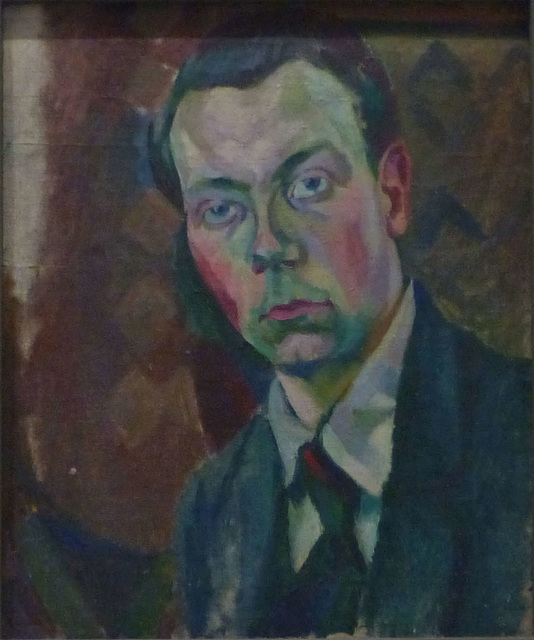
Robert Delaunay / 1885 - 1941 /
Self-Portrait / 1908 /
Cardiff - National Museum
Cardiff is the capital and, with around 370,000 inhabitants, the most populous city in Wales.
In 1081, William the Conqueror had a castle built on the remains of a Roman fort. The first mention of Cardiff dates back to 1093, when the knight Robert Fitzhamon, a follower of William, was entrusted with a fief here. Cardiff was granted city rights in the 13th century, but remained a relatively small town.
In 1404, Owain Glyndŵr, a Welsh leader who led a 15-year Welsh revolt against English rule in Wales, burned Cardiff to the ground and took possession of the castle. The settlement was rebuilt. In 1538, Henry VIII closed the Dominican and Franciscan monasteries of Cardiff, the remains of which were used as building materials.
In the 19th century, the city experienced an unexpected growth spurt thanks to industrialisation and coal mining. The harbour was expanded and developed into the largest coal port in the world.
When the museum was founded, it had been collecting artefacts for 25 years. A predecessor institution called the Cardiff Museum of Natural History, Arts and Antiquities opened its first premises in 1882. Plans for the construction of a new building took many years before the foundation stone of the current museum building was laid in 1912. It was not fully completed until 1932.
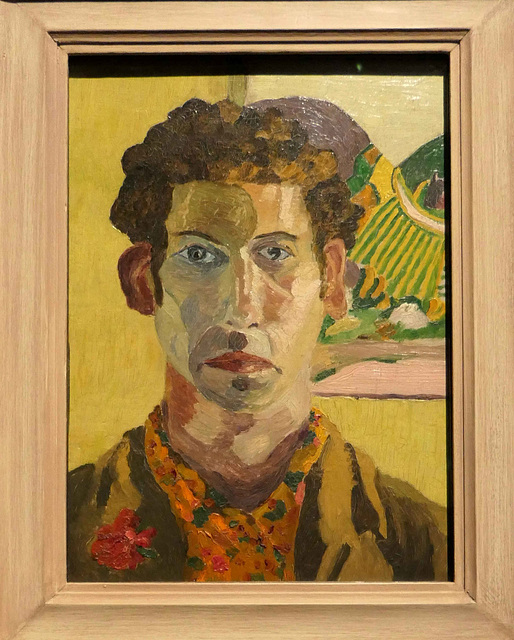
Cedric Morris / 1889 – 1982
Self Portrait / 1919
Hannover - Landesmuseum
With more than 500.000 inhabitants Hannover is the capital and largest city of the German state of Lower Saxony.
Hannover was founded in medieval times on the east bank of the River Leine. It was a small village of ferrymen and fishermen. It became a comparatively large town in the 13th century, receiving town privileges in 1241, owing to its position at natural crossroads It was connected to the Hanseatic city of Bremen by the Leine and was situated north-west of the Harz mountains so that east-west traffic passed through it.
Between 1714 and 1837 three kings of Great Britain were concurrently also Electoral Princes of Hanover.
As an important railway and road junction and production centre, Hannover was a major target for strategic bombing during WW II. More than 90% of the city centre was destroyed in a total of 88 bombing raids. So today Hannover lacks it´s medieval heart.
Originally the Museum of "Kunst und Wissenschaft" (art and science) inaugurated in 1856 in the presence of George V of Hanover. After the annexation of Hanover by Prussia, the museum was integrated into the Provincial Museum, as it was called from 1869. The museum ran out of space for its art collections, prompting the construction of the current building in 1902. Extensive renovations and modernisations were carried out in the interior from 1995 to 2000, reopening on 13 May 2000 as part of Expo 2000.
Today the museum comprises the state gallery (Landesgalerie), featuring paintings and sculptures from the Middle Ages to the 20th century, and departments of archaeology, natural history and ethnology.
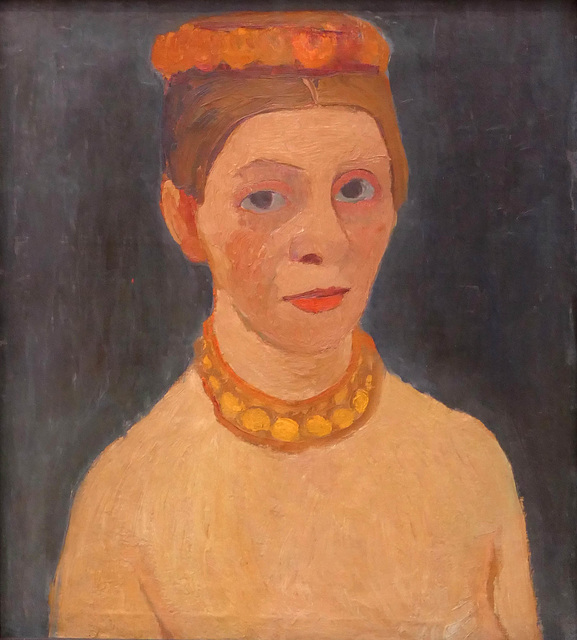
Paula Modersohn-Becker (1876 - 1907)
was a German painter and one of the most important representatives of early Expressionism. Her works unite characteristic aspects of early 20th century art.
Becker became known in the Worpswede artists' colony, where she was a pupil of Fritz Mackensen. Two paintings that she exhibited at the Bremen Kunsthalle in 1899 were sharply criticised and had to be removed during the exhibition. In 1900, she studied at the Académie Colarossi in Paris and married the painter Paul Modersohn after her return to Worpswede in 1901.
Paula Modersohn-Becker´s immense oeuvre only came to light posthumously. She created 750 paintings and around 1000 drawings.
Selbstbildnis mit rotem Kranz und Kette - Self portrait with red flower wreath and chain / 1906/07
Dortmund - Museum Ostwall
The Museum Ostwall is a museum of modern and contemporary art. It was founded in the late 1940s on Ostwall (a street along the old city wall) to create a space for the exhibition of modern art that had been classified as "degenerate art" by the Nazis.
Since 2010, the museum has been located on the 4th and 5th floors of the Dortmunder U, a former and now extensively renovated brewery building.
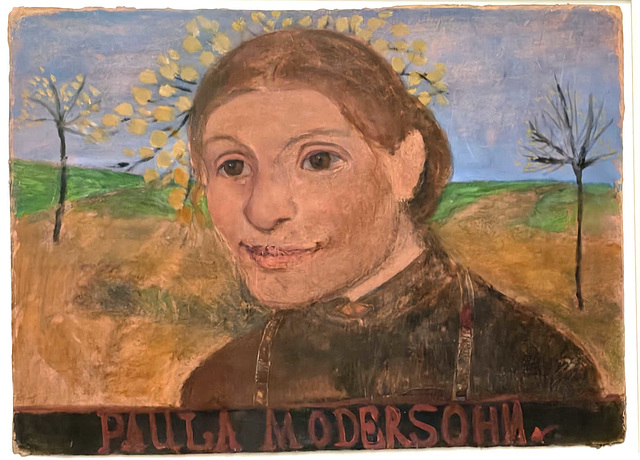
Paula Modersohn-Becker (1876 - 1907)
Selbstbildnis vor blühenden Bäumen / Self-portrait in front of flowering trees / 1902
Jump to top
RSS feed- Latest items - Subscribe to the latest items added to this album
- ipernity © 2007-2026
- Help & Contact
|
Club news
|
About ipernity
|
History |
ipernity Club & Prices |
Guide of good conduct
Donate | Group guidelines | Privacy policy | Terms of use | Statutes | In memoria -
Facebook
X
