

Vincent van Gogh


Essen - Museum Folkwang
Essen is the central and, after Dortmund, second-largest city of the Ruhr district, the largest urban area in Germany. Because of its central location, Essen is often regarded as the Ruhr's "secret capital".
The city dates back to the Essen women's monastery founded before 850. In addition to this monastery, Werden Monastery, founded by Liudger around 800, was a center of late antique and early Christian textual tradition. Elevated to the status of a free imperial city by Emperor Charles IV in the 14th century, Essen had been an arms manufacturer since the late Middle Ages and, with industrialization, rose to become one of the most important centers of the mining industry. After a massive decline in heavy industry from the mid-1960s onwards, Essen developed a strong service sector as part of structural change.
With the Museum Folkwang, Essen boasts a renowned collection of modern art. It was opened in Hagen in 1902 by Karl Ernst Osthaus under the name Folkwang Museum and long played a pioneering role in the field of modern art. After Osthaus's death in 1921, his collection was sold to Essen. The collection has been housed there ever since. During the Nazi era, the museum lost 1,400 works, including significant parts of its collection, in the "Degenerate Art" campaign. After the war, these losses were largely replaced through repurchases or new acquisitions.
Vincent van Gogh (1853 – 1890)
Rhonebarken / Sand Barges / 1888

Essen - Museum Folkwang
Essen is the central and, after Dortmund, second-largest city of the Ruhr district, the largest urban area in Germany. Because of its central location, Essen is often regarded as the Ruhr's "secret capital".
The city dates back to the Essen women's monastery founded before 850. In addition to this monastery, Werden Monastery, founded by Liudger around 800, was a center of late antique and early Christian textual tradition. Elevated to the status of a free imperial city by Emperor Charles IV in the 14th century, Essen had been an arms manufacturer since the late Middle Ages and, with industrialization, rose to become one of the most important centers of the mining industry. After a massive decline in heavy industry from the mid-1960s onwards, Essen developed a strong service sector as part of structural change.
With the Museum Folkwang, Essen boasts a renowned collection of modern art. It was opened in Hagen in 1902 by Karl Ernst Osthaus under the name Folkwang Museum and long played a pioneering role in the field of modern art. After Osthaus's death in 1921, his collection was sold to Essen. The collection has been housed there ever since. During the Nazi era, the museum lost 1,400 works, including significant parts of its collection, in the "Degenerate Art" campaign. After the war, these losses were largely replaced through repurchases or new acquisitions.
Vincent van Gogh (1853 – 1890)
Porträt Armand Roulain / Portrait Armand Roulain / 1888
Madrid - Museo Thyssen-Bornemisza
Madrid is the capital and most populous city of Spain. The city has almost 3.4 million inhabitants and a metropolitan area population of approximately 6.7 million. Madrid is part of the historical landscape of Castile and is located in the middle of the Meseta, the plateau of Castile.
The site of modern-day Madrid has been occupied since prehistoric times. The first document about the existence of an established settlement in Madrid dates from the Muslim age. In the second half of the 9th century Umayyad Emir Muhammad I built a fortress here.In 1083, Madrid was conquered by the Kingdom of Castile. In 1309, under Fernando IV, the Assembly of Estates (Cortes) of the Kingdom of Castile was convened for the first time in Madrid.
In 1561, Philip II moved the royal court from Valladolid to Madrid. It became the de facto capital of Spain, which it remains to this day. The War of the Spanish Succession ended in 1714 with the Bourbons taking over the Spanish throne. Today's royal palace was built under their rule. Particularly during the reign of Charles III, who is therefore popularly referred to as the “best mayor of Madrid”, the city's public infrastructure was modernized and numerous public buildings were built.
Museo Thyssen-Bornemisza
The museum is named after its founder, Baron Heinrich Thyssen-Bornemisza. With over 1,600 paintings, it was once the second-largest private collection in the world.
After Baron Thyssen, having unsuccessfully sought permission to enlarge his museum in Lugano, searched for a better-suited location elsewhere in Europe end of the 1980s. In 1985, the Baron had married Carmen "Tita" Cervera and introduced her to art collecting. Cervera's influence was decisive in persuading the Baron to relocate the core of his collection to Spain where the local government had a building available next to the Prado. The Thyssen-Bornemisza Museum officially opened in 1992, showing 715 works of art. A year later, the Spanish Government bought 775 works for $350 million.These pieces are now in the purpose-built museum in Madrid. After the museum opened, in 1999, Cervera loaned 429 works of her own art collection to the museum for 11 years. The loan was renewed annually for free from 2012.
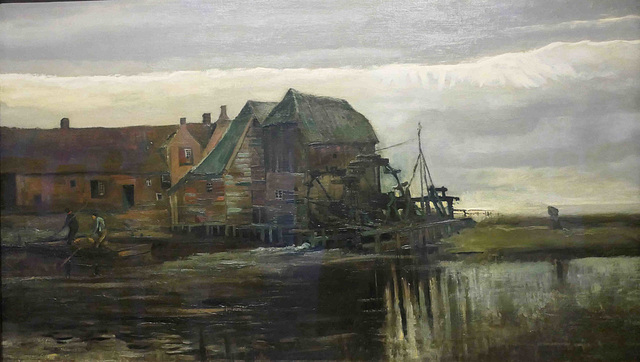
Vincent van Gogh / 1853 - 1890 / 1884
Watermill at Gennep
Madrid - Museo Thyssen-Bornemisza
Madrid is the capital and most populous city of Spain. The city has almost 3.4 million inhabitants and a metropolitan area population of approximately 6.7 million. Madrid is part of the historical landscape of Castile and is located in the middle of the Meseta, the plateau of Castile.
The site has been occupied since prehistoric times. The first document about the existence of an established settlement in Madrid dates from the Muslim age. In the second half of the 9th century Umayyad Emir Muhammad I built a fortress here. In 1083, Madrid was conquered by the Kingdom of Castile. In 1309, under Fernando IV, the Assembly of Estates (Cortes) of the Kingdom of Castile was convened for the first time in Madrid.
In 1561, Philip II moved the royal court from Valladolid to Madrid. It became the de facto capital of Spain, which it remains to this day. The War of the Spanish Succession ended in 1714 with the Bourbons taking over the Spanish throne. Today's royal palace was built under their rule. Particularly during the reign of Charles III the city's public infrastructure was modernized and numerous public buildings were built.
Museo Thyssen-Bornemisza
The museum is named after its founder, Baron Heinrich Thyssen-Bornemisza. With over 1,600 paintings, it was once the second-largest private collection in the world.
After Baron Thyssen, having unsuccessfully sought permission to enlarge his museum in Lugano, searched for a better-suited location elsewhere in Europe end of the 1980s. In 1985, the Baron had married Carmen "Tita" Cervera and introduced her to art collecting. Cervera's influence was decisive in persuading the Baron to relocate the core of his collection to Spain where the local government had a building available next to the Prado. The Thyssen-Bornemisza Museum officially opened in 1992, showing 715 works of art. A year later, the Spanish Government bought 775 works for $350 million.These pieces are now in the purpose-built museum in Madrid. After the museum opened, in 1999, Cervera loaned 429 works of her own art collection to the museum for 11 years. The loan was renewed annually for free from 2012.
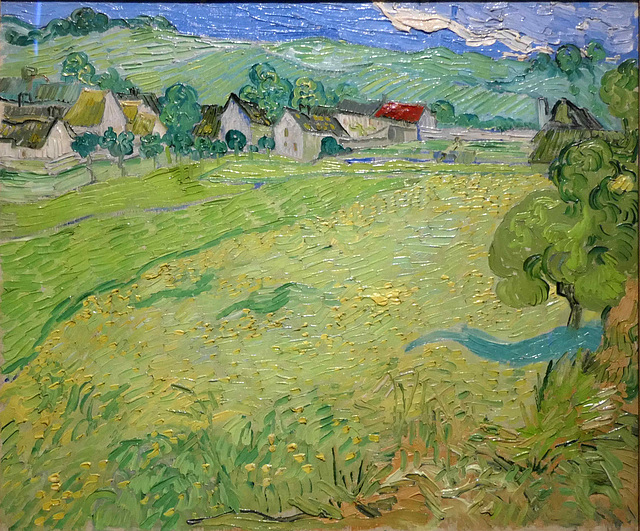
Vincent van Gogh / 1853 - 1890 /
Les Vessenots in Auvers / 1890 /
06 Jan 2023
2 favorites
Madrid - Museo Thyssen-Bornemisza
Madrid is the capital and most populous city of Spain. The city has almost 3.4 million inhabitants and a metropolitan area population of approximately 6.7 million. Madrid is part of the historical landscape of Castile and is located in the middle of the Meseta, the plateau of Castile.
The site has been occupied since prehistoric times. The first document about the existence of an established settlement in Madrid dates from the Muslim age. In the second half of the 9th century Umayyad Emir Muhammad I built a fortress here. In 1083, Madrid was conquered by the Kingdom of Castile. In 1309, under Fernando IV, the Assembly of Estates (Cortes) of the Kingdom of Castile was convened for the first time in Madrid.
In 1561, Philip II moved the royal court from Valladolid to Madrid. It became the de facto capital of Spain, which it remains to this day. The War of the Spanish Succession ended in 1714 with the Bourbons taking over the Spanish throne. Today's royal palace was built under their rule. Particularly during the reign of Charles III the city's public infrastructure was modernized and numerous public buildings were built.
Museo Thyssen-Bornemisza
The museum is named after its founder, Baron Heinrich Thyssen-Bornemisza. With over 1,600 paintings, it was once the second-largest private collection in the world.
After Baron Thyssen, having unsuccessfully sought permission to enlarge his museum in Lugano, searched for a better-suited location elsewhere in Europe end of the 1980s. In 1985, the Baron had married Carmen "Tita" Cervera and introduced her to art collecting. Cervera's influence was decisive in persuading the Baron to relocate the core of his collection to Spain where the local government had a building available next to the Prado. The Thyssen-Bornemisza Museum officially opened in 1992, showing 715 works of art. A year later, the Spanish Government bought 775 works for $350 million.These pieces are now in the purpose-built museum in Madrid. After the museum opened, in 1999, Cervera loaned 429 works of her own art collection to the museum for 11 years. The loan was renewed annually for free from 2012.
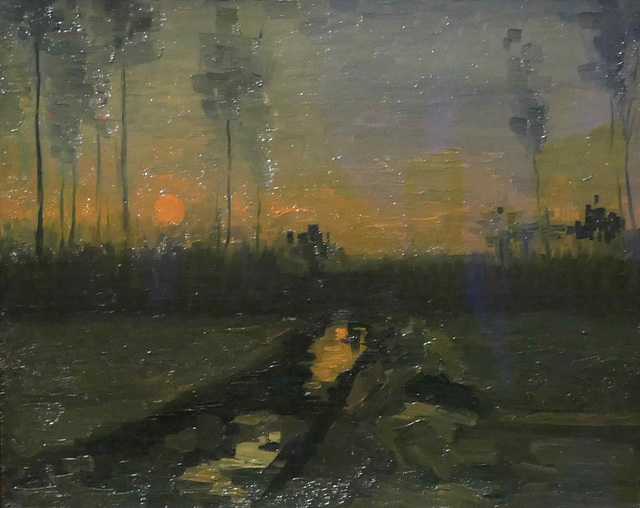
Vincent van Gogh / 1853 - 1890 /
Evening Landscape / 1885 /
Cardiff - National Museum
Cardiff is the capital and, with around 370,000 inhabitants, the most populous city in Wales.
In 1081, William the Conqueror had a castle built on the remains of a Roman fort. The first mention of Cardiff dates back to 1093, when the knight Robert Fitzhamon, a follower of William, was entrusted with a fief here. Cardiff was granted city rights in the 13th century, but remained a relatively small town.
In 1404, Owain Glyndŵr, a Welsh leader who led a 15-year Welsh revolt against English rule in Wales, burned Cardiff to the ground and took possession of the castle. The settlement was rebuilt. In 1538, Henry VIII closed the Dominican and Franciscan monasteries of Cardiff, the remains of which were used as building materials.
In the 19th century, the city experienced an unexpected growth spurt thanks to industrialisation and coal mining. The harbour was expanded and developed into the largest coal port in the world.
When the museum was founded, it had been collecting artefacts for 25 years. A predecessor institution called the Cardiff Museum of Natural History, Arts and Antiquities opened its first premises in 1882. Plans for the construction of a new building took many years before the foundation stone of the current museum building was laid in 1912. It was not fully completed until 1932.
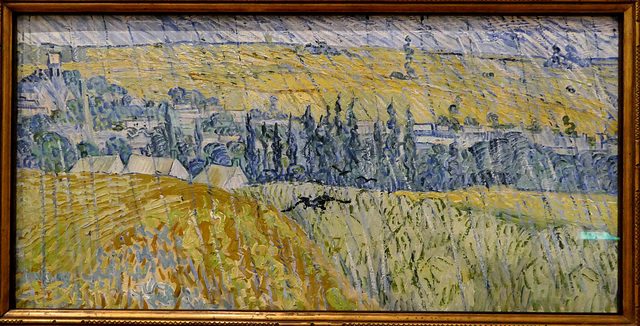
Vincent van Gogh / 1853 - 1890
Rain, Auvers / 1890

Cardiff - National Museum
Cardiff is the capital and, with around 370,000 inhabitants, the most populous city in Wales.
In 1081, William the Conqueror had a castle built on the remains of a Roman fort. The first mention of Cardiff dates back to 1093, when the knight Robert Fitzhamon, a follower of William, was entrusted with a fief here. Cardiff was granted city rights in the 13th century, but remained a relatively small town.
In 1404, Owain Glyndŵr, a Welsh leader who led a 15-year Welsh revolt against English rule in Wales, burned Cardiff to the ground and took possession of the castle. The settlement was rebuilt. In 1538, Henry VIII closed the Dominican and Franciscan monasteries of Cardiff, the remains of which were used as building materials.
In the 19th century, the city experienced an unexpected growth spurt thanks to industrialisation and coal mining. The harbour was expanded and developed into the largest coal port in the world.
When the museum was founded, it had been collecting artefacts for 25 years. A predecessor institution called the Cardiff Museum of Natural History, Arts and Antiquities opened its first premises in 1882. Plans for the construction of a new building took many years before the foundation stone of the current museum building was laid in 1912. It was not fully completed until 1932.
Vincent van Gogh / 1853 - 1890
Portrait of the Artist / 1887

Edinburgh - Scottish National Gallery
Edinburgh has been the capital of Scotland since the 15th century. With a population of around 525,000, it is the second largest city in Scotland after Glasgow.
The city is a cultural centre, and is the home of institutions including the National Museum of Scotland, the National Library of Scotland and the Scottish National Gallery. Edinburgh's Old Town and New Town together are listed as a UNESCO World Heritage Site.
The Scottish National Gallery was opened in 1859. It stands on "The Mound" between the two parts of Princes Street Gardens.
Vincent van Gogh (1853 - 1890) / Olive Trees / 1889
Berlin - Alte Nationalgalerie
The Alte Nationalgalerie (Old National Gallery) on Museum Island is a museum with 19th-century works of art from the collection of the Prussian Cultural Heritage Foundation.
Designed by Friedrich August Stüler on behalf of King Frederick William IV from 1862 onwards, it was completed in the Neo-Classical and Neo-Renaissance styles by 1876.
The building was severely damaged during WW II by bombing. It was reopened in 1949, but reconstruction took until 1969. Between 1998 and 2001 the museum was extensively renovated.
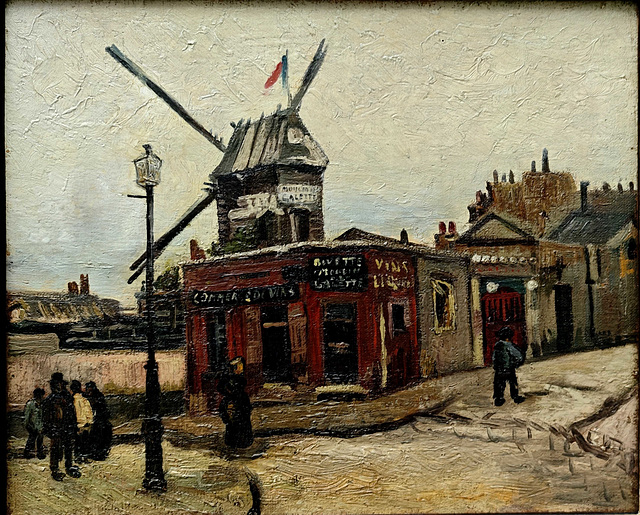
Vincent van Gogh (1853 - 1890 )
Moulin de la Galette, Montmatre / 1886
Jump to top
RSS feed- Latest items - Subscribe to the latest items added to this album
- ipernity © 2007-2026
- Help & Contact
|
Club news
|
About ipernity
|
History |
ipernity Club & Prices |
Guide of good conduct
Donate | Group guidelines | Privacy policy | Terms of use | Statutes | In memoria -
Facebook
X
