


Napoli

Naples / Neapel
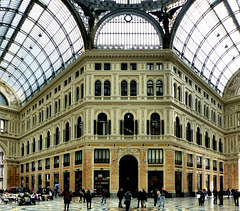
Napoli - Galleria Umberto I
| |
|
|
Napoli is the regional capital of Campania and the third-largest city of Italy. Its metropolitan area has a population of more than 3 million.
Founded by Greek settlers before 900 BC, Napoli was an important part of Magna Graecia and played a major role in the merging of Greek and Roman society.
Following the decline of the Western Roman Empire Napoli was shortly ruled by the Ostrogoths. Byzantine troops captured the city in 536m but after the Byzantine exarchate Ravenna fell a Duchy of Naples was created. Over centuries the Duchy´s relations to Rome or Byzanz were hard-fought. In 836 Napoli could repel a siege of Lombard troops with the help of the Saracens, what did not prevent Muhammad I Abu 'l-Abbas in the 850s loot Napoli. In the 11th century, the Duchy hired Norman mercenaries and about 1140 it came under Norman control under Roger II, then King of Sicily.
In 1228 Emperor Frederick II founded the first university in Europe here, making Napoli the intellectual centre of the kingdom. The conflict between the House of Hohenstaufen and the Papacy led in 1266 to Pope Innocent IV crowning the Angevin duke Charles I King of Sicily. Charles officially moved the capital from Palermo to Napoli.
In 1282 after the "Sicilian Vespers", a successful rebellion on the island of Sicily against the rule of King Charles I, the Kingdom of Sicily was divided into two. The Angevin Kingdom of Naples included the southern part of the Italian peninsula, while the island of Sicily became the Aragonese Kingdom of Sicily.
By the 17th century, Naples had become Europe's second-largest city – second only to Paris – with around 250000 inhabitants.
Galleria Umberto I is a shopping gallery, located across from the San Carlo opera house. The galleria was built 1887–1891 during the rebuilding of Napoli, after cholera had hit Napoli severely in 1884. The time was called the "risanamento". Galleria Umberto I was designed by Emanuele Rocco and is reminiscent of the Galleria Vittorio Emanuele II in Milano.
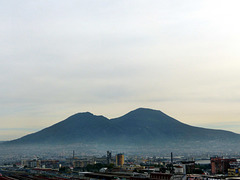
Napoli - Mount Vesuvius
| |
|
|
Napoli is the regional capital of Campania and the third-largest city of Italy. Its metropolitan area has a population of more than 3 million.
Founded by Greek settlers before 900 BC, Napoli was an important part of Magna Graecia and played a major role in the merging of Greek and Roman society.
Following the decline of the Western Roman Empire Napoli was shortly ruled by the Ostrogoths. Byzantine troops captured the city in 536m but after the Byzantine exarchate Ravenna fell a Duchy of Naples was created. Over centuries the Duchy´s relations to Rome or Byzanz were hard-fought. In 836 Napoli could repel a siege of Lombard troops with the help of the Saracens, what did not prevent Muhammad I Abu 'l-Abbas in the 850s loot Napoli. In the 11th century, the Duchy hired Norman mercenaries and about 1140 it came under Norman control under Roger II, then King of Sicily.
In 1228 Emperor Frederick II founded the first university in Europe here, making Napoli the intellectual centre of the kingdom. The conflict between the House of Hohenstaufen and the Papacy led in 1266 to Pope Innocent IV crowning the Angevin duke Charles I King of Sicily. Charles officially moved the capital from Palermo to Napoli.
In 1282 after the "Sicilian Vespers", a successful rebellion on the island of Sicily against the rule of King Charles I, the Kingdom of Sicily was divided into two. The Angevin Kingdom of Naples included the southern part of the Italian peninsula, while the island of Sicily became the Aragonese Kingdom of Sicily.
By the 17th century, Naples had become Europe's second-largest city – second only to Paris – with around 250000 inhabitants.
The "humpbacked" peak of Mount Vesuvius towers over Napoli. The volcano is regarded as one of the most dangerous volcanoes in the world because of the population of 3,000,000 people living near enough to be affected by an eruption. An eruption in April 1906 killed more than 100 people. The vulcano stayed very active up to a major eruption on 18 March 1944. Despite the evacuation of 12,000 people, 26 people were killed. The towns of Massa di Somma and San Sebastiano were almost completely buried under masses of lava.
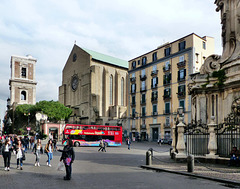
Napoli - Santa Chiara
| |
|
Napoli is the regional capital of Campania and the third-largest city of Italy. Its metropolitan area has a population of more than 3 million.
Founded by Greek settlers before 900 BC, Napoli was an important part of Magna Graecia and played a major role in the merging of Greek and Roman society.
Following the decline of the Western Roman Empire Napoli was shortly ruled by the Ostrogoths. Byzantine troops captured the city in 536m but after the Byzantine exarchate Ravenna fell a Duchy of Naples was created. Over centuries the Duchy´s relations to Rome or Byzanz were hard-fought. In 836 Napoli could repel a siege of Lombard troops with the help of the Saracens, what did not prevent Muhammad I Abu 'l-Abbas in the 850s loot Napoli. In the 11th century, the Duchy hired Norman mercenaries and about 1140 it came under Norman control under Roger II, then King of Sicily.
In 1228 Emperor Frederick II founded the first university in Europe here, making Napoli the intellectual centre of the kingdom. The conflict between the House of Hohenstaufen and the Papacy led in 1266 to Pope Innocent IV crowning the Angevin duke Charles I King of Sicily. Charles officially moved the capital from Palermo to Napoli.
In 1282 after the "Sicilian Vespers", a successful rebellion on the island of Sicily against the rule of King Charles I, the Kingdom of Sicily was divided into two. The Angevin Kingdom of Naples included the southern part of the Italian peninsula, while the island of Sicily became the Aragonese Kingdom of Sicily.
By the 17th century, Naples had become Europe's second-largest city – second only to Paris – with around 250000 inhabitants.
Tourists leave the red Hop-On Hop-Off bus near the Basilica di Santa Chiara. The basilica is part of a former Poor Clare convent. It is the burial place of the Neapolitan kings from the two Capetian dynasties House Anjou and House Bourbon-Sicily.
The monastic complex was built in 1313–1340 by Queen Sancha of Majorca and her husband King Robert of Naples. The church was erected in traditional Provençal-Gothic style. After the building was partially destroyed by a fire after bombings during World War II, it was brought back to the alleged original state by a disputed restoration, which was completed in 1953.
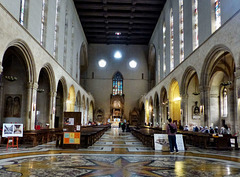
Napoli - Santa Chiara
| |
|
|
Napoli is the regional capital of Campania and the third-largest city of Italy. Its metropolitan area has a population of more than 3 million.
Founded by Greek settlers before 900 BC, Napoli was an important part of Magna Graecia and played a major role in the merging of Greek and Roman society.
Following the decline of the Western Roman Empire Napoli was shortly ruled by the Ostrogoths. Byzantine troops captured the city in 536m but after the Byzantine exarchate Ravenna fell a Duchy of Naples was created. Over centuries the Duchy´s relations to Rome or Byzanz were hard-fought. In 836 Napoli could repel a siege of Lombard troops with the help of the Saracens, what did not prevent Muhammad I Abu 'l-Abbas in the 850s loot Napoli. In the 11th century, the Duchy hired Norman mercenaries and about 1140 it came under Norman control under Roger II, then King of Sicily.
In 1228 Emperor Frederick II founded the first university in Europe here, making Napoli the intellectual centre of the kingdom. The conflict between the House of Hohenstaufen and the Papacy led in 1266 to Pope Innocent IV crowning the Angevin duke Charles I King of Sicily. Charles officially moved the capital from Palermo to Napoli.
In 1282 after the "Sicilian Vespers", a successful rebellion on the island of Sicily against the rule of King Charles I, the Kingdom of Sicily was divided into two. The Angevin Kingdom of Naples included the southern part of the Italian peninsula, while the island of Sicily became the Aragonese Kingdom of Sicily.
By the 17th century, Naples had become Europe's second-largest city – second only to Paris – with around 250000 inhabitants.
The basilica is part of a former Poor Clare convent. It is the burial place of the Neapolitan kings from the two Capetian dynasties House Anjou and House Bourbon-Sicily.
The monastic complex was built in 1313–1340 by Queen Sancha of Majorca and her husband King Robert of Naples. The church was erected in traditional Provençal-Gothic style. After the building was partially destroyed by a fire after bombings during World War II, it was brought back to the alleged original state by a disputed restoration, which was completed in 1953.
The nave is 82 m long.
Napoli - Santa Chiara
| |
|
Napoli is the regional capital of Campania and the third-largest city of Italy. Its metropolitan area has a population of more than 3 million.
Founded by Greek settlers before 900 BC, Napoli was an important part of Magna Graecia and played a major role in the merging of Greek and Roman society.
Following the decline of the Western Roman Empire Napoli was shortly ruled by the Ostrogoths. Byzantine troops captured the city in 536m but after the Byzantine exarchate Ravenna fell a Duchy of Naples was created. Over centuries the Duchy´s relations to Rome or Byzanz were hard-fought. In 836 Napoli could repel a siege of Lombard troops with the help of the Saracens, what did not prevent Muhammad I Abu 'l-Abbas in the 850s loot Napoli. In the 11th century, the Duchy hired Norman mercenaries and about 1140 it came under Norman control under Roger II, then King of Sicily.
In 1228 Emperor Frederick II founded the first university in Europe here, making Napoli the intellectual centre of the kingdom. The conflict between the House of Hohenstaufen and the Papacy led in 1266 to Pope Innocent IV crowning the Angevin duke Charles I King of Sicily. Charles officially moved the capital from Palermo to Napoli.
In 1282 after the "Sicilian Vespers", a successful rebellion on the island of Sicily against the rule of King Charles I, the Kingdom of Sicily was divided into two. The Angevin Kingdom of Naples included the southern part of the Italian peninsula, while the island of Sicily became the Aragonese Kingdom of Sicily.
By the 17th century, Naples had become Europe's second-largest city – second only to Paris – with around 250000 inhabitants.
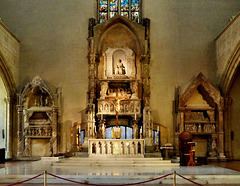
The basilica is part of a former Poor Clare convent. It is the burial place of the Neapolitan kings from the two Capetian dynasties House Anjou and House Bourbon-Sicily.
Seen in the centre is the tomb of Robert of Anjou (aka "Robert the Wise", 1276 – 1343).
The monastic complex was built in 1313–1340 by Queen Sancha of Majorca and her husband King Robert of Naples. The church was erected in traditional Provençal-Gothic style. After the building was partially destroyed by a fire after bombings during World War II, it was brought back to the alleged original state by a disputed restoration, which was completed in 1953.
Napoli - Santa Chiara
| |
|
Napoli is the regional capital of Campania and the third-largest city of Italy. Its metropolitan area has a population of more than 3 million.
Founded by Greek settlers before 900 BC, Napoli was an important part of Magna Graecia and played a major role in the merging of Greek and Roman society.
Following the decline of the Western Roman Empire Napoli was shortly ruled by the Ostrogoths. Byzantine troops captured the city in 536m but after the Byzantine exarchate Ravenna fell a Duchy of Naples was created. Over centuries the Duchy´s relations to Rome or Byzanz were hard-fought. In 836 Napoli could repel a siege of Lombard troops with the help of the Saracens, what did not prevent Muhammad I Abu 'l-Abbas in the 850s loot Napoli. In the 11th century, the Duchy hired Norman mercenaries and about 1140 it came under Norman control under Roger II, then King of Sicily.
In 1228 Emperor Frederick II founded the first university in Europe here, making Napoli the intellectual centre of the kingdom. The conflict between the House of Hohenstaufen and the Papacy led in 1266 to Pope Innocent IV crowning the Angevin duke Charles I King of Sicily. Charles officially moved the capital from Palermo to Napoli.
In 1282 after the "Sicilian Vespers", a successful rebellion on the island of Sicily against the rule of King Charles I, the Kingdom of Sicily was divided into two. The Angevin Kingdom of Naples included the southern part of the Italian peninsula, while the island of Sicily became the Aragonese Kingdom of Sicily.
By the 17th century, Naples had become Europe's second-largest city – second only to Paris – with around 250000 inhabitants.
The basilica is part of a former Poor Clare convent. It is the burial place of the Neapolitan kings from the two Capetian dynasties House Anjou and House Bourbon-Sicily.
The monastic complex was built in 1313–1340 by Queen Sancha of Majorca and her husband King Robert of Naples. The church was erected in traditional Provençal-Gothic style. After the building was partially destroyed by a fire after bombings during World War II, it was brought back to the alleged original state by a disputed restoration, which was completed in 1953.
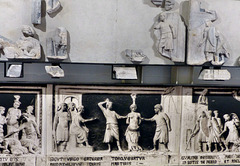
Some of the former convent buildings now host a museum. Here is, what could be "reconstructed" after the bombings had destroyed the church during WWII.
So many works of art share the fate of the Buddhas of Bamiyan.
Napoli - Santa Chiara
| |
|
|
Napoli is the regional capital of Campania and the third-largest city of Italy. Its metropolitan area has a population of more than 3 million.
Founded by Greek settlers before 900 BC, Napoli was an important part of Magna Graecia and played a major role in the merging of Greek and Roman society.
Following the decline of the Western Roman Empire Napoli was shortly ruled by the Ostrogoths. Byzantine troops captured the city in 536m but after the Byzantine exarchate Ravenna fell a Duchy of Naples was created. Over centuries the Duchy´s relations to Rome or Byzanz were hard-fought. In 836 Napoli could repel a siege of Lombard troops with the help of the Saracens, what did not prevent Muhammad I Abu 'l-Abbas in the 850s loot Napoli. In the 11th century, the Duchy hired Norman mercenaries and about 1140 it came under Norman control under Roger II, then King of Sicily.
In 1228 Emperor Frederick II founded the first university in Europe here, making Napoli the intellectual centre of the kingdom. The conflict between the House of Hohenstaufen and the Papacy led in 1266 to Pope Innocent IV crowning the Angevin duke Charles I King of Sicily. Charles officially moved the capital from Palermo to Napoli.
In 1282 after the "Sicilian Vespers", a successful rebellion on the island of Sicily against the rule of King Charles I, the Kingdom of Sicily was divided into two. The Angevin Kingdom of Naples included the southern part of the Italian peninsula, while the island of Sicily became the Aragonese Kingdom of Sicily.
By the 17th century, Naples had become Europe's second-largest city – second only to Paris – with around 250000 inhabitants.
The basilica is part of a former Poor Clare convent. It is the burial place of the Neapolitan kings from the two Capetian dynasties House Anjou and House Bourbon-Sicily.
The monastic complex was built in 1313–1340 by Queen Sancha of Majorca and her husband King Robert of Naples. The church was erected in traditional Provençal-Gothic style. After the building was partially destroyed by a fire after bombings during World War II, it was brought back to the alleged original state by a disputed restoration, which was completed in 1953.
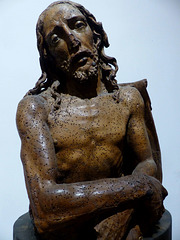
Some of the former convent buildings now host a museum.
"Ecce Homo" - sculptures were popular icons at the very end of the Middle Ages. This one was carved by Giovanni da Nola (1478–1559)
Napoli - Santa Chiara
| |
|
Napoli is the regional capital of Campania and the third-largest city of Italy. Its metropolitan area has a population of more than 3 million.
Founded by Greek settlers before 900 BC, Napoli was an important part of Magna Graecia and played a major role in the merging of Greek and Roman society.
Following the decline of the Western Roman Empire Napoli was shortly ruled by the Ostrogoths. Byzantine troops captured the city in 536m but after the Byzantine exarchate Ravenna fell a Duchy of Naples was created. Over centuries the Duchy´s relations to Rome or Byzanz were hard-fought. In 836 Napoli could repel a siege of Lombard troops with the help of the Saracens, what did not prevent Muhammad I Abu 'l-Abbas in the 850s loot Napoli. In the 11th century, the Duchy hired Norman mercenaries and about 1140 it came under Norman control under Roger II, then King of Sicily.
In 1228 Emperor Frederick II founded the first university in Europe here, making Napoli the intellectual centre of the kingdom. The conflict between the House of Hohenstaufen and the Papacy led in 1266 to Pope Innocent IV crowning the Angevin duke Charles I King of Sicily. Charles officially moved the capital from Palermo to Napoli.
In 1282 after the "Sicilian Vespers", a successful rebellion on the island of Sicily against the rule of King Charles I, the Kingdom of Sicily was divided into two. The Angevin Kingdom of Naples included the southern part of the Italian peninsula, while the island of Sicily became the Aragonese Kingdom of Sicily.
By the 17th century, Naples had become Europe's second-largest city – second only to Paris – with around 250000 inhabitants.
The basilica is part of a former Poor Clare convent. It is the burial place of the Neapolitan kings from the two Capetian dynasties House Anjou and House Bourbon-Sicily.
The monastic complex was built in 1313–1340 by Queen Sancha of Majorca and her husband King Robert of Naples. The church was erected in traditional Provençal-Gothic style. After the building was partially destroyed by a fire after bombings during World War II, it was brought back to the alleged original state by a disputed restoration, which was completed in 1953.
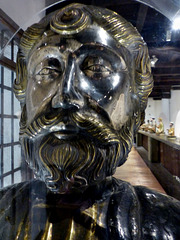
Some of the former convent buildings now host a museum.
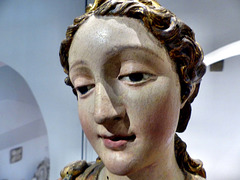
Relics were the most valuable possessions a convent owned. So the reliquaries, in which the holy remains were kept and displayed, are often masterpieces of art. Here is Saint Paul.
Napoli - Santa Chiara
| |
|
Napoli is the regional capital of Campania and the third-largest city of Italy. Its metropolitan area has a population of more than 3 million.
Founded by Greek settlers before 900 BC, Napoli was an important part of Magna Graecia and played a major role in the merging of Greek and Roman society.
Following the decline of the Western Roman Empire Napoli was shortly ruled by the Ostrogoths. Byzantine troops captured the city in 536m but after the Byzantine exarchate Ravenna fell a Duchy of Naples was created. Over centuries the Duchy´s relations to Rome or Byzanz were hard-fought. In 836 Napoli could repel a siege of Lombard troops with the help of the Saracens, what did not prevent Muhammad I Abu 'l-Abbas in the 850s loot Napoli. In the 11th century, the Duchy hired Norman mercenaries and about 1140 it came under Norman control under Roger II, then King of Sicily.
In 1228 Emperor Frederick II founded the first university in Europe here, making Napoli the intellectual centre of the kingdom. The conflict between the House of Hohenstaufen and the Papacy led in 1266 to Pope Innocent IV crowning the Angevin duke Charles I King of Sicily. Charles officially moved the capital from Palermo to Napoli.
In 1282 after the "Sicilian Vespers", a successful rebellion on the island of Sicily against the rule of King Charles I, the Kingdom of Sicily was divided into two. The Angevin Kingdom of Naples included the southern part of the Italian peninsula, while the island of Sicily became the Aragonese Kingdom of Sicily.
By the 17th century, Naples had become Europe's second-largest city – second only to Paris – with around 250000 inhabitants.
The basilica is part of a former Poor Clare convent. It is the burial place of the Neapolitan kings from the two Capetian dynasties House Anjou and House Bourbon-Sicily.
The monastic complex was built in 1313–1340 by Queen Sancha of Majorca and her husband King Robert of Naples. The church was erected in traditional Provençal-Gothic style. After the building was partially destroyed by a fire after bombings during World War II, it was brought back to the alleged original state by a disputed restoration, which was completed in 1953.
Some of the former convent buildings now host a museum.
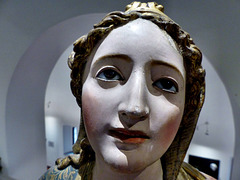
Relics were the most valuable possessions a convent owned. So the reliquaries, in which the holy remains were kept and displayed, are often masterpieces of art.
Napoli - Santa Chiara
| |
|
Napoli is the regional capital of Campania and the third-largest city of Italy. Its metropolitan area has a population of more than 3 million.
Founded by Greek settlers before 900 BC, Napoli was an important part of Magna Graecia and played a major role in the merging of Greek and Roman society.
Following the decline of the Western Roman Empire Napoli was shortly ruled by the Ostrogoths. Byzantine troops captured the city in 536m but after the Byzantine exarchate Ravenna fell a Duchy of Naples was created. Over centuries the Duchy´s relations to Rome or Byzanz were hard-fought. In 836 Napoli could repel a siege of Lombard troops with the help of the Saracens, what did not prevent Muhammad I Abu 'l-Abbas in the 850s loot Napoli. In the 11th century, the Duchy hired Norman mercenaries and about 1140 it came under Norman control under Roger II, then King of Sicily.
In 1228 Emperor Frederick II founded the first university in Europe here, making Napoli the intellectual centre of the kingdom. The conflict between the House of Hohenstaufen and the Papacy led in 1266 to Pope Innocent IV crowning the Angevin duke Charles I King of Sicily. Charles officially moved the capital from Palermo to Napoli.
In 1282 after the "Sicilian Vespers", a successful rebellion on the island of Sicily against the rule of King Charles I, the Kingdom of Sicily was divided into two. The Angevin Kingdom of Naples included the southern part of the Italian peninsula, while the island of Sicily became the Aragonese Kingdom of Sicily.
By the 17th century, Naples had become Europe's second-largest city – second only to Paris – with around 250000 inhabitants.
The basilica is part of a former Poor Clare convent. It is the burial place of the Neapolitan kings from the two Capetian dynasties House Anjou and House Bourbon-Sicily.
The monastic complex was built in 1313–1340 by Queen Sancha of Majorca and her husband King Robert of Naples. The church was erected in traditional Provençal-Gothic style. After the building was partially destroyed by a fire after bombings during World War II, it was brought back to the alleged original state by a disputed restoration, which was completed in 1953.
Some of the former convent buildings now host a museum.
Relics were the most valuable possessions a convent owned. So the reliquaries, in which the holy remains were kept and displayed, are often masterpieces of art.
Santa Fortunata
Napoli - Santa Chiara
| |
|
Napoli is the regional capital of Campania and the third-largest city of Italy. Its metropolitan area has a population of more than 3 million.
Founded by Greek settlers before 900 BC, Napoli was an important part of Magna Graecia and played a major role in the merging of Greek and Roman society.
Following the decline of the Western Roman Empire Napoli was shortly ruled by the Ostrogoths. Byzantine troops captured the city in 536m but after the Byzantine exarchate Ravenna fell a Duchy of Naples was created. Over centuries the Duchy´s relations to Rome or Byzanz were hard-fought. In 836 Napoli could repel a siege of Lombard troops with the help of the Saracens, what did not prevent Muhammad I Abu 'l-Abbas in the 850s loot Napoli. In the 11th century, the Duchy hired Norman mercenaries and about 1140 it came under Norman control under Roger II, then King of Sicily.
In 1228 Emperor Frederick II founded the first university in Europe here, making Napoli the intellectual centre of the kingdom. The conflict between the House of Hohenstaufen and the Papacy led in 1266 to Pope Innocent IV crowning the Angevin duke Charles I King of Sicily. Charles officially moved the capital from Palermo to Napoli.
In 1282 after the "Sicilian Vespers", a successful rebellion on the island of Sicily against the rule of King Charles I, the Kingdom of Sicily was divided into two. The Angevin Kingdom of Naples included the southern part of the Italian peninsula, while the island of Sicily became the Aragonese Kingdom of Sicily.
By the 17th century, Naples had become Europe's second-largest city – second only to Paris – with around 250000 inhabitants.
The basilica is part of a former Poor Clare convent. It is the burial place of the Neapolitan kings from the two Capetian dynasties House Anjou and House Bourbon-Sicily.
The monastic complex was built in 1313–1340 by Queen Sancha of Majorca and her husband King Robert of Naples. The church was erected in traditional Provençal-Gothic style. After the building was partially destroyed by a fire after bombings during World War II, it was brought back to the alleged original state by a disputed restoration, which was completed in 1953.
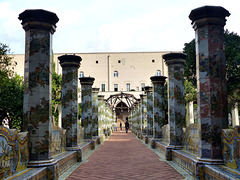
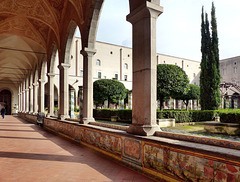
The "Chiostro delle Maioliche" (Majolica Cloister) is considered the most beautiful cloister in Campania. It was laid out in the 14th century and rebuilt as an inner courtyard with a central crossroads in 1739–1740. In 1742 the cloister got embellished with the unique addition of majolica tiles in Rococò style. The tiles were created by Donato and Giuseppe Massa, apprentices of Francesco del Grue, who was imprisoned as a prisoner of war in Castello Nuovo in 1716.
Napoli - Santa Chiara
| |
|
Napoli is the regional capital of Campania and the third-largest city of Italy. Its metropolitan area has a population of more than 3 million.
Founded by Greek settlers before 900 BC, Napoli was an important part of Magna Graecia and played a major role in the merging of Greek and Roman society.
Following the decline of the Western Roman Empire Napoli was shortly ruled by the Ostrogoths. Byzantine troops captured the city in 536m but after the Byzantine exarchate Ravenna fell a Duchy of Naples was created. Over centuries the Duchy´s relations to Rome or Byzanz were hard-fought. In 836 Napoli could repel a siege of Lombard troops with the help of the Saracens, what did not prevent Muhammad I Abu 'l-Abbas in the 850s loot Napoli. In the 11th century, the Duchy hired Norman mercenaries and about 1140 it came under Norman control under Roger II, then King of Sicily.
In 1228 Emperor Frederick II founded the first university in Europe here, making Napoli the intellectual centre of the kingdom. The conflict between the House of Hohenstaufen and the Papacy led in 1266 to Pope Innocent IV crowning the Angevin duke Charles I King of Sicily. Charles officially moved the capital from Palermo to Napoli.
In 1282 after the "Sicilian Vespers", a successful rebellion on the island of Sicily against the rule of King Charles I, the Kingdom of Sicily was divided into two. The Angevin Kingdom of Naples included the southern part of the Italian peninsula, while the island of Sicily became the Aragonese Kingdom of Sicily.
By the 17th century, Naples had become Europe's second-largest city – second only to Paris – with around 250000 inhabitants.
The basilica is part of a former Poor Clare convent. It is the burial place of the Neapolitan kings from the two Capetian dynasties House Anjou and House Bourbon-Sicily.
The monastic complex was built in 1313–1340 by Queen Sancha of Majorca and her husband King Robert of Naples. The church was erected in traditional Provençal-Gothic style. After the building was partially destroyed by a fire after bombings during World War II, it was brought back to the alleged original state by a disputed restoration, which was completed in 1953.
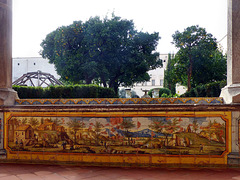
The "Chiostro delle Maioliche" (Majolica Cloister) is considered the most beautiful cloister in Campania. It was laid out in the 14th century and rebuilt as an inner courtyard with a central crossroads in 1739–1740. In 1742 the cloister got embellished with the unique addition of majolica tiles in Rococò style. The tiles were created by Donato and Giuseppe Massa, apprentices of Francesco del Grue, who was imprisoned as a prisoner of war in Castello Nuovo in 1716.
Napoli - Santa Chiara
| |
|
Napoli is the regional capital of Campania and the third-largest city of Italy. Its metropolitan area has a population of more than 3 million.
Founded by Greek settlers before 900 BC, Napoli was an important part of Magna Graecia and played a major role in the merging of Greek and Roman society.
Following the decline of the Western Roman Empire Napoli was shortly ruled by the Ostrogoths. Byzantine troops captured the city in 536m but after the Byzantine exarchate Ravenna fell a Duchy of Naples was created. Over centuries the Duchy´s relations to Rome or Byzanz were hard-fought. In 836 Napoli could repel a siege of Lombard troops with the help of the Saracens, what did not prevent Muhammad I Abu 'l-Abbas in the 850s loot Napoli. In the 11th century, the Duchy hired Norman mercenaries and about 1140 it came under Norman control under Roger II, then King of Sicily.
In 1228 Emperor Frederick II founded the first university in Europe here, making Napoli the intellectual centre of the kingdom. The conflict between the House of Hohenstaufen and the Papacy led in 1266 to Pope Innocent IV crowning the Angevin duke Charles I King of Sicily. Charles officially moved the capital from Palermo to Napoli.
In 1282 after the "Sicilian Vespers", a successful rebellion on the island of Sicily against the rule of King Charles I, the Kingdom of Sicily was divided into two. The Angevin Kingdom of Naples included the southern part of the Italian peninsula, while the island of Sicily became the Aragonese Kingdom of Sicily.
By the 17th century, Naples had become Europe's second-largest city – second only to Paris – with around 250000 inhabitants.
The basilica is part of a former Poor Clare convent. It is the burial place of the Neapolitan kings from the two Capetian dynasties House Anjou and House Bourbon-Sicily.
The monastic complex was built in 1313–1340 by Queen Sancha of Majorca and her husband King Robert of Naples. The church was erected in traditional Provençal-Gothic style. After the building was partially destroyed by a fire after bombings during World War II, it was brought back to the alleged original state by a disputed restoration, which was completed in 1953.
The "Chiostro delle Maioliche" (Majolica Cloister) is considered the most beautiful cloister in Campania. It was laid out in the 14th century and rebuilt as an inner courtyard with a central crossroads in 1739–1740. In 1742 the cloister got embellished with the unique addition of majolica tiles in Rococò style. The tiles were created by Donato and Giuseppe Massa, apprentices of Francesco del Grue, who was imprisoned as a prisoner of war in Castello Nuovo in 1716.
Napoli - Santa Chiara
| |
|
Napoli is the regional capital of Campania and the third-largest city of Italy. Its metropolitan area has a population of more than 3 million.
Founded by Greek settlers before 900 BC, Napoli was an important part of Magna Graecia and played a major role in the merging of Greek and Roman society.
Following the decline of the Western Roman Empire Napoli was shortly ruled by the Ostrogoths. Byzantine troops captured the city in 536m but after the Byzantine exarchate Ravenna fell a Duchy of Naples was created. Over centuries the Duchy´s relations to Rome or Byzanz were hard-fought. In 836 Napoli could repel a siege of Lombard troops with the help of the Saracens, what did not prevent Muhammad I Abu 'l-Abbas in the 850s loot Napoli. In the 11th century, the Duchy hired Norman mercenaries and about 1140 it came under Norman control under Roger II, then King of Sicily.
In 1228 Emperor Frederick II founded the first university in Europe here, making Napoli the intellectual centre of the kingdom. The conflict between the House of Hohenstaufen and the Papacy led in 1266 to Pope Innocent IV crowning the Angevin duke Charles I King of Sicily. Charles officially moved the capital from Palermo to Napoli.
In 1282 after the "Sicilian Vespers", a successful rebellion on the island of Sicily against the rule of King Charles I, the Kingdom of Sicily was divided into two. The Angevin Kingdom of Naples included the southern part of the Italian peninsula, while the island of Sicily became the Aragonese Kingdom of Sicily.
By the 17th century, Naples had become Europe's second-largest city – second only to Paris – with around 250000 inhabitants.
The basilica is part of a former Poor Clare convent. It is the burial place of the Neapolitan kings from the two Capetian dynasties House Anjou and House Bourbon-Sicily.
The monastic complex was built in 1313–1340 by Queen Sancha of Majorca and her husband King Robert of Naples. The church was erected in traditional Provençal-Gothic style. After the building was partially destroyed by a fire after bombings during World War II, it was brought back to the alleged original state by a disputed restoration, which was completed in 1953.
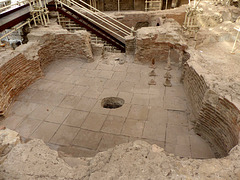
During the restoration work after WWII the remains of Roman thermae and a large pool were found and later unearthed.
Napoli - San Lorenzo Maggiore
| |
|
Napoli is the regional capital of Campania and the third-largest city of Italy. Its metropolitan area has a population of more than 3 million.
Founded by Greek settlers before 900 BC, Napoli was an important part of Magna Graecia and played a major role in the merging of Greek and Roman society.
Following the decline of the Western Roman Empire Napoli was shortly ruled by the Ostrogoths. Byzantine troops captured the city in 536m but after the Byzantine exarchate Ravenna fell a Duchy of Naples was created. Over centuries the Duchy´s relations to Rome or Byzanz were hard-fought. In 836 Napoli could repel a siege of Lombard troops with the help of the Saracens, what did not prevent Muhammad I Abu 'l-Abbas in the 850s loot Napoli. In the 11th century, the Duchy hired Norman mercenaries and about 1140 it came under Norman control under Roger II, then King of Sicily.
In 1228 Emperor Frederick II founded the first university in Europe here, making Napoli the intellectual centre of the kingdom. The conflict between the House of Hohenstaufen and the Papacy led in 1266 to Pope Innocent IV crowning the Angevin duke Charles I King of Sicily. Charles officially moved the capital from Palermo to Napoli.
In 1282 after the "Sicilian Vespers", a successful rebellion on the island of Sicily against the rule of King Charles I, the Kingdom of Sicily was divided into two. The Angevin Kingdom of Naples included the southern part of the Italian peninsula, while the island of Sicily became the Aragonese Kingdom of Sicily.
By the 17th century, Naples had become Europe's second-largest city – second only to Paris – with around 250000 inhabitants.
The Franciscan order had a church in Napoli, where Charles I of Anjou decided to build the "Maschio Angioino" (Castel Nuovo) in the late 13th century. They lost it and got compensated by the area, where San Lorenzo Maggiore is located now. Often rebuilt over the centuries the restorations started in the 19th century by demolishing the Baroque additions of the main interior.
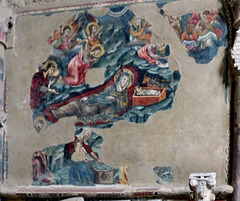
The fresco, depicting the Nativity, is pretty damaged, but the "First Bath" can still be found. The midwife is just testing the water temperature.
Napoli - Duomo di Napoli
| |
|
Napoli is the regional capital of Campania and the third-largest city of Italy. Its metropolitan area has a population of more than 3 million.
Founded by Greek settlers before 900 BC, Napoli was an important part of Magna Graecia and played a major role in the merging of Greek and Roman society.
Following the decline of the Western Roman Empire Napoli was shortly ruled by the Ostrogoths. Byzantine troops captured the city in 536m but after the Byzantine exarchate Ravenna fell a Duchy of Naples was created. Over centuries the Duchy´s relations to Rome or Byzanz were hard-fought. In 836 Napoli could repel a siege of Lombard troops with the help of the Saracens, what did not prevent Muhammad I Abu 'l-Abbas in the 850s loot Napoli. In the 11th century, the Duchy hired Norman mercenaries and about 1140 it came under Norman control under Roger II, then King of Sicily.
In 1228 Emperor Frederick II founded the first university in Europe here, making Napoli the intellectual centre of the kingdom. The conflict between the House of Hohenstaufen and the Papacy led in 1266 to Pope Innocent IV crowning the Angevin duke Charles I King of Sicily. Charles officially moved the capital from Palermo to Napoli.
In 1282 after the "Sicilian Vespers", a successful rebellion on the island of Sicily against the rule of King Charles I, the Kingdom of Sicily was divided into two. The Angevin Kingdom of Naples included the southern part of the Italian peninsula, while the island of Sicily became the Aragonese Kingdom of Sicily.
By the 17th century, Naples had become Europe's second-largest city – second only to Paris – with around 250000 inhabitants.
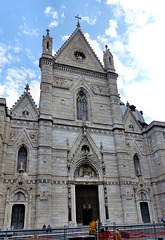
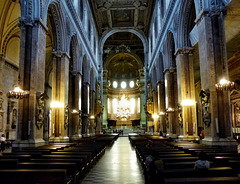
The present cathedral stands on the foundations of two early Christian basilicas. One of these dates back to the first decades of the 4th century it was partially preserved. The cathedral was commissioned by King Charles I of Anjou. Construction continued during the reign of his successor, Charles II (1285-1309) and was completed in the early 14th century under Robert of Anjou.
Over the centuries the cathedral was repeatedly expanded and changed in different styles. The facade and the campanile collapsed during the 1349-earthquake. They were rebuilt in the 15th century, but in 1456, another earthquake caused damage to the nave. A crypt for the remains of Saint Gennaro was built around 1500. The apse was badly damaged in the earthquake of 1732 and got rebuilt in Baroque style.
From 1875 on a new facade in the neo-Gothic style was built, including older elements such as the original sculptural decoration. It was completed in 1905.
Napoli - San Lorenzo Maggiore
| |
|
Napoli is the regional capital of Campania and the third-largest city of Italy. Its metropolitan area has a population of more than 3 million.
Founded by Greek settlers before 900 BC, Napoli was an important part of Magna Graecia and played a major role in the merging of Greek and Roman society.
Following the decline of the Western Roman Empire Napoli was shortly ruled by the Ostrogoths. Byzantine troops captured the city in 536m but after the Byzantine exarchate Ravenna fell a Duchy of Naples was created. Over centuries the Duchy´s relations to Rome or Byzanz were hard-fought. In 836 Napoli could repel a siege of Lombard troops with the help of the Saracens, what did not prevent Muhammad I Abu 'l-Abbas in the 850s loot Napoli. In the 11th century, the Duchy hired Norman mercenaries and about 1140 it came under Norman control under Roger II, then King of Sicily.
In 1228 Emperor Frederick II founded the first university in Europe here, making Napoli the intellectual centre of the kingdom. The conflict between the House of Hohenstaufen and the Papacy led in 1266 to Pope Innocent IV crowning the Angevin duke Charles I King of Sicily. Charles officially moved the capital from Palermo to Napoli.
In 1282 after the "Sicilian Vespers", a successful rebellion on the island of Sicily against the rule of King Charles I, the Kingdom of Sicily was divided into two. The Angevin Kingdom of Naples included the southern part of the Italian peninsula, while the island of Sicily became the Aragonese Kingdom of Sicily.
By the 17th century, Naples had become Europe's second-largest city – second only to Paris – with around 250000 inhabitants.
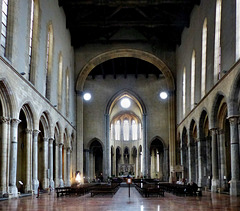
The Franciscan order had a church in Napoli, where Charles I of Anjou decided to build the "Maschio Angioino" (Castel Nuovo) in the late 13th century. They lost it and got compensated by the area, where San Lorenzo Maggiore is located now. Often rebuilt over the centuries the restorations started in the 19th century by demolishing the Baroque additions of the main interior.
The nave is about 80m long.
Napoli - Duomo di Napoli
| |
|
Napoli is the regional capital of Campania and the third-largest city of Italy. Its metropolitan area has a population of more than 3 million.
Founded by Greek settlers before 900 BC, Napoli was an important part of Magna Graecia and played a major role in the merging of Greek and Roman society.
Following the decline of the Western Roman Empire Napoli was shortly ruled by the Ostrogoths. Byzantine troops captured the city in 536m but after the Byzantine exarchate Ravenna fell a Duchy of Naples was created. Over centuries the Duchy´s relations to Rome or Byzanz were hard-fought. In 836 Napoli could repel a siege of Lombard troops with the help of the Saracens, what did not prevent Muhammad I Abu 'l-Abbas in the 850s loot Napoli. In the 11th century, the Duchy hired Norman mercenaries and about 1140 it came under Norman control under Roger II, then King of Sicily.
In 1228 Emperor Frederick II founded the first university in Europe here, making Napoli the intellectual centre of the kingdom. The conflict between the House of Hohenstaufen and the Papacy led in 1266 to Pope Innocent IV crowning the Angevin duke Charles I King of Sicily. Charles officially moved the capital from Palermo to Napoli.
In 1282 after the "Sicilian Vespers", a successful rebellion on the island of Sicily against the rule of King Charles I, the Kingdom of Sicily was divided into two. The Angevin Kingdom of Naples included the southern part of the Italian peninsula, while the island of Sicily became the Aragonese Kingdom of Sicily.
By the 17th century, Naples had become Europe's second-largest city – second only to Paris – with around 250000 inhabitants.
The present cathedral stands on the foundations of two early Christian basilicas. One of these dates back to the first decades of the 4th century it was partially preserved. The cathedral was commissioned by King Charles I of Anjou. Construction continued during the reign of his successor, Charles II (1285-1309) and was completed in the early 14th century under Robert of Anjou.
Over the centuries the cathedral was repeatedly expanded and changed in different styles. The facade and the campanile collapsed during the 1349-earthquake. They were rebuilt in the 15th century, but in 1456, another earthquake caused damage to the nave. A crypt for the remains of Saint Gennaro was built around 1500. The apse was badly damaged in the earthquake of 1732 and got rebuilt in Baroque style.
Jump to top
RSS feed- Latest items - Subscribe to the latest items added to this album
- ipernity © 2007-2026
- Help & Contact
|
Club news
|
About ipernity
|
History |
ipernity Club & Prices |
Guide of good conduct
Donate | Group guidelines | Privacy policy | Terms of use | Statutes | In memoria -
Facebook
X
