


Exotism and Churches

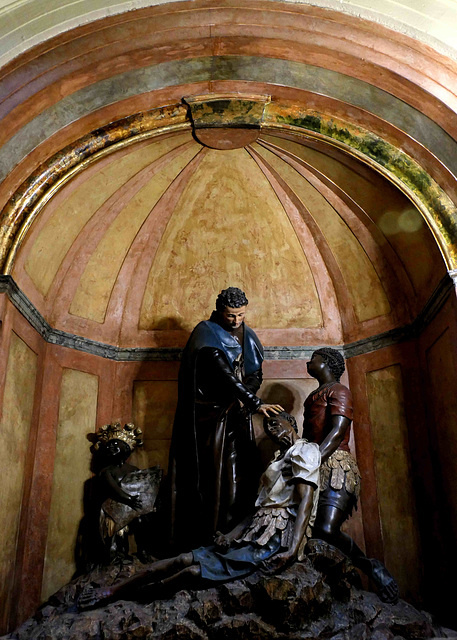

Málaga - Santa Iglesia Catedral Basílica de la Encarnación
Málaga's history spans around 2,800 years, making it one of the oldest continuously inhabited cities in Western Europe. The city was founded around the 8th century BC by seafaring Phoenicians, who called the city Malaka.
From the 6th century BC, the city was under the hegemony of ancient Carthage and from the Second Punic War (218 BC) under Roman rule. The city experienced an economic boom thanks to the production of garum.
The Migration Period meant eventful years for Málaga. After the Vandals and the Alans, Visigoths and Eastern Romans fought for control. In 571, the city was briefly occupied by troops of the Visigothic king Leovigild, but it was not until around 616 that the Eastern Romans finally handed the city over to the Visigoths.
The Moors conquered Málaga in 711 and the city gained importance in the 11th century when the Hammudids established one of their residences here. In 1053, the King of Granada had the last Hammudid caliph poisoned and conquered the city. After the conquest by the Catholic Monarchs in the course of the Reconquista in 1487, "reforms" began to transform the city into a Christian settlement. In Muslim times, the Jewish quarter was located in the eastern part of the city. In the 11th century, the city took in numerous Jews who had fled from the intolerant Berbers in Córdoba. In the middle of the 11th century, around 200 Jews lived in Málaga out of a population of around 20,000. After the city was conquered by Castile in 1487, all of Malaga's Jews were taken prisoner. Around 1490 it was decided that the city should be repopulated by Christians. Jews and Muslims had to leave Málaga within 15 days.
The Cathedral of Málaga was built by the Christian conquerors from 1528 over a mosque.
As a result of the 254-year construction phase up to 1782, the church consists of a mixture of different styles. The Renaissance style is predominant, but it also has Gothic, Baroque and Neoclassical elements. To defray the enormous expenses of the work, the Crown imposed a tax on the ships that called in Málaga.
This group is labelled
"Saint Turibius of Mogrovejo, Archbishop of Lima headling a sick Indian"
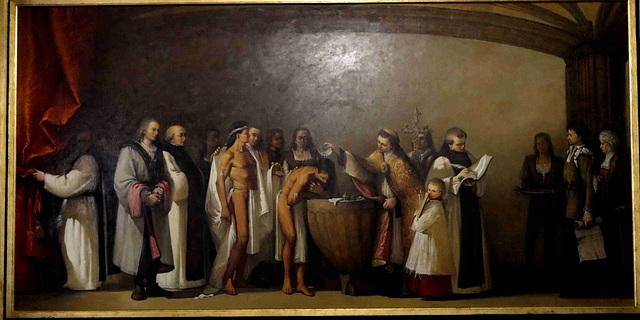
Guadalupe - Real Monasterio de Santa María de Guadalupe
The Royal Monastery of St. Mary of Guadalupe towers over the small town.
The surrounding remote areas were uninhabited and remained largely untouched by the great events of Iberian history. But around 1300, a shepherd discovered an image of the Madonna here, which soon became the subject of numerous legends. The image is said to have been sent to Seville by Pope Gregory the Great around the year 590 and hidden here after the Moors came to power.
After its discovery, several hermitages were built, but soon after the victorious Battle of Salado King Alfonso XI donated the construction of a church and a monastery, which experienced an enormous boom after the discovery of America - numerous places, islands etc. in the Spanish colonial empire were given the name Guadalupe.
Since the construction of the first sanctuary, Guadalupe became the most important pilgrimage center in the Iberian Peninsula after Santiago de Compostela
Colonialism and missionary work went hand in hand and enriched the monastery.
Jump to top
RSS feed- Latest items - Subscribe to the latest items added to this album
- ipernity © 2007-2026
- Help & Contact
|
Club news
|
About ipernity
|
History |
ipernity Club & Prices |
Guide of good conduct
Donate | Group guidelines | Privacy policy | Terms of use | Statutes | In memoria -
Facebook
X
