


Lithuania, Litauen, Lietuva

All photos were taken in Lithuania.
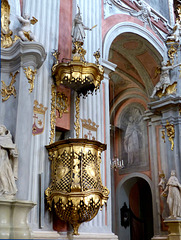
Vilnius - Šv. Teresės bažnyčia
| |
|
|
Vilnius is the capital and largest city of Lithuania, with a population of about 600.000. Before WWII, Vilnius was one of the largest Jewish centers in Europe which led to the nickname "the Jerusalem of the North".
The city was first mentioned in written sources as Vilna in 1323 as the capital city of the Grand Duchy of Lithuania. Gediminas, Grand Duke of Lithuania, built a wooden castle on a hill in the city. The city became more widely known after he wrote a circular letter of invitation to Germans and Jews to the principal Hansa towns in 1325, offering free access into his domains to men of every order and profession. At this time Vilnius was facing raids of the Teutonic Order, although they never captured the castle, large portions of the town were burned down between 1365 and 1383. English king Henry IV spent the full year of 1390 supporting the unsuccessful siege of Vilnius by Teutonic Knights with his 300 fellow knights.
Between 1503 and 1522, the city was surrounded by a city wall to protect it from Crimean Tatar attacks. The city reached the peak of its development during the reign of Sigismund II. Augustus, Grand Duke of Lithuania and King of Poland, settled here in 1544. After the foundation of the Polish-Lithuanian Commonwealth in 1569, the city experienced a further boom, as Stephen Báthory, King of Poland and Grand Duke of Lithuania, founded the Jesuit College of Vilnius (= Vilnius University) in 1579. The university soon developed into one of the most important scientific and cultural centers in the Grand Duchy of Lithuania.
In 1621, the Carmelites began building a monastery at Medininkai Gate (see background at right).
Behind the city walls, the Carmelites operated a brickyard in the 17th century. With the support of the Chancellor of the Grand Duchy of Lithuania, construction of the new brick church of St. Teresa began in 1633.
The construction was completed in 1650. In 1760 the church burned down and was rebuilt. After the fire, a vaulted roof was covered and a bell tower was built. In 1763-1765 the interior was decorated with sculptures and frescoes in rococo style.
During the war of 1812, French soldiers destroyed the interior of the church. After the war the church was restored. In 1844 the tsarist government closed the monastery. Almost a hundred years later the Carmelites returned to Vilnius, but after the Second World War the monastery was closed again and the activities of the Carmelites in Vilnius ceased.
In the second half of the 19th century the church was partially restored. From 1861 to 1915 it housed a girls' school. In 1927-1929 the restoration of the church took place. In 1971-1976 the interior of the church was restored.
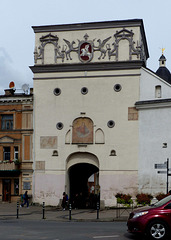
Vilnius - Aušros vartai
| |
|
|
Vilnius is the capital and largest city of Lithuania, with a population of about 600.000. Before WWII, Vilnius was one of the largest Jewish centers in Europe which led to the nickname "the Jerusalem of the North".
The city was first mentioned in written sources as Vilna in 1323 as the capital city of the Grand Duchy of Lithuania. Gediminas, Grand Duke of Lithuania, built a wooden castle on a hill in the city. The city became more widely known after he wrote a circular letter of invitation to Germans and Jews to the principal Hansa towns in 1325, offering free access into his domains to men of every order and profession. At this time Vilnius was facing raids of the Teutonic Order, although they never captured the castle, large portions of the town were burned down between 1365 and 1383. English king Henry IV spent the full year of 1390 supporting the unsuccessful siege of Vilnius by Teutonic Knights with his 300 fellow knights.
Between 1503 and 1522, the city was surrounded by a city wall to protect it from Crimean Tatar attacks. The city reached the peak of its development during the reign of Sigismund II. Augustus, Grand Duke of Lithuania and King of Poland, settled here in 1544. After the foundation of the Polish-Lithuanian Commonwealth in 1569, the city experienced a further boom, as Stephen Báthory, King of Poland and Grand Duke of Lithuania, founded the Jesuit College of Vilnius (= Vilnius University) in 1579. The university soon developed into one of the most important scientific and cultural centers in the Grand Duchy of Lithuania.
The name "Gate of Dawn" or this city gate appeared in the early 20th century. Sounds romantic, but since the gate does not face east, is questionary. Other names are "Pointed Gate" and "Medininkai Gate" as the road from the gate led to the village of Medininkai, 30 kilometers from Vilnius.
At the beginning of the 16th century, Vilnius was fortified with a city wall by a joint decision of the Bishop of Vilnius and the City Council. As early as October 1503, the bishop was able to solemnly inaugurate the wall, which encompassed the entire city.
The gate itself was built in Gothic style from 1503 to 1522. The exterior of the gate was decorated in the upper part with a relief showing the coat of arms of the Grand Duchy of Lithuania, the so-called Vytis. This is a white equestrian figure on a dark background, carrying a shield on which is depicted a cross with two crossbars.
Seen here is the southern side of the gate. Why the gate developed into a major pilgrim spot can be seen from the other side.
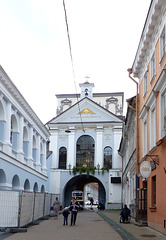
Vilnius - Aušros Vartų Dievo Motina
| |
|
Vilnius is the capital and largest city of Lithuania, with a population of about 600.000. Before WWII, Vilnius was one of the largest Jewish centers in Europe which led to the nickname "the Jerusalem of the North".
The city was first mentioned in written sources as Vilna in 1323 as the capital city of the Grand Duchy of Lithuania. Gediminas, Grand Duke of Lithuania, built a wooden castle on a hill in the city. The city became more widely known after he wrote a circular letter of invitation to Germans and Jews to the principal Hansa towns in 1325, offering free access into his domains to men of every order and profession. At this time Vilnius was facing raids of the Teutonic Order, although they never captured the castle, large portions of the town were burned down between 1365 and 1383. English king Henry IV spent the full year of 1390 supporting the unsuccessful siege of Vilnius by Teutonic Knights with his 300 fellow knights.
Between 1503 and 1522, the city was surrounded by a city wall to protect it from Crimean Tatar attacks. The city reached the peak of its development during the reign of Sigismund II. Augustus, Grand Duke of Lithuania and King of Poland, settled here in 1544. After the foundation of the Polish-Lithuanian Commonwealth in 1569, the city experienced a further boom, as Stephen Báthory, King of Poland and Grand Duke of Lithuania, founded the Jesuit College of Vilnius (= Vilnius University) in 1579. The university soon developed into one of the most important scientific and cultural centers in the Grand Duchy of Lithuania.
Information about the city gate itself can be found in the previous upload.
This is the gate seen from the north side and here you can see why the gate has become an important pilgrimage site.
It houses a miraculous painting called Aušros Vartų Dievo Motina (Our Lady of the Gate of Dawn).
In the middle of the 17th century, the Carmelites built the Church of St. Teresa and their monastery near the Gate of Dawn, and the city government entrusted the Carmelites with the maintenance of the gate and the painting. In 1671, the monks built a wooden Marian chapel next to the gate tower. At that time the painting was already an object of public veneration.
In 1715 the wooden chapel burned down, but the painting was saved. In 1720 the present brick chapel was consecrated.
The origin of the painting is not known. With silver covering the entire painting, except for the face and hands, it was very hard to determine in what period the painting was created. In 1927, the silver cover was removed for the first time in decades. The painting was analyzed and restored. Based on the new data gathered during the restoration art historians concluded that the painting was completed around 1630–50. In the 1990s one of its planks was dated based on its tree rings. The scientists concluded that the oak grew from 1434–to 1620.
I did not take a photograph of the icon, but you can see it behind the window.
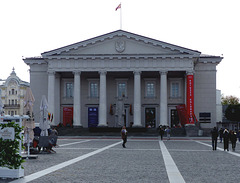
Vilnius - Rotušė
| |
|
Vilnius is the capital and largest city of Lithuania, with a population of about 600.000. Before WWII, Vilnius was one of the largest Jewish centers in Europe which led to the nickname "the Jerusalem of the North".
The city was first mentioned in written sources as Vilna in 1323 as the capital city of the Grand Duchy of Lithuania. Gediminas, Grand Duke of Lithuania, built a wooden castle on a hill in the city. The city became more widely known after he wrote a circular letter of invitation to Germans and Jews to the principal Hansa towns in 1325, offering free access into his domains to men of every order and profession. At this time Vilnius was facing raids of the Teutonic Order, although they never captured the castle, large portions of the town were burned down between 1365 and 1383. English king Henry IV spent the full year of 1390 supporting the unsuccessful siege of Vilnius by Teutonic Knights with his 300 fellow knights.
Between 1503 and 1522, the city was surrounded by a city wall to protect it from Crimean Tatar attacks. The city reached the peak of its development during the reign of Sigismund II. Augustus, Grand Duke of Lithuania and King of Poland, settled here in 1544. After the foundation of the Polish-Lithuanian Commonwealth in 1569, the city experienced a further boom, as Stephen Báthory, King of Poland and Grand Duke of Lithuania, founded the Jesuit College of Vilnius (= Vilnius University) in 1579. The university soon developed into one of the most important scientific and cultural centers in the Grand Duchy of Lithuania.
The town hall in Vilnius was mentioned for the first time in 1432. At that time it was a Gothic-style building, and has since been reconstructed many times. The current town hall was rebuilt in neoclassical style according to the design by Laurynas Gucevičius in 1799. It has remained unchanged since then. Nowadays it is used for representational purposes
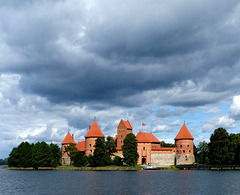
Trakai - salos pilis
| |
|
|
The town surrounded by lakes developed in the 13th century. According to a legend, Grand Duke Gediminas discovered a beautiful lake-surrounded place not far from Kernavė, then the capital of the Grand Duchy and decided to build a castle in the location. The name of Trakai was first mentioned in Teutonic Knights chronicles in 1337.
Later a castle was built on an island in Lake Galvė. This and a neighboring castle in the town suffered from attacks of the Teutonic Knights during which both wooden castles were raided by the Teutonic Knights several times in a row.
Despite this Trakai became a political and administrative centre of the Duchy. Construction of brick castles was finished and a church was built. In 1409, the town was granted city rights.
After the Grand Duchy of Lithuania joined the Kingdom of Poland in 1569, the castles remained a royal property, but the town's importance declined. In 1477, the castle on the lake was a meeting place of King Casimir IV with Venetian envoys. After that the castle became a prison for political prisoners. The castle then was refurbished by Sigismund I the Old, who set up his summer residence there; however, after his death in 1548 the castle gradually fell into disrepair.
During the wars between Russia and Poland between 1654 and 1667, the town was plundered and burnt. In the aftermath of the war with the Tsardom of Russia in 1655, both castles were demolished and the town's prosperity ended. During the Great Northern War (1700–1721) Trakai was plundered again, as famine and plague swept the country.
After the Partitions of Poland in 1795, the area was annexed by the Russian Empire. After WW I, the area became part of the Republic of Poland. In 1929, the Polish authorities ordered the reconstruction and restoration of the Trakai Island Castle. The works were almost complete in 1939, when the Invasion of Poland started and the area was soon annexed by the Soviet Union, then by Nazi Germany. During the war, more than 5,000 Jews from the Trakai region were murdered by the Nazis. In 1944. After WW II it was again annexed by the Soviet Union and made part of the Lithuanian SSR. The reconstruction was completed on the 1990s and by now is a major tourist attraction.
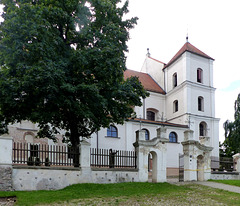
Trakai - Švč. Mergelės Marijos Apsilankymo bazilik…
| |
|
|
The town surrounded by many lakes developed in the 13th century. According to a legend, Grand Duke Gediminas discovered a beautiful lake-surrounded place not far from Kernavė, then the capital of the Grand Duchy and decided to build a castle in the location. The name of Trakai was first mentioned in Teutonic Knights chronicles in 1337.
Later a castle was built on an island in Lake Galvė. This and a neighboring castle in the town suffered from attacks of the Teutonic Knights during which both wooden castles were raided by the Teutonic Knights several times in a row.
Despite this Trakai became a political and administrative centre of the Duchy. Construction of brick castles was finished and a church was built. In 1409, the town was granted city rights.
The Church of the Visitation of the Virgin Mary was founded in 1409 by the Lithuanian Grand Duke Vytautas the Great after the construction of the Trakai moated castle. During the Russian-Polish War of 1654-1667 the church was damaged and subsequently restored. Around 1719 it was baroqueized.
The first church was built on a rectangular ground plan in Gothic style. Unfortunately, the church was locked.
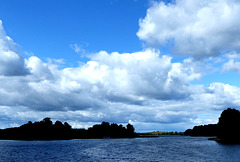
Lake Galvė
| |
|
|
The Trakai District has nearly 200 lakes. Many of them border the town of Trakai itself. It seems as if water reigns in the area, and land obediently gives way to it. The Galvė lake one of the largest in the Trakai region and one of the deepest in Lithuania. Its waters are dotted with 21 islands.
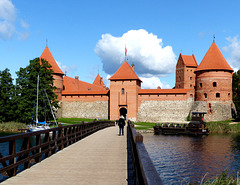
Trakai - salos pilis
| |
|
|
|
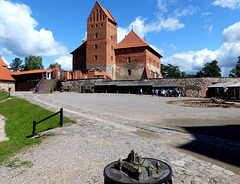
The town surrounded by many lakes developed in the 13th century. According to a legend, Grand Duke Gediminas discovered a beautiful lake-surrounded place not far from Kernavė, then the capital of the Grand Duchy, and decided to build a castle in the location. The name of Trakai was first mentioned in Teutonic Knights chronicles in 1337.
Later a castle was built on an island in Lake Galvė. This and a neighboring castle in the town suffered from attacks of the Teutonic Knights during which both wooden castles were raided by the Teutonic Knights several times in a row.
Despite this Trakai became a political and administrative centre of the Duchy. The construction of brick castles was finished and a church was built. In 1409, the town was granted city rights.
After the Grand Duchy of Lithuania joined the Kingdom of Poland in 1569, the castles remained royal property, but the town's importance declined. In 1477, the castle on the lake was a meeting place of King Casimir IV with Venetian envoys. After that, the castle became a prison. The castle then was refurbished by Sigismund I the Old, who set up his summer residence there; however, after his death in 1548 the castle gradually fell into disrepair.
During the wars between Russia and Poland between 1654 and 1667, the town was plundered and burnt. In the aftermath of the war with the Tsardom of Russia in 1655, both castles were demolished and the town's prosperity ended.
After WW I, the area became part of the Republic of Poland. In 1929, the Polish authorities ordered the reconstruction and restoration of the Trakai Island Castle. The works were almost complete in 1939 when the Invasion of Poland started and the area was soon annexed by the Soviet Union, then by Nazi Germany. During the war, more than 5,000 Jews from the Trakai region were murdered by the Nazis. In 1944. After WW II it was again annexed by the Soviet Union and made part of the Lithuanian SSR. The reconstruction was completed in the 1990s and by now is a major tourist attraction.
Trakai - salos pilis
| |
|
|
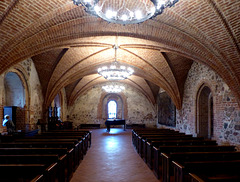
The town surrounded by many lakes developed in the 13th century. According to a legend, Grand Duke Gediminas discovered a beautiful lake-surrounded place not far from Kernavė, then the capital of the Grand Duchy, and decided to build a castle in the location. The name of Trakai was first mentioned in Teutonic Knights chronicles in 1337.
Later a castle was built on an island in Lake Galvė. This and a neighboring castle in the town suffered from attacks of the Teutonic Knights during which both wooden castles were raided by the Teutonic Knights several times in a row.
Despite this Trakai became a political and administrative centre of the Duchy. The construction of brick castles was finished and a church was built. In 1409, the town was granted city rights.
After the Grand Duchy of Lithuania joined the Kingdom of Poland in 1569, the castles remained royal property, but the town's importance declined. In 1477, the castle on the lake was a meeting place of King Casimir IV with Venetian envoys. After that, the castle became a prison. The castle then was refurbished by Sigismund I the Old, who set up his summer residence there; however, after his death in 1548 the castle gradually fell into disrepair.
During the wars between Russia and Poland between 1654 and 1667, the town was plundered and burnt. In the aftermath of the war with the Tsardom of Russia in 1655, both castles were demolished and the town's prosperity ended.
After WW I, the area became part of the Republic of Poland. In 1929, the Polish authorities ordered the reconstruction and restoration of the Trakai Island Castle. The works were almost complete in 1939 when the Invasion of Poland started and the area was soon annexed by the Soviet Union, then by Nazi Germany. During the war, more than 5,000 Jews from the Trakai region were murdered by the Nazis. In 1944. After WW II it was again annexed by the Soviet Union and made part of the Lithuanian SSR. The reconstruction was completed in the 1990s and by now is a major tourist attraction.
Trakai - salos pilis
| |
|
|
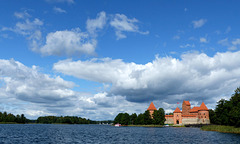
The town surrounded by many lakes developed in the 13th century. According to a legend, Grand Duke Gediminas discovered a beautiful lake-surrounded place not far from Kernavė, then the capital of the Grand Duchy, and decided to build a castle in the location. The name of Trakai was first mentioned in Teutonic Knights chronicles in 1337.
Later a castle was built on an island in Lake Galvė. This and a neighboring castle in the town suffered from attacks of the Teutonic Knights during which both wooden castles were raided by the Teutonic Knights several times in a row.
Despite this Trakai became a political and administrative centre of the Duchy. The construction of brick castles was finished and a church was built. In 1409, the town was granted city rights.
After the Grand Duchy of Lithuania joined the Kingdom of Poland in 1569, the castles remained royal property, but the town's importance declined. In 1477, the castle on the lake was a meeting place of King Casimir IV with Venetian envoys. After that, the castle became a prison. The castle then was refurbished by Sigismund I the Old, who set up his summer residence there; however, after his death in 1548 the castle gradually fell into disrepair.
During the wars between Russia and Poland between 1654 and 1667, the town was plundered and burnt. In the aftermath of the war with the Tsardom of Russia in 1655, both castles were demolished and the town's prosperity ended.
After WW I, the area became part of the Republic of Poland. In 1929, the Polish authorities ordered the reconstruction and restoration of the Trakai Island Castle. The works were almost complete in 1939 when the Invasion of Poland started and the area was soon annexed by the Soviet Union, then by Nazi Germany. During the war, more than 5,000 Jews from the Trakai region were murdered by the Nazis. In 1944. After WW II it was again annexed by the Soviet Union and made part of the Lithuanian SSR. The reconstruction was completed in the 1990s and by now is a major tourist attraction.
Today the castle is used as a museum.
Trakai - salos pilis
| |
|
|
The town surrounded by many lakes developed in the 13th century. According to a legend, Grand Duke Gediminas discovered a beautiful lake-surrounded place not far from Kernavė, then the capital of the Grand Duchy, and decided to build a castle in the location. The name of Trakai was first mentioned in Teutonic Knights chronicles in 1337.
Later a castle was built on an island in Lake Galvė. This and a neighboring castle in the town suffered from attacks of the Teutonic Knights during which both wooden castles were raided by the Teutonic Knights several times in a row.
Despite this Trakai became a political and administrative centre of the Duchy. The construction of brick castles was finished and a church was built. In 1409, the town was granted city rights.
After the Grand Duchy of Lithuania joined the Kingdom of Poland in 1569, the castles remained royal property, but the town's importance declined. In 1477, the castle on the lake was a meeting place of King Casimir IV with Venetian envoys. After that, the castle became a prison. The castle then was refurbished by Sigismund I the Old, who set up his summer residence there; however, after his death in 1548 the castle gradually fell into disrepair.
During the wars between Russia and Poland between 1654 and 1667, the town was plundered and burnt. In the aftermath of the war with the Tsardom of Russia in 1655, both castles were demolished and the town's prosperity ended.
After WW I, the area became part of the Republic of Poland. In 1929, the Polish authorities ordered the reconstruction and restoration of the Trakai Island Castle. The works were almost complete in 1939 when the Invasion of Poland started and the area was soon annexed by the Soviet Union, then by Nazi Germany. During the war, more than 5,000 Jews from the Trakai region were murdered by the Nazis. In 1944. After WW II it was again annexed by the Soviet Union and made part of the Lithuanian SSR. The reconstruction was completed in the 1990s and by now is a major tourist attraction.
Today the castle is used as a museum.
Kaunas - Kristaus Prisikėlimo bazilika
| |
|
|
A settlement existed at the confluence of two large rivers, for many centuries, before Kaunas was first mentioned in written sources in 1361. At that time a brick castle was constructed. Only a year later the castle was captured after a siege and destroyed by the Teutonic Order. It was one of the most important victories of the Teutonic Knights in the 14th in Lithuania. The castle was rebuilt at the beginning of the 15th century.
In 1408 Kaunas was granted city rights by Vytautas the Great. Kaunas began to gain prominence since it was at an intersection of trade routes and a river port. In 1441 Kaunas joined the Hanseatic League. By the 16th century, Kaunas had a public school and a hospital and was one of the best-formed towns in Lithuania.
In 1665, the Russian army attacked the city, and in 1701 the city was occupied by the Swedish Army. Fires destroyed parts of the city in 1731 and 1732. After the final partition of the Polish–Lithuanian state in 1795, the city was taken over by the Russian Empire. During the French invasion of Russia in 1812, Napoleon´s armee passed through twice, devastating the city both times.
When In 1862, a railway connecting the Russian Empire and Imperial Germany was built, Kaunas was a significant railway hub.
As WWII began, about 30,000 Jews were living in Kaunas, comprising about 25% of the city's population. Only very few survived the war.
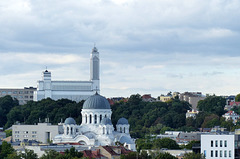
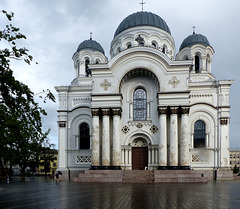
Michael the Archangel's Church is seen in the foreground. In the backdrop on a hill is the Christ's Resurrection Church. The church, consecrated in 2004, is the largest basilical church in the Baltic States.
After Lithuania regained independence in 1918, the idea of this new church arose. Kaunas was chosen as its site, since the historic capital Vilnius, was part of Poland between 1920 and 1939. A design competition was held in 1928 and the proposal drawn up by Karolis Reisonas was chosen for the church. In 1933 the final design was approved.
Funds for the construction were raised in Lithuania and abroad. The construction underwent several setbacks, and at times was suspended for lack of funding.
In 1938 the walls and roof of the church were completed, and by 1940 it was largely finished. Further work was suspended during WW II. The Nazi occupational authorities used the church as a storeroom; during the Soviet occupation of Lithuania, the building was confiscated by the government. In 1952 Stalin decreed that it be used as a factory; the cross atop the tower was demolished.
The church structure was used as a radio factory until the Lithuanian national awakening in 1988. Soon thereafter, control of the church was returned to a newly founded council. Funding for completing the church was provided by both private sources and the Lithuanian government.
Kaunas - Šv. arkangelo Mykolo bažnyčia
| |
|
|
|
A settlement existed at the confluence of two large rivers, for many centuries, before Kaunas was first mentioned in written sources in 1361. At that time a brick castle was constructed. Only a year later the castle was captured after a siege and destroyed by the Teutonic Order. It was one of the most important victories of the Teutonic Knights in the 14th in Lithuania. The castle was rebuilt at the beginning of the 15th century.
In 1408 Kaunas was granted city rights by Vytautas the Great. Kaunas began to gain prominence since it was at an intersection of trade routes and a river port. In 1441 Kaunas joined the Hanseatic League. By the 16th century, Kaunas had a public school and a hospital and was one of the best-formed towns in Lithuania.
In 1665, the Russian army attacked the city, and in 1701 the city was occupied by the Swedish Army. Fires destroyed parts of the city in 1731 and 1732. After the final partition of the Polish–Lithuanian state in 1795, the city was taken over by the Russian Empire. During the French invasion of Russia in 1812, Napoleon´s armee passed through twice, devastating the city both times.
When In 1862, a railway connecting the Russian Empire and Imperial Germany was built, Kaunas was a significant railway hub.
As WWII began, about 30,000 Jews were living in Kaunas, comprising about 25% of the city's population. Only very few survived the war.
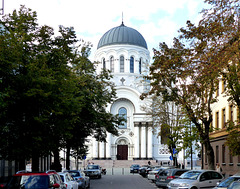
St. Michael the Archangel's Church (aka Garrison Church) was built between 1891 and 1895 when Kaunas was part of the Russian empire, for the use of the Russian Orthodox soldiers of Kaunas Fortress.
The construction of "garrison" Orthodox churches by the Russian government started after the suppression of the January Uprising of 1831.
The church was designed as an Orthodox cathedral to fit 2,000 worshipers by K. H. Lymarenko. The cathedral was completed in four years and was inaugurated in 1895.
After the fall of the Kaunas Fortress during WW I, the Germans cut down the church bells and transported them to Germany.
In the interwar period, the cathedral became a Roman Catholic church of the Lithuanian garrison of Kaunas. During the Soviet Union, it was used as an art gallery. Today it serves again as a Roman Catholic church.
Kaunas - Šv. arkangelo Mykolo bažnyčia
| |
|
|
A settlement existed at the confluence of two large rivers, for many centuries, before Kaunas was first mentioned in written sources in 1361. At that time a brick castle was constructed. Only a year later the castle was captured after a siege and destroyed by the Teutonic Order. It was one of the most important victories of the Teutonic Knights in the 14th in Lithuania. The castle was rebuilt at the beginning of the 15th century.
In 1408 Kaunas was granted city rights by Vytautas the Great. Kaunas began to gain prominence since it was at an intersection of trade routes and a river port. In 1441 Kaunas joined the Hanseatic League. By the 16th century, Kaunas had a public school and a hospital and was one of the best-formed towns in Lithuania.
In 1665, the Russian army attacked the city, and in 1701 the city was occupied by the Swedish Army. Fires destroyed parts of the city in 1731 and 1732. After the final partition of the Polish–Lithuanian state in 1795, the city was taken over by the Russian Empire. During the French invasion of Russia in 1812, Napoleon´s armee passed through twice, devastating the city both times.
When In 1862, a railway connecting the Russian Empire and Imperial Germany was built, Kaunas was a significant railway hub.
As WWII began, about 30,000 Jews were living in Kaunas, comprising about 25% of the city's population. Only very few survived the war.
St. Michael the Archangel's Church (aka Garrison Church) was built between 1891 and 1895 when Kaunas was part of the Russian empire, for the use of the Russian Orthodox soldiers of Kaunas Fortress.
The construction of "garrison" Orthodox churches by the Russian government started after the suppression of the January Uprising of 1831.
The church was designed as an Orthodox cathedral to fit 2,000 worshipers by K. H. Lymarenko. The cathedral was completed in four years and was inaugurated in 1895.
After the fall of the Kaunas Fortress during WW I, the Germans cut down the church bells and transported them to Germany.
In the interwar period, the cathedral became a Roman Catholic church of the Lithuanian garrison of Kaunas. During the Soviet Union, it was used as an art gallery. Today it serves again as a Roman Catholic church.
The Laisvės alėja, the main pedestrian street in Kaunas ends/starts at the church.
Kaunas - Fire Station
| |
|
A settlement existed at the confluence of two large rivers, for many centuries, before Kaunas was first mentioned in written sources in 1361. At that time a brick castle was constructed. Only a year later the castle was captured after a siege and destroyed by the Teutonic Order. It was one of the most important victories of the Teutonic Knights in the 14th in Lithuania. The castle was rebuilt at the beginning of the 15th century.
In 1408 Kaunas was granted city rights by Vytautas the Great. Kaunas began to gain prominence since it was at an intersection of trade routes and a river port. In 1441 Kaunas joined the Hanseatic League. By the 16th century, Kaunas had a public school and a hospital and was one of the best-formed towns in Lithuania.
In 1665, the Russian army attacked the city, and in 1701 the city was occupied by the Swedish Army. Fires destroyed parts of the city in 1731 and 1732. After the final partition of the Polish–Lithuanian state in 1795, the city was taken over by the Russian Empire. During the French invasion of Russia in 1812, Napoleon´s armee passed through twice, devastating the city both times.
When In 1862, a railway connecting the Russian Empire and Imperial Germany was built, Kaunas was a significant railway hub.
As WWII began, about 30,000 Jews were living in Kaunas, comprising about 25% of the city's population. Only very few survived the war.
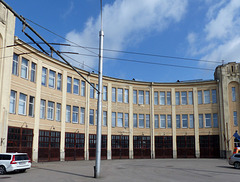
The firefighters of the 1. Fire Brigade, stationed here, are always on alert. 24/7.
Kaunas - Vending Machine
| |
|
A settlement existed at the confluence of two large rivers, for many centuries, before Kaunas was first mentioned in written sources in 1361. At that time a brick castle was constructed. Only a year later the castle was captured after a siege and destroyed by the Teutonic Order. It was one of the most important victories of the Teutonic Knights in the 14th in Lithuania. The castle was rebuilt at the beginning of the 15th century.
In 1408 Kaunas was granted city rights by Vytautas the Great. Kaunas began to gain prominence since it was at an intersection of trade routes and a river port. In 1441 Kaunas joined the Hanseatic League. By the 16th century, Kaunas had a public school and a hospital and was one of the best-formed towns in Lithuania.
In 1665, the Russian army attacked the city, and in 1701 the city was occupied by the Swedish Army. Fires destroyed parts of the city in 1731 and 1732. After the final partition of the Polish–Lithuanian state in 1795, the city was taken over by the Russian Empire. During the French invasion of Russia in 1812, Napoleon´s armee passed through twice, devastating the city both times.
When In 1862, a railway connecting the Russian Empire and Imperial Germany was built, Kaunas was a significant railway hub.
As WWII began, about 30,000 Jews were living in Kaunas, comprising about 25% of the city's population. Only very few survived the war.
-
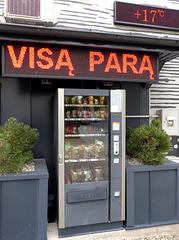
Vending machines are very popular in the Baltic States
Kaunas
| |
|
A settlement existed at the confluence of two large rivers, for many centuries, before Kaunas was first mentioned in written sources in 1361. At that time a brick castle was constructed. Only a year later the castle was captured after a siege and destroyed by the Teutonic Order. It was one of the most important victories of the Teutonic Knights in the 14th in Lithuania. The castle was rebuilt at the beginning of the 15th century.
In 1408 Kaunas was granted city rights by Vytautas the Great. Kaunas began to gain prominence since it was at an intersection of trade routes and a river port. In 1441 Kaunas joined the Hanseatic League. By the 16th century, Kaunas had a public school and a hospital and was one of the best-formed towns in Lithuania.
In 1665, the Russian army attacked the city, and in 1701 the city was occupied by the Swedish Army. Fires destroyed parts of the city in 1731 and 1732. After the final partition of the Polish–Lithuanian state in 1795, the city was taken over by the Russian Empire. During the French invasion of Russia in 1812, Napoleon´s armee passed through twice, devastating the city both times.
When In 1862, a railway connecting the Russian Empire and Imperial Germany was built, Kaunas was a significant railway hub.
As WWII began, about 30,000 Jews were living in Kaunas, comprising about 25% of the city's population. Only very few survived the war.
-
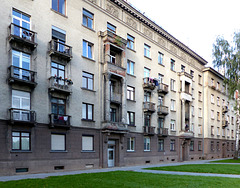
The large residential building, erected after WWII and decorated with the Soviet star is crumbling.
Kaunas - Šv. Pranciškaus Ksavero bažnyčia
| |
|
|
A settlement existed at the confluence of two large rivers, for many centuries, before Kaunas was first mentioned in written sources in 1361. At that time a brick castle was constructed. Only a year later the castle was captured after a siege and destroyed by the Teutonic Order. It was one of the most important victories of the Teutonic Knights in the 14th in Lithuania. The castle was rebuilt at the beginning of the 15th century.
In 1408 Kaunas was granted city rights by Vytautas the Great. Kaunas began to gain prominence since it was at an intersection of trade routes and a river port. In 1441 Kaunas joined the Hanseatic League. By the 16th century, Kaunas had a public school and a hospital and was one of the best-formed towns in Lithuania.
In 1665, the Russian army attacked the city, and in 1701 the city was occupied by the Swedish Army. Fires destroyed parts of the city in 1731 and 1732. After the final partition of the Polish–Lithuanian state in 1795, the city was taken over by the Russian Empire. During the French invasion of Russia in 1812, Napoleon´s armee passed through twice, devastating the city both times.
When In 1862, a railway connecting the Russian Empire and Imperial Germany was built, Kaunas was a significant railway hub.
As WWII began, about 30,000 Jews were living in Kaunas, comprising about 25% of the city's population. Only very few survived the war.
-
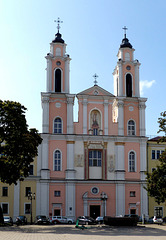
The church of St. Francis Xavier was built by Jesuits on the town hall square. The Jesuits opened their first residence in Kaunas in 1642 and founded the first four-grade school here in 1649. Construction of the church began in 1666 and it was consecrated in 1722.
The tsarist Russian government transferred the church to the Orthodox Church in 1824. In 1924 the church was again transferred to the Jesuits. After the occupation of Lithuania by the Soviet Union, the church was converted into a technical school, and the interior of the church was used as a gymnasium. The church was returned to the Jesuits in 1989, and a renovation of the church took place in 1992.
Jump to top
RSS feed- Latest items - Subscribe to the latest items added to this album
- ipernity © 2007-2026
- Help & Contact
|
Club news
|
About ipernity
|
History |
ipernity Club & Prices |
Guide of good conduct
Donate | Group guidelines | Privacy policy | Terms of use | Statutes | In memoria -
Facebook
X
