


Spain / Portugal / Gibraltar

An album that grew over the years
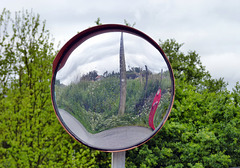
Rain - Approaching Caldas de Reis
| |
|
It rained the whole day. I walked from Pontevedra to Caldas de Reis. Here you see me in a magic, flattering mirror, wearing my red raincoat. I seem to be slender and willowy .
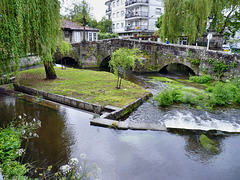
Caldas de Reis - Roman Bridge
| |
|
Caldas de Reis is known for it´s hot springs, that have cured people since thousands of years. The Romans called the settlement "Aquis Celenis" - and left this bridge.
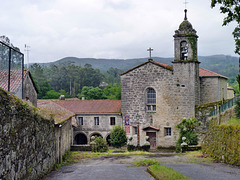
Padron - Herbón
| |
|
One of the popular dishes in Galicia is named "Pimentos de Padrón" and most of the pimentos (peppers) come from the village Herbon, next to Padron. In August there is even a "Festa do Pemento de Padrón" - in this monastery. Herbon not has only many Pimentos, but as well a high density of small but aggressive dogs.

Teo - The Bar
| |
|
This is the counter of the only bar (and shop) I found near to the "Alberge" in Teo. It´s a really nice one - and delicious, hot coffee is served there in small cups.
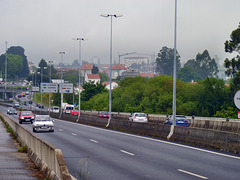
Santiago de Compostela - Cathedral
| |
|
Rain again. Somewhere in the outskirts of Santiago I had to change onto the N550, and so walked on the left side of the main road for some kilometers. Then I saw the cathedral the first time. On the horizont - in the middle of a Ferris-wheel.
Santiago de Compostela - Cathedral
| |
|
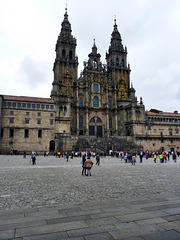
So - - finally - - I reached the Praza do Obradoiro just before noon, and saw the western, baroque facade of the Cathedral. I felt strange...
Fisterra
| |
|
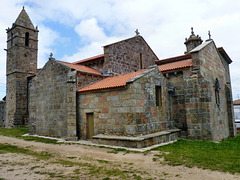
"Santa María das Areas" built on the way to the "Cabo Fisterra", today just outside the village Fisterra. The structure of the romanesque church is still visible, though over the centuries it got many "addons". Fisterra has had a "hopital" for the pilgrims in medieval times, and this may have been here, next to to church.
Fisterra
| |
|
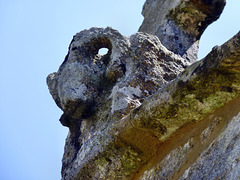
A ram dominated by a cross on the roof of "Santa María das Areas" in Fisterra, on the way to "Cabo Fisterra", the (medieval) end of the world. In northern Europe such rams are often connected to the pagan god "Thor". I am not sure about this in a celtic area during the 11th/ 12th century.
Olcoz - Streetlights
| |
|
|
|
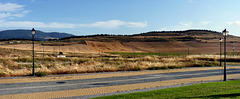
I had noticed already an abundance of new streelights in a couple of Spanish villages. But no village I walked through can beat Olcoz in the ratio streetlight per inhabitant, as the population is about 50 - and on this field alone are more than 30 lights.
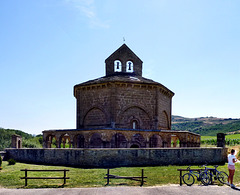
Saint Mary of Eunate
| |
|
|
|
Saint Mary of Eunate stands isolated, as it was not erected in or near a village, but in the middle of fields. It is surrounded by arches, that gave this place the name, as (according to the tourist office) "Eunate" means "one hundred doors" in Basque.
From here to Puente la Reina, where the "Camino Aragonés" / "Via Tolosana" joins the busy "Camino Francés" is only a short walk.
There is not much information about the origins of this wonderful, octogonal church. The floorplan of Saint Mary of Eunate is surely inspired by the "Church of the Holy Sepulchre of Jerusalem".
Such churches (eg Tomar, Estrella, Pisa..) are often connected to the Knights Templar, but there no proof, that they have ever been in this area. The earliest documented reference is from 1487 and just mentions the "Virgin of Eunate".
It is a spectacular church, that for sure has served the pilgrims in the early days.
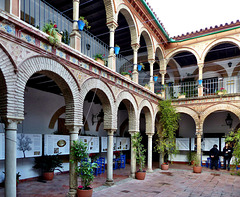
Córdoba - Convento de Santa Clara
| |
|
|
Córdoba shares its history with so many cities in Southern Spain. It was Carthaginian and Roman (from 260BC on), later it belonged to the Byzantine Empire for two decade, got looted by the Vandals, before Visigoths conquered it in 572. In 711 it was taken by the by the Umayyad army and became a provincial capital.
In 976 a mosque was built here atop of a Christian church erected by the Visigoths. After the Reconquista the mosque was coverted into a nunnery and a basilica was built.
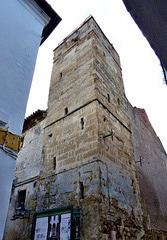
Córdoba - Convento de Santa Clara
| |
|
Córdoba shares its history with so many cities in Southern Spain. It was Carthaginian and Roman (from 260BC on), later it belonged to the Byzantine Empire for two decade, got looted by the Vandals, before Visigoths conquered it in 572. In 711 it was taken by the by the Umayyad army and became a provincial capital.
In 976 a mosque was built here atop of a Christian church erected by the Visigoths. After the Reconquista the mosque was coverted into a nunnery and a basilica was built. The Moorish minaret of the former mosque survived the times.
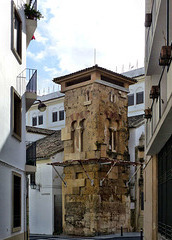
Córdoba - Minaret of San Juan
| |
|
|
Córdoba shares its history with so many cities in Southern Spain. It was Carthaginian and Roman (from 260BC on), later it belonged to the Byzantine Empire for two decade, got looted by the Vandals, before Visigoths conquered it in 572. In 711 it was taken by the by the Umayyad army and became a provincial capital.
Córdoba was captured by King Ferdinand III of Castile in 1236, after a siege of several months. The city declined over the next centuries and was partly destroyed and looted by French troops in 1808 during the Peninsular War.
Today Córdoba is a thriving city with a population of more than 300.000. The Minaret of San Juan (aka "Torre de San Juan") was built end of the 9th or early 10th century and was then part of a mosque. It was probably higher, than it is now. After the conquest of Cordoba the place was ceded to the Knights Hospitaller (aka "of Saint John of Jerusalem"), who built a church on the ruins of the mosque.
Granada - Alhambra
| |
|
|
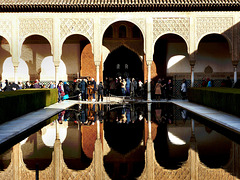
A small fortress was built in 889 on the remains of Roman fortifications on which in the mid-13th century the Alhambra, a large palace and fortress complex, got erected by the Nasrid Emir Mohammed ben Al-Ahmar. In 1333 it was converted into a royal palace by Yusuf I, Sultan of Granada.
After the Reconquista in 1492, the site became the Royal Court of Ferdinand II of Aragon and his wife Isabella I of Castile. The palaces were partially altered in the Renaissance style. A palace better befitting the Holy Roman Emperor Charles V was completed due to Morisco rebellions in Granada.
In 1526 Charles V commissioned a new palace better befitting the Holy Roman Emperor, but this was ultimately never completed due to Morisco rebellions.
The Alhambra complex, having fallen in disrepair, was rediscovered following the defeat of Napoleon, who had conducted retaliatory destruction of the site. The rediscoverers were first British intellectuals and then other travelers. One of them was the US-author Washington Irving, who published "Tales of the Alhambra" in 1832.
Today the well restored Alhambra is one of Spain's major tourist attractions, though tourists with no prebooked tickets, won´t see it all. As we had no prebooked tickets, I need to return.
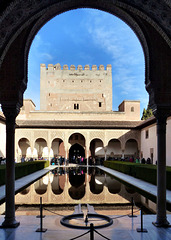
The "Court of the Myrtles" ("Patio de los Arrayanes") has a central pond, which is 34 metres long.
Granada - Alhambra
| |
|
|
|
A small fortress was built in 889 on the remains of Roman fortifications on which in the mid-13th century the Alhambra, a large palace and fortress complex, got erected by the Nasrid Emir Mohammed ben Al-Ahmar. In 1333 it was converted into a royal palace by Yusuf I, Sultan of Granada.
After the Reconquista in 1492, the site became the Royal Court of Ferdinand II of Aragon and his wife Isabella I of Castile. The palaces were partially altered in the Renaissance style. A palace better befitting the Holy Roman Emperor Charles V was completed due to Morisco rebellions in Granada.
In 1526 Charles V commissioned a new palace better befitting the Holy Roman Emperor, but this was ultimately never completed due to Morisco rebellions.
The Alhambra complex, having fallen in disrepair, was rediscovered following the defeat of Napoleon, who had conducted retaliatory destruction of the site. The rediscoverers were first British intellectuals and then other travelers. One of them was the US-author Washington Irving, who published "Tales of the Alhambra" in 1832.
Today the well restored Alhambra is one of Spain's major tourist attractions, though tourists with no prebooked tickets, won´t see it all. As we had no prebooked tickets, I need to return.
The "Court of the Myrtles" ("Patio de los Arrayanes") has a central pond, which is 34 metres long.
Granada - Alhambra
| |
|
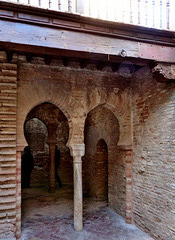
A small fortress was built in 889 on the remains of Roman fortifications on which in the mid-13th century the Alhambra, a large palace and fortress complex, got erected by the Nasrid Emir Mohammed ben Al-Ahmar. In 1333 it was converted into a royal palace by Yusuf I, Sultan of Granada.
After the Reconquista in 1492, the site became the Royal Court of Ferdinand II of Aragon and his wife Isabella I of Castile. The palaces were partially altered in the Renaissance style. A palace better befitting the Holy Roman Emperor Charles V was completed due to Morisco rebellions in Granada.
In 1526 Charles V commissioned a new palace better befitting the Holy Roman Emperor, but this was ultimately never completed due to Morisco rebellions.
The Alhambra complex, having fallen in disrepair, was rediscovered following the defeat of Napoleon, who had conducted retaliatory destruction of the site. The rediscoverers were first British intellectuals and then other travelers. One of them was the US-author Washington Irving, who published "Tales of the Alhambra" in 1832.
Today the well restored Alhambra is one of Spain's major tourist attractions, though tourists with no prebooked tickets, won´t see it all. As we had no prebooked tickets, I need to return.
Granada - Alhambra
| |
|
A small fortress was built in 889 on the remains of Roman fortifications on which in the mid-13th century the Alhambra, a large palace and fortress complex, got erected by the Nasrid Emir Mohammed ben Al-Ahmar. In 1333 it was converted into a royal palace by Yusuf I, Sultan of Granada.
After the Reconquista in 1492, the site became the Royal Court of Ferdinand II of Aragon and his wife Isabella I of Castile. The palaces were partially altered in the Renaissance style. A palace better befitting the Holy Roman Emperor Charles V was completed due to Morisco rebellions in Granada.
In 1526 Charles V commissioned a new palace better befitting the Holy Roman Emperor, but this was ultimately never completed due to Morisco rebellions.
The Alhambra complex, having fallen in disrepair, was rediscovered following the defeat of Napoleon, who had conducted retaliatory destruction of the site. The rediscoverers were first British intellectuals and then other travelers. One of them was the US-author Washington Irving, who published "Tales of the Alhambra" in 1832.
Today the well restored Alhambra is one of Spain's major tourist attractions, though tourists with no prebooked tickets, won´t see it all. As we had no prebooked tickets, I need to return.
Granada - Alhambra
| |
|
|
|
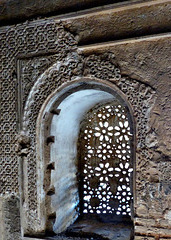
A small fortress was built in 889 on the remains of Roman fortifications on which in the mid-13th century the Alhambra, a large palace and fortress complex, got erected by the Nasrid Emir Mohammed ben Al-Ahmar. In 1333 it was converted into a royal palace by Yusuf I, Sultan of Granada.
After the Reconquista in 1492, the site became the Royal Court of Ferdinand II of Aragon and his wife Isabella I of Castile. The palaces were partially altered in the Renaissance style. A palace better befitting the Holy Roman Emperor Charles V was completed due to Morisco rebellions in Granada.
In 1526 Charles V commissioned a new palace better befitting the Holy Roman Emperor, but this was ultimately never completed due to Morisco rebellions.
The Alhambra complex, having fallen in disrepair, was rediscovered following the defeat of Napoleon, who had conducted retaliatory destruction of the site. The rediscoverers were first British intellectuals and then other travelers. One of them was the US-author Washington Irving, who published "Tales of the Alhambra" in 1832.
Today the well restored Alhambra is one of Spain's major tourist attractions, though tourists with no prebooked tickets, won´t see it all. As we had no prebooked tickets, I need to return.
Jump to top
RSS feed- Latest items - Subscribe to the latest items added to this album
- ipernity © 2007-2026
- Help & Contact
|
Club news
|
About ipernity
|
History |
ipernity Club & Prices |
Guide of good conduct
Donate | Group guidelines | Privacy policy | Terms of use | Statutes | In memoria -
Facebook
X
