


Andalusia / Andalucía

All photos were taken in Andalucía.
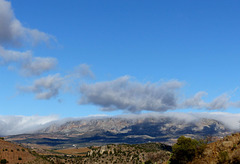
El Torcal de Antequera
| |
|
The "Sierra del Torca" is a small mountain range separating Antequera and Malaga. El Torcal de Antequera is a nature reserve, an area of about 17 square kilometres. Here are impressive karst landscapes.

Torremolinos
| |
|
|
Upto the 1950s Torremolinos was a small fishing village with a few hotels, just south of Malaga. The tourism-based boom of the late 50s and early 60s made Torremolinos the first major mass tourism spot on the Costa del Sol. In summer thousands of tourists will populate the beach, while in winter only some anglers meet in the late afternoon.
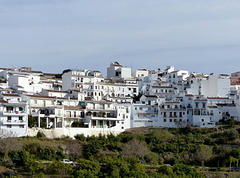
Frigiliana
| |
|
Frigiliana is not even 7 kms apart from Nerja and its beaches - but about 440 metres higher.
As the Moors did stay here even after the Reconquista, the original Moorish structure of the old town center is still preserved. The quarter is made up of steep cobbled alleyways winding past white houses. The residents are asked to lime their homes regularly.
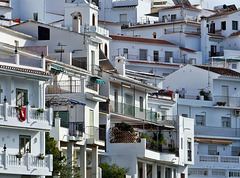
Frigiliana
| |
|
|
Frigiliana is not even 7 kms apart from Nerja and its beaches - but about 440 metres higher.
As the Moors did stay here even after the Reconquista, the original Moorish structure of the old town center is still preserved. The quarter is made up of steep cobbled alleyways winding past white houses. The residents are asked to lime their homes regularly.
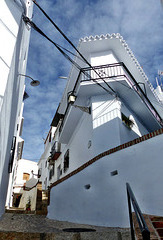
Frigiliana
| |
|
|
Frigiliana is not even 7 kms apart from Nerja and its beaches - but about 440 metres higher.
As the Moors did stay here even after the Reconquista, the original Moorish structure of the old town center is still preserved. The quarter is made up of steep cobbled alleyways winding past white houses. The residents are asked to lime their homes regularly.
Frigiliana
| |
|
|
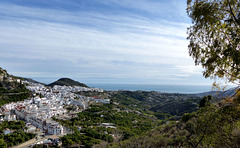
Frigiliana is not even 7 kms apart from Nerja and its beaches - but about 440 metres higher.
As the Moors did stay here even after the Reconquista, the original Moorish structure of the old town center is still preserved. The quarter is made up of steep cobbled alleyways winding past white houses. The residents are asked to lime their homes regularly.
Nerja and the Mediterranian sea - in the backdrop.
Sierra Nevada
| |
|
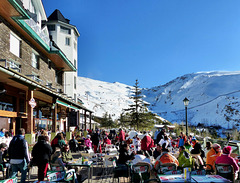
The Sierra Nevada contains the Mulhacén, named after Abu l-Hasan Ali, once the Sultan of near Granada. This is highest mountain in western Europe outside the Alps - 3478m.
The mountain range is a tourist destination, as the peaks make skiing possible in one of Europe's most southerly ski resorts.
Granada
| |
|
The crescent stands over the Sierra Nevada. Seen from the hotel in Granada. We had booked a hotel neighbouring the Alhambra to be the very first tourists at the ticket booth next day.
Granada - Alhambra
| |
|
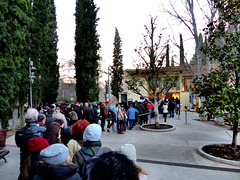
We had booked a hotel neighbouring the Alhambra to be the very first tourists at the ticket booth next day, but even after a very early breakfast we arrived too late. We stood in line for about two hours - and got onformed via the loudspeakers, that certain tickets were already sold out.
Be advised to get your tickets online. Before you arrive in Granada.
Granada - Alhambra
| |
|
|
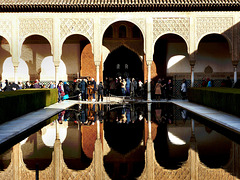
A small fortress was built in 889 on the remains of Roman fortifications on which in the mid-13th century the Alhambra, a large palace and fortress complex, got erected by the Nasrid Emir Mohammed ben Al-Ahmar. In 1333 it was converted into a royal palace by Yusuf I, Sultan of Granada.
After the Reconquista in 1492, the site became the Royal Court of Ferdinand II of Aragon and his wife Isabella I of Castile. The palaces were partially altered in the Renaissance style. A palace better befitting the Holy Roman Emperor Charles V was completed due to Morisco rebellions in Granada.
In 1526 Charles V commissioned a new palace better befitting the Holy Roman Emperor, but this was ultimately never completed due to Morisco rebellions.
The Alhambra complex, having fallen in disrepair, was rediscovered following the defeat of Napoleon, who had conducted retaliatory destruction of the site. The rediscoverers were first British intellectuals and then other travelers. One of them was the US-author Washington Irving, who published "Tales of the Alhambra" in 1832.
Today the well restored Alhambra is one of Spain's major tourist attractions, though tourists with no prebooked tickets, won´t see it all. As we had no prebooked tickets, I need to return.
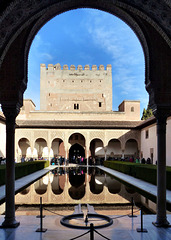
The "Court of the Myrtles" ("Patio de los Arrayanes") has a central pond, which is 34 metres long.
Granada - Alhambra
| |
|
|
|
A small fortress was built in 889 on the remains of Roman fortifications on which in the mid-13th century the Alhambra, a large palace and fortress complex, got erected by the Nasrid Emir Mohammed ben Al-Ahmar. In 1333 it was converted into a royal palace by Yusuf I, Sultan of Granada.
After the Reconquista in 1492, the site became the Royal Court of Ferdinand II of Aragon and his wife Isabella I of Castile. The palaces were partially altered in the Renaissance style. A palace better befitting the Holy Roman Emperor Charles V was completed due to Morisco rebellions in Granada.
In 1526 Charles V commissioned a new palace better befitting the Holy Roman Emperor, but this was ultimately never completed due to Morisco rebellions.
The Alhambra complex, having fallen in disrepair, was rediscovered following the defeat of Napoleon, who had conducted retaliatory destruction of the site. The rediscoverers were first British intellectuals and then other travelers. One of them was the US-author Washington Irving, who published "Tales of the Alhambra" in 1832.
Today the well restored Alhambra is one of Spain's major tourist attractions, though tourists with no prebooked tickets, won´t see it all. As we had no prebooked tickets, I need to return.
The "Court of the Myrtles" ("Patio de los Arrayanes") has a central pond, which is 34 metres long.
Granada - Alhambra
| |
|
A small fortress was built in 889 on the remains of Roman fortifications on which in the mid-13th century the Alhambra, a large palace and fortress complex, got erected by the Nasrid Emir Mohammed ben Al-Ahmar. In 1333 it was converted into a royal palace by Yusuf I, Sultan of Granada.
After the Reconquista in 1492, the site became the Royal Court of Ferdinand II of Aragon and his wife Isabella I of Castile. The palaces were partially altered in the Renaissance style. A palace better befitting the Holy Roman Emperor Charles V was completed due to Morisco rebellions in Granada.
In 1526 Charles V commissioned a new palace better befitting the Holy Roman Emperor, but this was ultimately never completed due to Morisco rebellions.
The Alhambra complex, having fallen in disrepair, was rediscovered following the defeat of Napoleon, who had conducted retaliatory destruction of the site. The rediscoverers were first British intellectuals and then other travelers. One of them was the US-author Washington Irving, who published "Tales of the Alhambra" in 1832.
Today the well restored Alhambra is one of Spain's major tourist attractions, though tourists with no prebooked tickets, won´t see it all. As we had no prebooked tickets, I need to return.
Granada - Alhambra
| |
|
A small fortress was built in 889 on the remains of Roman fortifications on which in the mid-13th century the Alhambra, a large palace and fortress complex, got erected by the Nasrid Emir Mohammed ben Al-Ahmar. In 1333 it was converted into a royal palace by Yusuf I, Sultan of Granada.
After the Reconquista in 1492, the site became the Royal Court of Ferdinand II of Aragon and his wife Isabella I of Castile. The palaces were partially altered in the Renaissance style. A palace better befitting the Holy Roman Emperor Charles V was completed due to Morisco rebellions in Granada.
In 1526 Charles V commissioned a new palace better befitting the Holy Roman Emperor, but this was ultimately never completed due to Morisco rebellions.
The Alhambra complex, having fallen in disrepair, was rediscovered following the defeat of Napoleon, who had conducted retaliatory destruction of the site. The rediscoverers were first British intellectuals and then other travelers. One of them was the US-author Washington Irving, who published "Tales of the Alhambra" in 1832.
Today the well restored Alhambra is one of Spain's major tourist attractions, though tourists with no prebooked tickets, won´t see it all. As we had no prebooked tickets, I need to return.
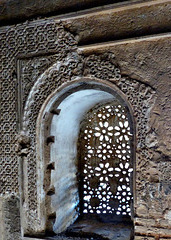
Granada - Alhambra
| |
|
|
|
A small fortress was built in 889 on the remains of Roman fortifications on which in the mid-13th century the Alhambra, a large palace and fortress complex, got erected by the Nasrid Emir Mohammed ben Al-Ahmar. In 1333 it was converted into a royal palace by Yusuf I, Sultan of Granada.
After the Reconquista in 1492, the site became the Royal Court of Ferdinand II of Aragon and his wife Isabella I of Castile. The palaces were partially altered in the Renaissance style. A palace better befitting the Holy Roman Emperor Charles V was completed due to Morisco rebellions in Granada.
In 1526 Charles V commissioned a new palace better befitting the Holy Roman Emperor, but this was ultimately never completed due to Morisco rebellions.
The Alhambra complex, having fallen in disrepair, was rediscovered following the defeat of Napoleon, who had conducted retaliatory destruction of the site. The rediscoverers were first British intellectuals and then other travelers. One of them was the US-author Washington Irving, who published "Tales of the Alhambra" in 1832.
Today the well restored Alhambra is one of Spain's major tourist attractions, though tourists with no prebooked tickets, won´t see it all. As we had no prebooked tickets, I need to return.
Granada - Alhambra
| |
|
|
A small fortress was built in 889 on the remains of Roman fortifications on which in the mid-13th century the Alhambra, a large palace and fortress complex, got erected by the Nasrid Emir Mohammed ben Al-Ahmar. In 1333 it was converted into a royal palace by Yusuf I, Sultan of Granada.
After the Reconquista in 1492, the site became the Royal Court of Ferdinand II of Aragon and his wife Isabella I of Castile. The palaces were partially altered in the Renaissance style. A palace better befitting the Holy Roman Emperor Charles V was completed due to Morisco rebellions in Granada.
In 1526 Charles V commissioned a new palace better befitting the Holy Roman Emperor, but this was ultimately never completed due to Morisco rebellions.
The Alhambra complex, having fallen in disrepair, was rediscovered following the defeat of Napoleon, who had conducted retaliatory destruction of the site. The rediscoverers were first British intellectuals and then other travelers. One of them was the US-author Washington Irving, who published "Tales of the Alhambra" in 1832.
Today the well restored Alhambra is one of Spain's major tourist attractions, though tourists with no prebooked tickets, won´t see it all. As we had no prebooked tickets, I need to return.
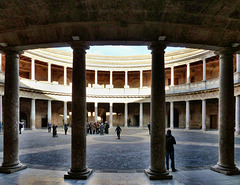
When in 1526 Charles V commissioned "his" palace in Granada great parts of the Nasrid palaces got demolished to give room for the new building. The square building was never completed (it got a roof in 1929). It has a round patio, seen here, with a diameter of 31 metres.
Granada - Cathedral
| |
|
|
|
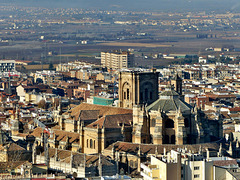
The Granada-Cathedral seen from the Alhambra.
As Granada was part of the Nasrid Kingdom upto 1492, when it was conquered at the end of the Reconquista, the erection of the cathedral started rather late - in 1523. At that time the "Capella Real", adjoining the cathedral today, was already completed. The cathedral took 181 years to build.
The "Capella Royal" is the burial place of the so called "Catholic Monarchs" Isabella I of Castile, Queen of Castile, and her husband Ferdinand II of Aragon, King of Aragon. Here is as well the tomb of their daughter Joanna of Castile, better known as "Joanna the Mad" ("Juana la Loca").
Granada - Alhambra
| |
|
A small fortress was built in 889 on the remains of Roman fortifications on which in the mid-13th century the Alhambra, a large palace and fortress complex, got erected by the Nasrid Emir Mohammed ben Al-Ahmar. In 1333 it was converted into a royal palace by Yusuf I, Sultan of Granada.
After the Reconquista in 1492, the site became the Royal Court of Ferdinand II of Aragon and his wife Isabella I of Castile. The palaces were partially altered in the Renaissance style. A palace better befitting the Holy Roman Emperor Charles V was completed due to Morisco rebellions in Granada.
In 1526 Charles V commissioned a new palace better befitting the Holy Roman Emperor, but this was ultimately never completed due to Morisco rebellions.
The Alhambra complex, having fallen in disrepair, was rediscovered following the defeat of Napoleon, who had conducted retaliatory destruction of the site. The rediscoverers were first British intellectuals and then other travelers. One of them was the US-author Washington Irving, who published "Tales of the Alhambra" in 1832.
Today the well restored Alhambra is one of Spain's major tourist attractions, though tourists with no prebooked tickets, won´t see it all.
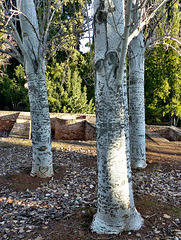
In the gardens of the Alhambra Mass tourism has left its marks. Many tourist left their messages in the bark of the trees. Maybe they had no prebooked tickets.
Granada - Alhambra
| |
|
A small fortress was built in 889 on the remains of Roman fortifications on which in the mid-13th century the Alhambra, a large palace and fortress complex, got erected by the Nasrid Emir Mohammed ben Al-Ahmar. In 1333 it was converted into a royal palace by Yusuf I, Sultan of Granada.
After the Reconquista in 1492, the site became the Royal Court of Ferdinand II of Aragon and his wife Isabella I of Castile. The palaces were partially altered in the Renaissance style. A palace better befitting the Holy Roman Emperor Charles V was completed due to Morisco rebellions in Granada.
In 1526 Charles V commissioned a new palace better befitting the Holy Roman Emperor, but this was ultimately never completed due to Morisco rebellions.
The Alhambra complex, having fallen in disrepair, was rediscovered following the defeat of Napoleon, who had conducted retaliatory destruction of the site. The rediscoverers were first British intellectuals and then other travelers. One of them was the US-author Washington Irving, who published "Tales of the Alhambra" in 1832.
Today the well restored Alhambra is one of Spain's major tourist attractions, though tourists with no prebooked tickets, won´t see it all.
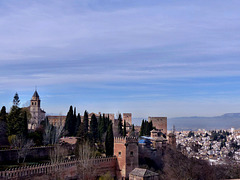
The Alhambra seen from the neighbouring "Palacio de Generalife".
Jump to top
RSS feed- Latest items - Subscribe to the latest items added to this album
- ipernity © 2007-2026
- Help & Contact
|
Club news
|
About ipernity
|
History |
ipernity Club & Prices |
Guide of good conduct
Donate | Group guidelines | Privacy policy | Terms of use | Statutes | In memoria -
Facebook
X
