

Heraklion - Saint Mark's Basilica
Heraklion - Saint Mark's Basilica
Heraklion - Petousis
Heraklion - Petousis
Heraklion - Cardphone
Crete - Psiloritis massif
Rethymno - Four Martyrs Church
Rethymno
Rethymno - Veli Pasha Mosque
Rethymno - Harbour
Rethymno - Harbor
Rethymno - Loggia
Rethymno
Rethymno - Guora Gate
Rethymno
Rethymno - Taverna I Vengera
Rethymno - Taverna I Vengera
Rethymno - Beach
Rethymno - Mikri Panagia
Rethymno - Mikri Panagia
Rethymno - Old Town
Rethymno - Old Town
Rethymno - Neradje Mosque
Heraklion - Butcher's shop
Heraklion - Moumoulidis (PiP)
Heraklion - Saint Paraskevi
Heraklion
Heraklion
Heraklion - wash and go
Heraklion - Agios Titos
Heraklion - Kafeneio O Tempelis
Heraklion - Kafeneio O Tempelis
Heraklion - Venetian Loggia
Heraklion - Hans & Gretel
Heraklion - Minoan
Heraklion - Eleftherias Square
Larnaca - Flamingo
Larnaca - Hala Sultan Tekke
Larnaca - Hala Sultan Tekke
Larnaca - Hala Sultan Tekke
Larnaca - Hala Sultan Tekke
Larnaca - Bekir Pasha Aqueduct
Larnaca - Municipal Market
Larnaca - Djami Kebir Mosque
Larnaca - Castle Museum
Location
Lat, Lng:
You can copy the above to your favourite mapping app.
Address: unknown
You can copy the above to your favourite mapping app.
Address: unknown
See also...
Keywords
Authorizations, license
-
Visible by: Everyone -
All rights reserved
-
16 visits
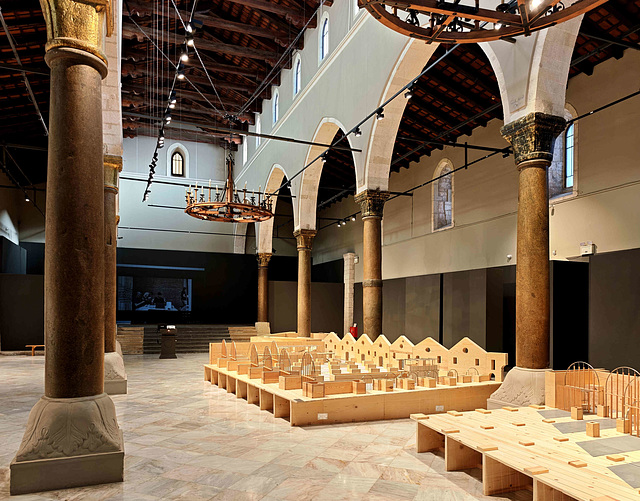
Heraklion - Saint Mark's Basilica

Crete is the largest and most populous of the Greek islands, is located about 100 km south of the Peloponnese. Crete was the center of Europe's first advanced civilization, the Minoans, from 3000 to 1400 BC. The Minoan civilization was overrun by the Mycenaean civilization from mainland Greece. Crete was later ruled by Rome, then successively by the Byzantine Empire, Andalusian Arabs, the Byzantine Empire again, the Venetian Republic, and the Ottoman Empire. In 1898 Crete, whose people had for some time wanted to join the Greek state, achieved independence from the Ottomans, formally becoming the Cretan State. Crete became part of Greece in December 1913.
Heraklion is the largest city and the administrative capital of the island of Crete. With a municipal population of about 180.000 it is the fourth largest city in Greece. The greater area of Heraklion has been continuously inhabited since at least 7000 BCE, making it one of the oldest inhabited regions in Europe. As a major center of the Minoan civilization it often considered Europe's oldest city.
"Hagios Markos" is a former Roman Catholic basilica, situated in the Eleftheriou Venizelou Square. It was built in 1239, during the Venetian rule of the island, following the conquest after the Fourth Crusade.
After the Ottoman conquest of Crete in 1669, it was converted into a mosque. The building was used as a mosque until 1915.
After the Greco-Turkish population exchange in 1924 the former mosque came to the municipality of Heraklion and was used at first as a cinema. In the early 1950s the municipal council suggested that the church be demolished and a municipal theatre or a post office be built in its place, a plan which was abandoned as the necessary funds could not be collected. In 1954 the archaeological council decided on the preservation of the church and in 1956 restoration works of the basilica began.
Ever since the completion of the restoration works in 1960, the former church has been used as a municipal art gallery.
Heraklion is the largest city and the administrative capital of the island of Crete. With a municipal population of about 180.000 it is the fourth largest city in Greece. The greater area of Heraklion has been continuously inhabited since at least 7000 BCE, making it one of the oldest inhabited regions in Europe. As a major center of the Minoan civilization it often considered Europe's oldest city.
"Hagios Markos" is a former Roman Catholic basilica, situated in the Eleftheriou Venizelou Square. It was built in 1239, during the Venetian rule of the island, following the conquest after the Fourth Crusade.
After the Ottoman conquest of Crete in 1669, it was converted into a mosque. The building was used as a mosque until 1915.
After the Greco-Turkish population exchange in 1924 the former mosque came to the municipality of Heraklion and was used at first as a cinema. In the early 1950s the municipal council suggested that the church be demolished and a municipal theatre or a post office be built in its place, a plan which was abandoned as the necessary funds could not be collected. In 1954 the archaeological council decided on the preservation of the church and in 1956 restoration works of the basilica began.
Ever since the completion of the restoration works in 1960, the former church has been used as a municipal art gallery.
kiiti has particularly liked this photo
- Keyboard shortcuts:
Jump to top
RSS feed- Latest comments - Subscribe to the comment feeds of this photo
- ipernity © 2007-2026
- Help & Contact
|
Club news
|
About ipernity
|
History |
ipernity Club & Prices |
Guide of good conduct
Donate | Group guidelines | Privacy policy | Terms of use | Statutes | In memoria -
Facebook
X

Sign-in to write a comment.