

Nicosia - Art Deco
Nicosia - Christmas
Nicosia - Christmas
Nicosia
Nicosia - Laundry Station
Nicosia - Municipal Theatre
Nicosia - Cyprus Museum
Nicosia - Cyprus Museum
Nicosia - Cyprus Museum
Nicosia - Cyprus Museum
Nicosia - Cyprus Museum
Nicosia - Cyprus Museum
Nicosia - Cyprus Museum
Nicosia - Cyprus Museum
Nicosia - Cyprus Museum
Nicosia - Cyprus Museum
Nicosia - Cyprus Museum
Nicosia - Cyprus Museum
Nicosia - Cyprus Museum
Nicosia - Cyprus Museum
Nicosia - Cyprus Museum
Nicosia - Cyprus Museum
Nicosia - Cyprus Museum
Nicosia
Nicosia
Timios Stavros tou Agiasmati
Timios Stavros tou Agiasmati
Timios Stavros tou Agiasmati
Timios Stavros tou Agiasmati
Timios Stavros tou Agiasmati
Timios Stavros tou Agiasmati
Timios Stavros tou Agiasmati
Timios Stavros tou Agiasmati
Timios Stavros tou Agiasmati
Timios Stavros tou Agiasmati
Timios Stavros tou Agiasmati
Timios Stavros tou Agiasmati
Timios Stavros tou Agiasmati
Timios Stavros tou Agiasmati
Timios Stavros tou Agiasmati
Timios Stavros tou Agiasmati
Timios Stavros tou Agiasmati
Amiandos - Agia Paraskevi
Koilani - Agia Mavri
Koilani - Agia Mavri
Location
Lat, Lng:
You can copy the above to your favourite mapping app.
Address: unknown
You can copy the above to your favourite mapping app.
Address: unknown
See also...
Keywords
Authorizations, license
-
Visible by: Everyone -
All rights reserved
-
29 visits
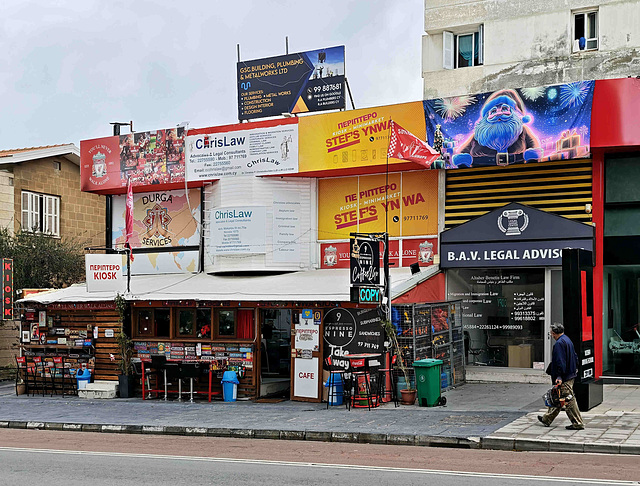
Nicosia - Cafe

Nicosia (aka Lefkosia) is the capital of Cyprus. Its northern part is the de facto capital of Northern Cyprus. Nicosia has been continuously inhabited for over 5,500 years. The town has been documented since the 7th century BC under the name of was Ledra.
By the 4th century, the town had become the seat of a bishopric. Following the destruction of Cyprus's coastal settlements during Arab raids in 647, the inland towns gained in relative significance. The town developed sufficiently for the Byzantine Empire to select Nicosia as the capital of the island around 965.
In 1191, Richard the Lionheart conquered Cyprus during the Third Crusade. In 1192, he sold the island to Guy of Lusignan. Therefore, from 1192 to 1489, the island was under the control of the House of Lusignan as the Kingdom of Cyprus.
In 1489 Cyprus came under the rule of the Republic of Venice. Due to the Ottoman threat in 1567, the Venetians built new fortifications in Nicosia. The new walls took the shape of a star with eleven bastions. The design of the bastion is more suitable for artillery and a better control for the defenders.
With the capture of Famagusta in 1571, all of Cyprus came under the rule of the Ottoman Empire. Nicosia remained the island's capital during this time and served as the administrative center.
Following the Russo-Turkish War of 1877–1878, the Sultan ceded Cyprus to Great Britain.
In 1960, Nicosia became the capital of the Republic of Cyprus, a state established by the Greek and Turkish Cypriots. In 1974, there was a coup d'état led by the Greek military junta to unite the island with Greece. The coup ousted president Makarios III and precipitated the invasion of the island by the Turkish army. The Turkish army advanced their positions, eventually capturing 37% of Cypriot territory including the northern part of Nicosia.
Today, Nicosia is divided by the Green Line into a Greek Cypriot and a Turkish Cypriot quarter, which is monitored by the United Nations Peacekeeping Force.
Cafe, Minimarket, Copyshop, Legal Advisor
By the 4th century, the town had become the seat of a bishopric. Following the destruction of Cyprus's coastal settlements during Arab raids in 647, the inland towns gained in relative significance. The town developed sufficiently for the Byzantine Empire to select Nicosia as the capital of the island around 965.
In 1191, Richard the Lionheart conquered Cyprus during the Third Crusade. In 1192, he sold the island to Guy of Lusignan. Therefore, from 1192 to 1489, the island was under the control of the House of Lusignan as the Kingdom of Cyprus.
In 1489 Cyprus came under the rule of the Republic of Venice. Due to the Ottoman threat in 1567, the Venetians built new fortifications in Nicosia. The new walls took the shape of a star with eleven bastions. The design of the bastion is more suitable for artillery and a better control for the defenders.
With the capture of Famagusta in 1571, all of Cyprus came under the rule of the Ottoman Empire. Nicosia remained the island's capital during this time and served as the administrative center.
Following the Russo-Turkish War of 1877–1878, the Sultan ceded Cyprus to Great Britain.
In 1960, Nicosia became the capital of the Republic of Cyprus, a state established by the Greek and Turkish Cypriots. In 1974, there was a coup d'état led by the Greek military junta to unite the island with Greece. The coup ousted president Makarios III and precipitated the invasion of the island by the Turkish army. The Turkish army advanced their positions, eventually capturing 37% of Cypriot territory including the northern part of Nicosia.
Today, Nicosia is divided by the Green Line into a Greek Cypriot and a Turkish Cypriot quarter, which is monitored by the United Nations Peacekeeping Force.
Cafe, Minimarket, Copyshop, Legal Advisor
kiiti has particularly liked this photo
- Keyboard shortcuts:
Jump to top
RSS feed- Latest comments - Subscribe to the comment feeds of this photo
- ipernity © 2007-2026
- Help & Contact
|
Club news
|
About ipernity
|
History |
ipernity Club & Prices |
Guide of good conduct
Donate | Group guidelines | Privacy policy | Terms of use | Statutes | In memoria -
Facebook
X

Sign-in to write a comment.