

Paphos - Tombs of the Kings
Paphos - Tombs of the Kings
Paphos - Tombs of the Kings
Paphos - Tombs of the Kings
Paphos - Tombs of the Kings
Paphos - Tombs of the Kings
Paphos - Tombs of the Kings
Paphos - 99 Flake
Paphos - Archaeological Park
Paphos - Archaeological Park
Paphos - Archaeological Park
Paphos - Archaeological Park
Paphos - Archaeological Park
Paphos - Archaeological Park
Paphos - Archaeological Park
Paphos - Archaeological Park
Paphos - Archaeological Park
Paphos - Archaeological Park
Paphos - Archaeological Park
Paphos - Archaeological Park
Paphos - Archaeological Park
Paphos - Archaeological Park
Paphos - Archaeological Park
Kourion
Kourion
Kourion
Kourion
Kourion
Kourion
Kourion
Kourion
Kourion
Kolossi – Agios Efstathios
Kolossi – Agios Efstathios
Kolossi – Agios Efstathios
Kolossi – Agios Efstathios
Kolossi Castle
Kolossi Castle
Kolossi Castle
Limassol - Aristos & Kiki Kebab House
Limassol - Archaeological Museum
Limassol - Archaeological Museum
Limassol - Archaeological Museum
Limassol - Archaeological Museum
Limassol - Archaeological Museum
Location
Lat, Lng:
You can copy the above to your favourite mapping app.
Address: unknown
You can copy the above to your favourite mapping app.
Address: unknown
Keywords
Authorizations, license
-
Visible by: Everyone -
All rights reserved
-
44 visits
Paphos - Tombs of the Kings
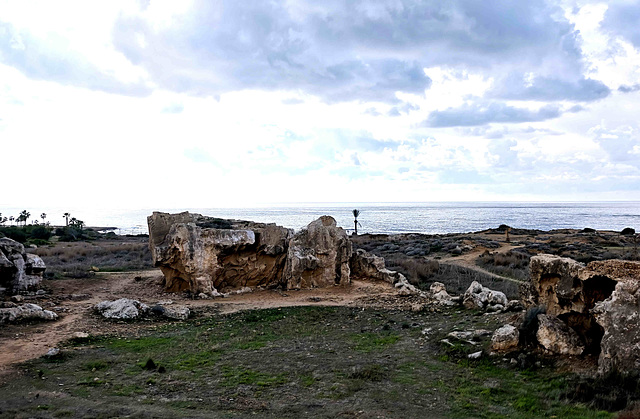

The Royal Tombs of Paphos are a necropolis located between Ktima and Kato Paphos. The name is misleading and derives from the size of the rock-cut tombs.
During the Ptolemaic period (294–58 BC), when the island was ruled and the tombs were built, the city-states of Cyprus no longer existed. They likely date back to the 4th and 3rd century BC and testify to the prosperity of the inhabitants, who modeled their lifestyles on Egyptian examples. The larger tombs served as burial sites for officials of the Ptolemaic administration or their rulers.
The necropolis was continuesly used during the Hellenistic and Roman period, and served as a refuge for early Christians during their persecution. In the Middle Ages, squatters settled there and altered the original architecture.
The notorious treasure hunter Luigi Palma di Cesnola, then the US Consul in Cyprus, began excavations at this site in 1870. The first excavations under scientific supervision took place in 1915.
During the Ptolemaic period (294–58 BC), when the island was ruled and the tombs were built, the city-states of Cyprus no longer existed. They likely date back to the 4th and 3rd century BC and testify to the prosperity of the inhabitants, who modeled their lifestyles on Egyptian examples. The larger tombs served as burial sites for officials of the Ptolemaic administration or their rulers.
The necropolis was continuesly used during the Hellenistic and Roman period, and served as a refuge for early Christians during their persecution. In the Middle Ages, squatters settled there and altered the original architecture.
The notorious treasure hunter Luigi Palma di Cesnola, then the US Consul in Cyprus, began excavations at this site in 1870. The first excavations under scientific supervision took place in 1915.
kiiti has particularly liked this photo
- Keyboard shortcuts:
Jump to top
RSS feed- Latest comments - Subscribe to the comment feeds of this photo
- ipernity © 2007-2026
- Help & Contact
|
Club news
|
About ipernity
|
History |
ipernity Club & Prices |
Guide of good conduct
Donate | Group guidelines | Privacy policy | Terms of use | Statutes | In memoria -
Facebook
X

Sign-in to write a comment.