

Liège - La Boverie
Liège - La Boverie
Liège - La Boverie
Liège - La Boverie
Liège - La Boverie
Liège - La Boverie
Liège - La Boverie
Liège - La Boverie
Liège - La Boverie
Liège - La Boverie
Liège - La Boverie
Liège - Mémorial Interallié
Liège - La Boverie
Liège - La Boverie
Liège - La Boverie
Liège - La Boverie
Liège - La Boverie
Liège - La Boverie
Liège - La Boverie
Liège
Liège
Liège - Boucherie Meknassi
Liège - La Boverie
Liège - Saint-Vincent
Liège
Liège
Liège
Liège
Liège
Liège - Le plongeur et son arc
Liège - Lavoir Cathédrale
Liège
Liège - Saint-Jacques-le-Mineur
Liège - Saint-Jacques-le-Mineur
Liège - Saint-Jacques-le-Mineur
Liège - Saint-Jacques-le-Mineur
Liège - Saint-Jacques-le-Mineur
Liège - Saint-Jacques-le-Mineur
Liège - Saint-Jacques-le-Mineur
Liège - Saint-Jacques-le-Mineur
Liège - Saint-Jacques-le-Mineur
Liège - Cathédrale Saint-Paul
Liège - Cathédrale Saint-Paul
Liège - Cathédrale Saint-Paul
Liège - Cathédrale Saint-Paul
Location
Lat, Lng:
You can copy the above to your favourite mapping app.
Address: unknown
You can copy the above to your favourite mapping app.
Address: unknown
Keywords
Authorizations, license
-
Visible by: Everyone -
All rights reserved
-
68 visits
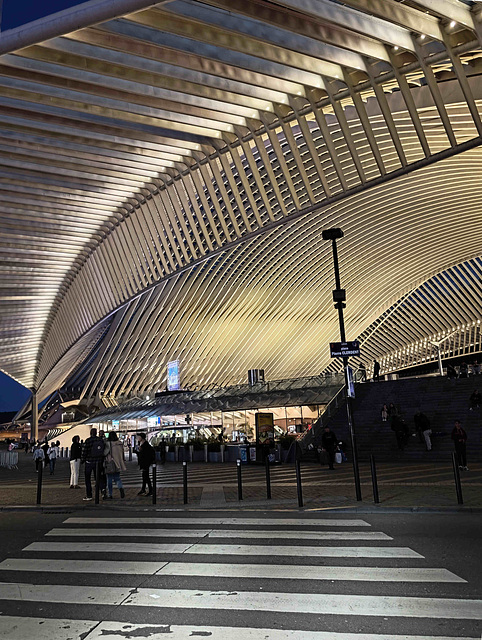
Liège - Gare de Liège-Guillemins

Liège is the center of the largest Walloon agglomeration, and the cultural center of the Walloon region of Belgium. The city, with a population of about 200.000, is located at the confluence of the Ourthe and Meuse rivers.
Around 705, Saint Lambert of Maastricht is credited with completing the Christianization of the region, but conversion may still not have been quite universal, since Lambert was murdered in Liège. To enshrine his relics, the successor, Hubertus (later St. Hubert), built a basilica which became the nucleus of the city.
In 1468, following an uprising of the inhabitants against Burgundian rule, xof Burgundy had the city plundered and systematically destroyed. The few survivors who had fled into the forests—Charles the Bold allegedly had more than 5,000 inhabitants murdered—were only able to return to the city for reconstruction after seven years.
In 1789, partly in connection with the French Revolution, the Liège Revolution occurred. It was directed against the absolutist rule of the Prince-Bishop and was crushed in early 1791 by troops commissioned by the Holy Roman Empire. In 1795, Liège was occupied by French troops and became part of the First French Republic. The Congress of Vienna annexed it to the Kingdom of the Netherlands, which in 1830 became the Kingdom of Belgium, to which Liège has belonged ever since.
The first station was opened in 1842 on the railway line from Brussels, after the line had already reached Ans in 1838. In 1863, a new station building was built. The building was extended for the 1905 World Exhibition. To mark the electrification of the railway line in 1958 a new building was built, that got damaged during the Belgian general strike of 1960/61.
Planning for the new station building began in 1996. 312 million euros were invested. The building has no exterior facade in the traditional sense; instead, the transition from inside to outside is seamless.
The new station is made of steel, glass, and white concrete. It has a monumental canopy 200 m long and 35 m high. It was originally scheduled for completion in April 2006. In fact, it was not opened until September 19, 2009, two weeks after its completion.
Around 705, Saint Lambert of Maastricht is credited with completing the Christianization of the region, but conversion may still not have been quite universal, since Lambert was murdered in Liège. To enshrine his relics, the successor, Hubertus (later St. Hubert), built a basilica which became the nucleus of the city.
In 1468, following an uprising of the inhabitants against Burgundian rule, xof Burgundy had the city plundered and systematically destroyed. The few survivors who had fled into the forests—Charles the Bold allegedly had more than 5,000 inhabitants murdered—were only able to return to the city for reconstruction after seven years.
In 1789, partly in connection with the French Revolution, the Liège Revolution occurred. It was directed against the absolutist rule of the Prince-Bishop and was crushed in early 1791 by troops commissioned by the Holy Roman Empire. In 1795, Liège was occupied by French troops and became part of the First French Republic. The Congress of Vienna annexed it to the Kingdom of the Netherlands, which in 1830 became the Kingdom of Belgium, to which Liège has belonged ever since.
The first station was opened in 1842 on the railway line from Brussels, after the line had already reached Ans in 1838. In 1863, a new station building was built. The building was extended for the 1905 World Exhibition. To mark the electrification of the railway line in 1958 a new building was built, that got damaged during the Belgian general strike of 1960/61.
Planning for the new station building began in 1996. 312 million euros were invested. The building has no exterior facade in the traditional sense; instead, the transition from inside to outside is seamless.
The new station is made of steel, glass, and white concrete. It has a monumental canopy 200 m long and 35 m high. It was originally scheduled for completion in April 2006. In fact, it was not opened until September 19, 2009, two weeks after its completion.
- Keyboard shortcuts:
Jump to top
RSS feed- Latest comments - Subscribe to the comment feeds of this photo
- ipernity © 2007-2026
- Help & Contact
|
Club news
|
About ipernity
|
History |
ipernity Club & Prices |
Guide of good conduct
Donate | Group guidelines | Privacy policy | Terms of use | Statutes | In memoria -
Facebook
X

Sign-in to write a comment.