

Sitia - Archaeological Museum
Sitia
Achlaida
Achlaida
Achlaida
Sitia
Agios Nikolaos - Agios Nikolaos
Agios Nikolaos - Agios Nikolaos
Agios Nikolaos - ATM
Agios Nikolaos
Agios Nikolaos - Archaeological Museum
Agios Nikolaos - Archaeological Museum
Agios Nikolaos - Archaeological Museum
Agios Nikolaos - Archaeological Museum
Agios Nikolaos - Archaeological Museum
Agios Nikolaos - Archaeological Museum
Agios Nikolaos - Archaeological Museum
Agios Nikolaos - Archaeological Museum
Agios Nikolaos - Archaeological Museum
Agios Nikolaos - Archaeological Museum
Agios Nikolaos - Archaeological Museum
Agios Nikolaos - Archaeological Museum
Agios Nikolaos - Archaeological Museum
Sitia - Archaeological Museum
Sitia - Archaeological Museum
Sitia - Archaeological Museum
Sitia - Archaeological Museum
Sitia - Archaeological Museum
Sitia - Archaeological Museum
Sitia - Archaeological Museum
Sitia - Archaeological Museum
Sitia - Archaeological Museum
Sitia - Archaeological Museum
Sitia
Hagia Photia
Hagia Photia
Hagia Photia
Sitia - Kritiko Spiti
Sitia - Kritiko Spiti
Sitia - Kritiko Spiti
Sitia - Kritiko Spiti
Sitia
Itanos
Itanos
Itanos
Location
Lat, Lng:
You can copy the above to your favourite mapping app.
Address: unknown
You can copy the above to your favourite mapping app.
Address: unknown
See also...
Keywords
Authorizations, license
-
Visible by: Everyone -
All rights reserved
-
122 visits
Sitia - Archaeological Museum

Settlement in the city area dates back to the pre-Minoan period. Architectural remains have been found from the end of the Neolithic period to the Bronze Age.
The city flourished during the Classical, Hellenistic, Roman and Byzantine periods as one of the island's most important ports. During Venetian times, the city was destroyed three times: first by an earthquake in 1508, then by Turkish pirates in 1538, and finally by the Venetians themselves in 1651. This last destruction occurred during the Cretan War. Lacking the resources to withstand a prolonged siege by the Turks, the Venetians destroyed the fortifications and relocated the garrison to Heraklion. The inhabitants migrated west, and the town remained deserted for the next 200 years of Turkish rule. The city was rebuilt after the Cretan Revolt until 1870. Today it has almost 20,000 inhabitants.
The Archaeological Museum features finds from the wider area, dating back to the period between 3500 BC and 500 AD.
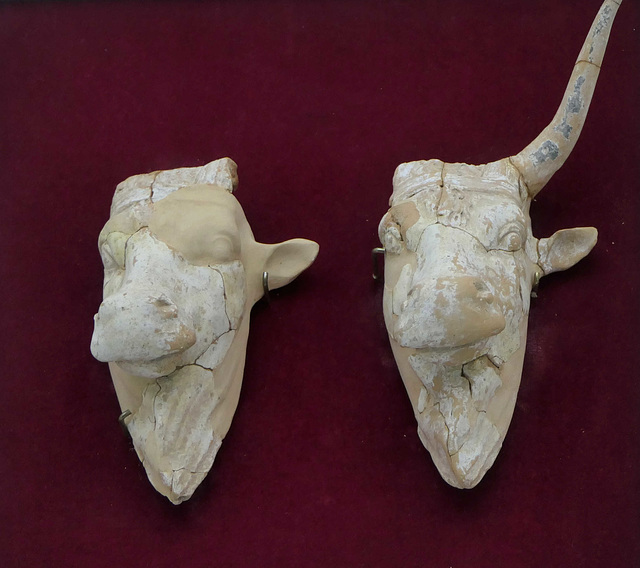
Such Minoan bull heads are being excavated throughout Crete. The infamous Minotaur also had such a head.
The city flourished during the Classical, Hellenistic, Roman and Byzantine periods as one of the island's most important ports. During Venetian times, the city was destroyed three times: first by an earthquake in 1508, then by Turkish pirates in 1538, and finally by the Venetians themselves in 1651. This last destruction occurred during the Cretan War. Lacking the resources to withstand a prolonged siege by the Turks, the Venetians destroyed the fortifications and relocated the garrison to Heraklion. The inhabitants migrated west, and the town remained deserted for the next 200 years of Turkish rule. The city was rebuilt after the Cretan Revolt until 1870. Today it has almost 20,000 inhabitants.
The Archaeological Museum features finds from the wider area, dating back to the period between 3500 BC and 500 AD.
Such Minoan bull heads are being excavated throughout Crete. The infamous Minotaur also had such a head.
appo-fam, Fred Fouarge have particularly liked this photo
- Keyboard shortcuts:
Jump to top
RSS feed- Latest comments - Subscribe to the comment feeds of this photo
- ipernity © 2007-2026
- Help & Contact
|
Club news
|
About ipernity
|
History |
ipernity Club & Prices |
Guide of good conduct
Donate | Group guidelines | Privacy policy | Terms of use | Statutes | In memoria -
Facebook
X

Sign-in to write a comment.