

Linlithgow - St Michael's Parish Church
Linlithgow - Palace
Linlithgow - Palace
Linlithgow - Loch
Dunblame - Cathedral
Dunblame - Cathedral
Dunblame - Cathedral
Dunblame - Cathedral
Dunblame - Cathedral
Dunblame - Cathedral
Dunblame - Cathedral
Dunblame - Cathedral
Tuilyies Standing Stones
Tuilyies Standing Stones
Dunfermline - Abbey
Dunfermline - Abbey
Dunfermline - Abbey
Dunfermline - Abbey
Dunfermline - Abbey
Dunfermline - Abbey
Dunfermline - Abbey
Dunfermline - Abbey
Dunfermline - Abbey
Linlithgow - the Cross Well
=Linlithgow - Cross Well
Kinneil - James Watt's workshop
Kinneil - Church
Kinneil - House
Abercorn - Church
Abercorn - Church
Abercorn - Church
Kirkliston - Parish Church
Kirkliston - Parish Church
Kirkliston - Parish Church
Kirkliston - Parish Church
Dalmeny - Parish Church
Dalmeny - Parish Church
Dalmeny - Parish Church
Dalmeny - Parish Church
Dalmeny - Parish Church
Dalmeny - Parish Church
Dalmeny - Parish Church
Dalmeny - Parish Church
Dalmeny - Parish Church
Dalmeny - Parish Church
Location
Lat, Lng:
You can copy the above to your favourite mapping app.
Address: unknown
You can copy the above to your favourite mapping app.
Address: unknown
See also...
Keywords
Authorizations, license
-
Visible by: Everyone -
All rights reserved
-
67 visits
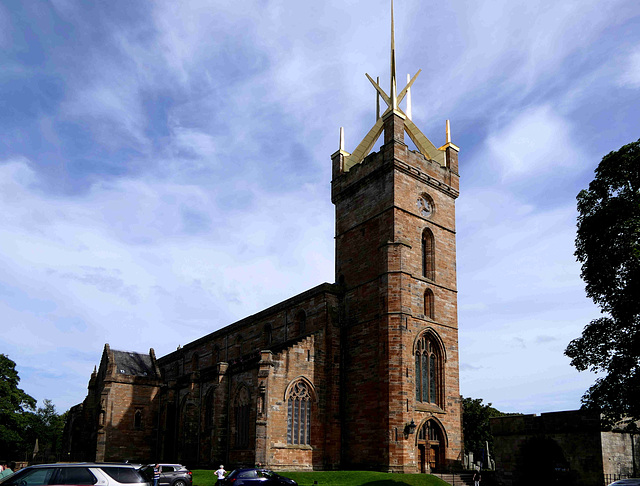
Linlithgow - St Michael's Parish Church

In the Middle Ages, Linlithgow rose to prominence as a royal town and residence, centred on Linlithgow Palace, a residence of the Scottish kings on the raised hill beside the loch, as it was a logical stopover between Edinburgh to the east and Stirling to the west.
In later centuries, Linlithgow became a centre of leather and other material manufacturing before developing rapidly in the Victorian era with the opening of the Union Canal in the 1820s and the arrival of the railway in 1842. Today Linlithgow is a bustling town with a population of around 13,000.
King David I of Scotland granted a charter for the establishment of the church in 1138. St Michael's was built on the site of the older church and was consecrated in 1242. Following a fire in 1424, most of the present building dates from the 15th century. Built immediately to the south of Linlithgow Palace, the church was much favoured as a place of worship by Scottish Kings and Queens.
Mary, Queen of Scots, was born in Linlithgow Palace in 1542 and was baptised in St Michael's Church. In 1559, at an early stage of the Scottish Reformation, Protestants destroyed the statues adorning the exterior and interior of the church. In 1646, Oliver Cromwell's troops stabled their horses within the nave. Following the departure of the troops, considerable restoration was required.
By the early 19th century, the church was in a very poor physical condition. Although repairs were made, many of the historic features of the church were destroyed. While other repairs were completed and the church was rededicated in 1896, the tower was too weakened for restoration of the original crown steeple. In 1964, an aluminium crown was installed.
In later centuries, Linlithgow became a centre of leather and other material manufacturing before developing rapidly in the Victorian era with the opening of the Union Canal in the 1820s and the arrival of the railway in 1842. Today Linlithgow is a bustling town with a population of around 13,000.
King David I of Scotland granted a charter for the establishment of the church in 1138. St Michael's was built on the site of the older church and was consecrated in 1242. Following a fire in 1424, most of the present building dates from the 15th century. Built immediately to the south of Linlithgow Palace, the church was much favoured as a place of worship by Scottish Kings and Queens.
Mary, Queen of Scots, was born in Linlithgow Palace in 1542 and was baptised in St Michael's Church. In 1559, at an early stage of the Scottish Reformation, Protestants destroyed the statues adorning the exterior and interior of the church. In 1646, Oliver Cromwell's troops stabled their horses within the nave. Following the departure of the troops, considerable restoration was required.
By the early 19th century, the church was in a very poor physical condition. Although repairs were made, many of the historic features of the church were destroyed. While other repairs were completed and the church was rededicated in 1896, the tower was too weakened for restoration of the original crown steeple. In 1964, an aluminium crown was installed.
William Sutherland, Nicole Merdrignac, Bernhard Sonderhuesken, Alexander Prolygin have particularly liked this photo
- Keyboard shortcuts:
Jump to top
RSS feed- Latest comments - Subscribe to the comment feeds of this photo
- ipernity © 2007-2026
- Help & Contact
|
Club news
|
About ipernity
|
History |
ipernity Club & Prices |
Guide of good conduct
Donate | Group guidelines | Privacy policy | Terms of use | Statutes | In memoria -
Facebook
X

Sign-in to write a comment.