

Shkodra - Orthodox Cathedral
Fishtë - Mrizi i Zanave
Fishtë - Mrizi i Zanave
Fishtë - Mrizi i Zanave
Fishtë - Mrizi i Zanave
Fishtë - Mrizi i Zanave
Fishtë - Mrizi i Zanave
Fishtë - Mrizi i Zanave
Fishtë - Mrizi i Zanave
Tirana - Skanderbeg Square
Tirana - Skanderbeg Square
Tirana - National History Museum
Tirana
Tirana - Resurrection Cathedral
Tirana - Resurrection Cathedral
Tirana - Resurrection Cathedral
Tirana - Resurrection Cathedral
Tirana
Tirana
Tirana - Pyramid of Tirana
Tirana - Et'hem Bey Mosque
Tirana - Bunk’Art
Tirana - Bunker
Shkodra - Cathedral
Shkodra - Cathedral
Ebasan - King Mosque
Ebasan
Ebasan
Ohrid - Saint Sophia
Ohrid - Saint Sophia
Ohrid - Saint Sophia
Ohrid - Saint Sophia
Ohrid - Saint Sophia
Ohrid - Saint Sophia
Ohrid - Saint Sophia
Ohrid - Saint Sophia
Ohrid - Saint Sophia
Ohrid - Saint Sophia
Ohrid - Saint Sophia
Ohrid - Saint Sophia
Ohrid - Saint Sophia
Ohrid - Saint Sophia
Ohrid
Ohrid - St. John at Kaneo
Ohrid - St. John at Kaneo
Location
Lat, Lng:
You can copy the above to your favourite mapping app.
Address: unknown
You can copy the above to your favourite mapping app.
Address: unknown
See also...
Keywords
Authorizations, license
-
Visible by: Everyone -
All rights reserved
-
165 visits
Shkodra - Ebu Bekër Mosque
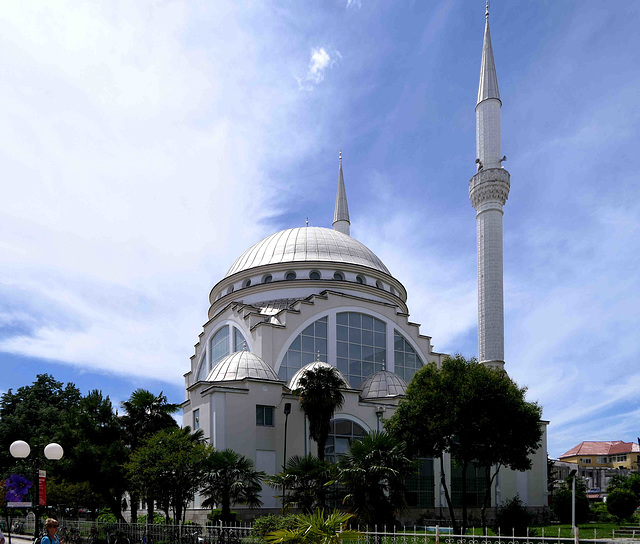

With around 140,000 inhabitants, Shkodra is the fifth most populous city in the Republic of Albania. The area has been inhabited continuously since the early Bronze Age. A settlement was founded here by Illyrians in the 4th century BC. The Romans annexed the town in 168 BC. With the spread of Christianity in the 4th century AD, the archbishopric of Scodra was founded and taken over by the Byzantine Emperor Justinian I in 535.
In the second half of the 6th century, Scodra was conquered by invading Slavs.
In 1396, the Republic of Venice took over Shkodra, which now became part of Venetian Albania. During Venetian rule, the city flourished into a rich trading town.
In 1479, after a long siege, Shkodra was captured by the Ottomans. As far as the inhabitants had survived the siege, they left the city with the retreating Venetian troops and were resettled on Venetian territory. It took a long time for the city to recover from the destruction and depopulation and become an important trading centre again, which was now able benefit from the exchange between the Ottoman Empire and the rest of Europe. By the end of the 16th century, almost all the inhabitants had converted to Islam.
The Ebu Bekër Mosque was built from 1994 to 1995 on the site of the old Fushë Çela Mosque, which was destroyed during the communist era.
In the second half of the 6th century, Scodra was conquered by invading Slavs.
In 1396, the Republic of Venice took over Shkodra, which now became part of Venetian Albania. During Venetian rule, the city flourished into a rich trading town.
In 1479, after a long siege, Shkodra was captured by the Ottomans. As far as the inhabitants had survived the siege, they left the city with the retreating Venetian troops and were resettled on Venetian territory. It took a long time for the city to recover from the destruction and depopulation and become an important trading centre again, which was now able benefit from the exchange between the Ottoman Empire and the rest of Europe. By the end of the 16th century, almost all the inhabitants had converted to Islam.
The Ebu Bekër Mosque was built from 1994 to 1995 on the site of the old Fushë Çela Mosque, which was destroyed during the communist era.
William Sutherland, Dimas Sequeira, Alexander Prolygin and 2 other people have particularly liked this photo
- Keyboard shortcuts:
Jump to top
RSS feed- Latest comments - Subscribe to the comment feeds of this photo
- ipernity © 2007-2026
- Help & Contact
|
Club news
|
About ipernity
|
History |
ipernity Club & Prices |
Guide of good conduct
Donate | Group guidelines | Privacy policy | Terms of use | Statutes | In memoria -
Facebook
X

Sign-in to write a comment.