

Nederland - Anloo, Magnuskerk
Combloux (74) 5 septembre 2018. Chapelle du Médonn…
La Chapelle Saint Roch
Germany - Kevelaer, Gnadenkapelle
Chapel of the Lord (16th century).
Chapel of Our Lady of Pity.
Chapel of Saint Bartholomew.
Nederland - Borne, Mariakapel
Germany - Oberstdorf, Seelenkapelle
Germany - Oberstdorf, Loretto-Kapellen
Austria - Kleinwalsertal/Hirschegg, Bruder Klaus-K…
Chapel of the Holy Spirit.
Esquina Gate and Chapel of Our Lady of Conception.
Bones Chapel (18th century).
Bones Chapel (18th century).
Ray of Light
Nederland - Heiloo, Onze Lieve Vrouw ter Nood - Ge…
Small Hindu Temple.
Tschuggenkapelle an der Flüelapassstraße
Chapel of Our Lady of the Sea.
View from the basilica to the shrine.
France: Saint-Philbert-sur-Orne, Église de la Plis…
Chapelle Saint Georges à Ornans.
Lusíada University and Sacred Art Museum.
Saint Anthony Chapel.
Greece - Areopoli, Church of Agios Charalambos & P…
Litlle chapel in the meadow - HBM
Chapel of Lord of the Calvary Steps.
Greece - Astros, Loukous Monastery
Greece - Elafonisos, Agios Spyridon
Greece - Feneos, Saint Fanourios Chapel
Greece - Plataniotissa, Church of the Virgin Mary
Ferreira do Alentejo - Capela do Calvário
Schiffer-Kirche St. Marien (5 PiPs)
Greece - Arkoudi, Church of Saint Nicholas
Alt Käbelich
Greece - Kalogerorachi, Zoodochos Pigi Samarina
Greece - Vasta, Agia Theodora
Chapel of the Lord of the Souls.
Εκκλησία Άγιος Ιωάννης.
Greece - Kalamata, Kalograion Monastery
Chapel of Our Lady of Good Success.
Twin churches. Saints Peter and Paul.
Greece - Kalamata, castle
Kirchlein im Grünen (2)

Location
Lat, Lng:
You can copy the above to your favourite mapping app.
Address: unknown
You can copy the above to your favourite mapping app.
Address: unknown
See also...
Keywords
Authorizations, license
-
Visible by: Everyone -
All rights reserved
-
199 visits
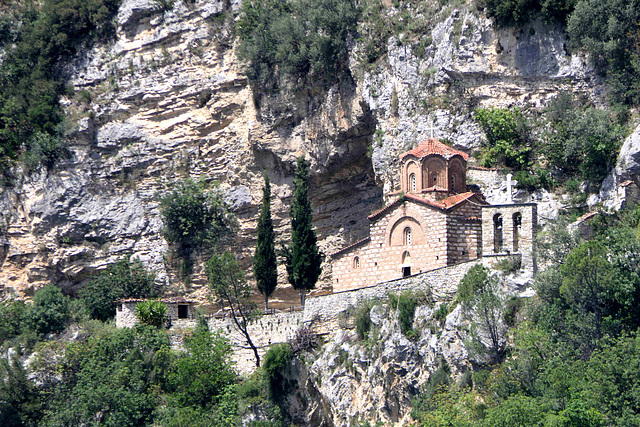
Berat - St. Michael

Berat was known under the ancient name of Antipatrea since at least the 4th century BC. The city eventually was conquered by Macedonian king Philip V until Roman intervention. It was described as the largest settlement with significant walls but got destroyed in 200 BCE and then included within Epirus Nova, in the province of Macedonia. Following the fall of the western Roman Empire the town became part of the unstable frontier of the Byzantine Empire, when it as well suffered by Slavic invasions..
It became part of the First Bulgarian Empire in the 9th century, in 1018 surrendered to the emperor Basil II, and remained in Byzantine hands until the Second Bulgarian Empire retook the city in 1203.
In 1272 Byzantine Emperor Michael VIII asked the Albanian leaders of Berat and Durrës to abandon their alliance with Charles I of Naples, leader of the Kingdom of Albania, who had captured and incorporated it in the Kingdom of Albania. However, they contacted Charles about it as a sign of their loyalty. In 1274 Michael VIII recaptured Berat. In 1280-1281 the Sicilian forces laid siege to Berat. In March 1281 a relief force from Constantinople was able to drive off the Sicilian army and Berat again fell under the control of the Byzantine Empire.
Berat the fell into decline. By the end of the 16th century it had only 710 houses. However, it began to recover by the 17th century, and became a major craft centre. During the first part of the 16th century, Berat was a Christian city and did not contain any Muslim households. Following their expulsion from Spain, a Jewish community existed in Berat that consisted of 25 families between 1519 and 1520. End of the 16th century, Berat contained 461 Muslim houses. Conversion to Islam of the urban population in Berat had increased.
During WWII, Jews were concealed in the homes and basements of 60 families from the Muslim and Christian communities in Berat. Muslims let Jewish people worship in the local mosque.
In the 1950s, during the Communist era, Berat became a place of internal exile for those who were deemed public enemies. In 1967, Albanian author Ismail Kadare was sent to Berat, where he spent two years.
Berat, was designated a UNESCO World Heritage Site in 2008. It comprises a unique style of architecture with influences from several civilizations that have managed to coexist for centuries throughout the history.
The St. Michael's Church is a medieval Byzantine church on a hilltop. The church was possibly constructed in the 14th century. ]
The church is a cruciform chapel with a dome on drum and narthex.
It became part of the First Bulgarian Empire in the 9th century, in 1018 surrendered to the emperor Basil II, and remained in Byzantine hands until the Second Bulgarian Empire retook the city in 1203.
In 1272 Byzantine Emperor Michael VIII asked the Albanian leaders of Berat and Durrës to abandon their alliance with Charles I of Naples, leader of the Kingdom of Albania, who had captured and incorporated it in the Kingdom of Albania. However, they contacted Charles about it as a sign of their loyalty. In 1274 Michael VIII recaptured Berat. In 1280-1281 the Sicilian forces laid siege to Berat. In March 1281 a relief force from Constantinople was able to drive off the Sicilian army and Berat again fell under the control of the Byzantine Empire.
Berat the fell into decline. By the end of the 16th century it had only 710 houses. However, it began to recover by the 17th century, and became a major craft centre. During the first part of the 16th century, Berat was a Christian city and did not contain any Muslim households. Following their expulsion from Spain, a Jewish community existed in Berat that consisted of 25 families between 1519 and 1520. End of the 16th century, Berat contained 461 Muslim houses. Conversion to Islam of the urban population in Berat had increased.
During WWII, Jews were concealed in the homes and basements of 60 families from the Muslim and Christian communities in Berat. Muslims let Jewish people worship in the local mosque.
In the 1950s, during the Communist era, Berat became a place of internal exile for those who were deemed public enemies. In 1967, Albanian author Ismail Kadare was sent to Berat, where he spent two years.
Berat, was designated a UNESCO World Heritage Site in 2008. It comprises a unique style of architecture with influences from several civilizations that have managed to coexist for centuries throughout the history.
The St. Michael's Church is a medieval Byzantine church on a hilltop. The church was possibly constructed in the 14th century. ]
The church is a cruciform chapel with a dome on drum and narthex.
appo-fam, Dimas Sequeira, William Sutherland, Nicole Merdrignac and 3 other people have particularly liked this photo
- Keyboard shortcuts:
Jump to top
RSS feed- Latest comments - Subscribe to the comment feeds of this photo
- ipernity © 2007-2026
- Help & Contact
|
Club news
|
About ipernity
|
History |
ipernity Club & Prices |
Guide of good conduct
Donate | Group guidelines | Privacy policy | Terms of use | Statutes | In memoria -
Facebook
X

Sign-in to write a comment.