

Parada de Sil - Monasterio de Santa Cristina
Santo Estevo de Ribas de Sil
Santa María de Nogueira de Miño
San Miguel do Monte
Monasterio de Santa María de Valdediós
Basilika St. Kastor
Pronstorf, romanische Feldsteinkirche mit Rundturm
Barfrestone - St. Nicholas
Barfrestone - St. Nicholas
Dalmeny - Parish Church
Kirkliston - Parish Church
Kirkliston - Parish Church
Kirkwall - St Magnus Cathedral
Kirkwall - St Magnus Cathedral
Waren (Müritz), Marienkirche
Happy Sunny Sunday!
St. Ägidius und Nikolaus
Chã, Igreja Românica de São Vicente da Chã, HWW
Igreja de São Vicente da Chã
Cotignac
Eglise de SAINTE-ORSE Dordogne
Löwe und Greif
Sant’Apollinare in Classe
Plasencia - Catedral
Drache und Hirsch
Drache
Kapitell mit zwei Löwen
Carved Grafitti
Chiesa di Santa Maria Impenso, Narni
Chiesa S. Maria Impensole, Narni, Umbria - (4 x P…
Saint Pierre de Bessejouls
Zamora - Santa María la Nueva
Flechtdorf - Kloster Flechtdorf
North Grimston - St Nicholas
Ledsham - All Saints
Riccall - St Mary
Melbourne - St Michael with St Mary
Melbourne - St Michael with St Mary
Ely - Cathedral
Ely - Cathedral
DSCN3254
DSCN3250
Romanik
San Sivestro, Bevagna (4 x PiP)
Rowlestone - St Peter

Location
Lat, Lng:
You can copy the above to your favourite mapping app.
Address: unknown
You can copy the above to your favourite mapping app.
Address: unknown
Keywords
Authorizations, license
-
Visible by: Everyone -
All rights reserved
-
166 visits
Plasencia - Catedral
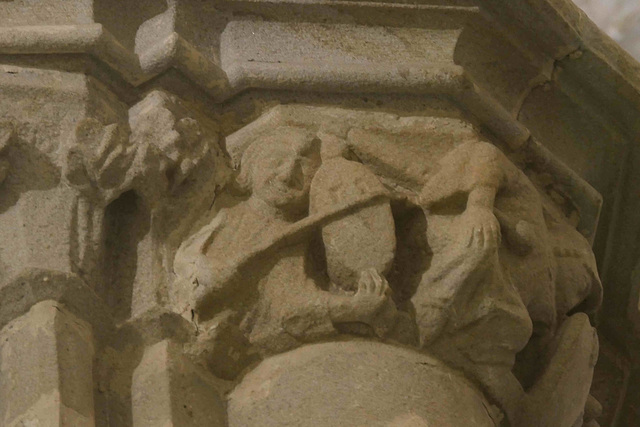

Today, Plasencia is a city with more than 40,000 inhabitants. The city was founded in 1186 by Alfonso VIII of Castile during the reconquest of the Moorish-occupied territories from the 10th century onwards and was elevated to the status of a bishop's see by Pope Clement III just three years later. However, the conflicts between Christians and the Almohads, who were dominant at the time, continued until 1212, when the city finally came under Christian rule after the Battle of Las Navas de Tolosa.
Plasencia Cathedral comprises two buildings: one known as the Old Cathedral, begun in the 13th century in the Romanesque style in transition to the Gothic. The remains of the original church include the naves, the western façade, the Gothic-style cloister and the chapter room crowned with a ribbed dome in the Byzantine tradition. The New Cathedral, begun in the 15th century, is in the Gothic style. It has high vaults supported by groups of columns. The Old Cathedral (Catedral vieja) currently houses the Cathedral Museum, while the New Cathedral (Catedral nueva) is the seat of the diocese of Plasencia
Plasencia Cathedral comprises two buildings: one known as the Old Cathedral, begun in the 13th century in the Romanesque style in transition to the Gothic. The remains of the original church include the naves, the western façade, the Gothic-style cloister and the chapter room crowned with a ribbed dome in the Byzantine tradition. The New Cathedral, begun in the 15th century, is in the Gothic style. It has high vaults supported by groups of columns. The Old Cathedral (Catedral vieja) currently houses the Cathedral Museum, while the New Cathedral (Catedral nueva) is the seat of the diocese of Plasencia
- Keyboard shortcuts:
Jump to top
RSS feed- Latest comments - Subscribe to the comment feeds of this photo
- ipernity © 2007-2026
- Help & Contact
|
Club news
|
About ipernity
|
History |
ipernity Club & Prices |
Guide of good conduct
Donate | Group guidelines | Privacy policy | Terms of use | Statutes | In memoria -
Facebook
X

Sign-in to write a comment.