

Romania, Library of St. John's from Neamț and Neam…
San Michele Arcangelo
Greece - Glyfada, Cathedral of Saints Constantine…
Córdoba - Santo Domingo de Silos
Alburquerque
Aveiro - Capela de São Bartolomeu
Ericeira, Portugal HBM
Ericeira, Portugal
Cambridge - Church of the Holy Sepulchre
Lucena - Iglesia de San Mateo
Lucena - Iglesia de San Mateo
Lucena - Iglesia de San Mateo
Lucena - Iglesia de San Mateo
Ferreira do Alentejo - Capela do Calvário
Chaves - São João de Deus
Chaves - São João de Deus
Butrint
Butrint
Butrint
Gjirokastër - Orthodox Cathedral
Italy, Cappella di San Galgano
Margam Abbey
Margam Abbey
Moldova, Bălți, Sts. Emperors Constantine and Elen…
Almazán - Ermita de Jesus
Ottmarsheim >>>>>>>
Манастир Добриловина.
Havelberg - St. Annen und Gertraudenkapelle
Torino - Basilica di Superga
Torino - Gran Madre di Dio
Frankfurt - Paulskirche
La Spezia - Cattedrale di Cristo Re
Pistoia - Battistero di San Giovanni in Corte
Florence - Battistero di San Giovanni
Todi - Santa María de la Consolación
Antrodoco - Santa Maria Extra Moenia
Antrodoco - Santa Maria Extra Moenia
Brindisi - San Giovanni al Sepolcro
Brindisi - San Giovanni al Sepolcro
Benevento - Santa Sofia
Ancarano - Madonna della Misericordia
Ascoli Piceno - Battistero di San Giovanni
Ascoli Piceno - Tempietto di S Emidio Rosso
Urbino - San Bernardino
Rimini - Tempietto di Sant'Antonio

Location
Lat, Lng:
You can copy the above to your favourite mapping app.
Address: unknown
You can copy the above to your favourite mapping app.
Address: unknown
See also...
See more...
Keywords
Authorizations, license
-
Visible by: Everyone -
All rights reserved
-
183 visits
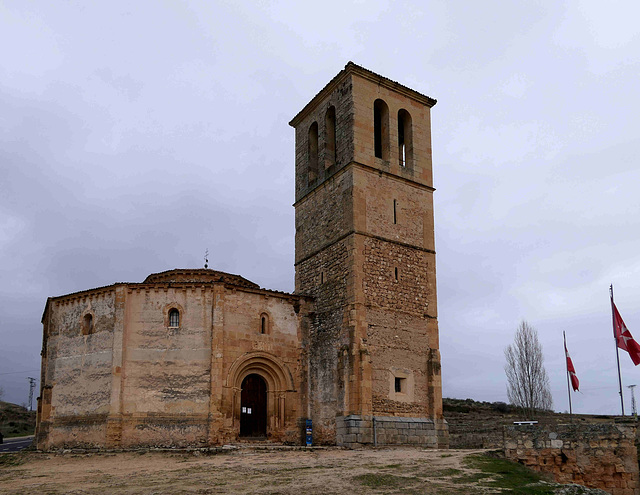
Segovia - La Vera Cruz

A Celtic castle existed here, from which resistance against the Romans originated. The city was nevertheless taken. Afterward, it began to be built as a Roman city and became an important Roman military base.
In the second half of the 5th century, Segovia became part of the Visigoth Empire. From the 8th to the 11th centuries, Segovia was under Moorish possession. In 1085 Alfonso VI conquered the city. From the 13th to the 15th century it was a royal residence.
The church of the "True Cross", formerly known as the Church of Holy Sepulchre, is located to the north of the city and close to the Convent of San Juan de la Cruz.
It consists of a nave with a dodecagonal floor plan that surrounds a small central two-story shrine.
The construction of this temple has traditionally been attributed to the Knights Templars, but it is believed that it was the Order of the Holy Sepulchre of Jerusalem and that it depended of the Collegiate church of Santa María la Mayor in Zamora.
The church was dedicated in 1208. In 1531 as a result of the unification of the Order of the Holy Sepulchre with the Order of St. John of Jerusalem, it became dependent on the Sovereign Military and Hospitaller Order of St. John of Jerusalem, Rhodes and Malta.
To the original building was added an apse which is now used as a sacristy. Then, the tower, initially separated from the church, was added. Later, three apses were built, giving the church its today's appearance.
In 1951, the Sovereign Military Hospitaller Order of Saint John of Jerusalem, of Rhodes and of Malta took possession of it again and is still today in charge of its conservation and custody.
In the second half of the 5th century, Segovia became part of the Visigoth Empire. From the 8th to the 11th centuries, Segovia was under Moorish possession. In 1085 Alfonso VI conquered the city. From the 13th to the 15th century it was a royal residence.
The church of the "True Cross", formerly known as the Church of Holy Sepulchre, is located to the north of the city and close to the Convent of San Juan de la Cruz.
It consists of a nave with a dodecagonal floor plan that surrounds a small central two-story shrine.
The construction of this temple has traditionally been attributed to the Knights Templars, but it is believed that it was the Order of the Holy Sepulchre of Jerusalem and that it depended of the Collegiate church of Santa María la Mayor in Zamora.
The church was dedicated in 1208. In 1531 as a result of the unification of the Order of the Holy Sepulchre with the Order of St. John of Jerusalem, it became dependent on the Sovereign Military and Hospitaller Order of St. John of Jerusalem, Rhodes and Malta.
To the original building was added an apse which is now used as a sacristy. Then, the tower, initially separated from the church, was added. Later, three apses were built, giving the church its today's appearance.
In 1951, the Sovereign Military Hospitaller Order of Saint John of Jerusalem, of Rhodes and of Malta took possession of it again and is still today in charge of its conservation and custody.
Alexander Prolygin, kiiti have particularly liked this photo
- Keyboard shortcuts:
Jump to top
RSS feed- Latest comments - Subscribe to the comment feeds of this photo
- ipernity © 2007-2026
- Help & Contact
|
Club news
|
About ipernity
|
History |
ipernity Club & Prices |
Guide of good conduct
Donate | Group guidelines | Privacy policy | Terms of use | Statutes | In memoria -
Facebook
X

Sign-in to write a comment.