

Pisa - Duomo di Santa Maria Assunta
Pisa - Duomo di Santa Maria Assunta
Pisa - Duomo di Santa Maria Assunta
Pisa - Duomo di Santa Maria Assunta
Pisa - Duomo di Santa Maria Assunta
Pisa - Duomo di Santa Maria Assunta
Pisa - Duomo di Santa Maria Assunta
Pisa - Duomo di Santa Maria Assunta
Pisa - Duomo di Santa Maria Assunta
Pisa - Leaning Tower
Pisa - CARTA E CARTONE
Pisa - Panificio Bolognese
Pisa - Duomo di Santa Maria Assunta
Pisa - Duomo di Santa Maria Assunta
Pisa - Duomo di Santa Maria Assunta
Pisa - Duomo di Santa Maria Assunta
Pisa - Duomo di Santa Maria Assunta
Pisa - Duomo di Santa Maria Assunta
Pisa - Leaning Tower
Pisa - Leaning Tower
Pisa - Leaning Tower
Pisa - Museo dell'Opera del Duomo
Pisa - Museo dell'Opera del Duomo
Pisa - La Bottega del Gelato
Pisa - Duomo di Santa Maria Assunta
Pisa - Duomo di Santa Maria Assunta
Pisa - Duomo di Santa Maria Assunta
Pisa - Duomo di Santa Maria Assunta
Pisa - Duomo di Santa Maria Assunta
Pisa - Duomo di Santa Maria Assunta
Pisa - Duomo di Santa Maria Assunta
Pisa - Duomo di Santa Maria Assunta
Pisa - Duomo di Santa Maria Assunta
Pisa - Duomo di Santa Maria Assunta
Pisa - Duomo di Santa Maria Assunta
Pisa - Duomo di Santa Maria Assunta
Pisa - Duomo di Santa Maria Assunta
Pisa - Duomo di Santa Maria Assunta
Pisa - Baptistry
Pisa - Baptistry
Pisa - Baptistry
Pisa - Baptistry
Pisa - Duomo di Santa Maria Assunta
Pisa - Baptistry
Pisa - Baptistry
Location
Lat, Lng:
You can copy the above to your favourite mapping app.
Address: unknown
You can copy the above to your favourite mapping app.
Address: unknown
See also...
See more...
Keywords
Authorizations, license
-
Visible by: Everyone -
All rights reserved
-
365 visits
Pisa - Duomo di Santa Maria Assunta
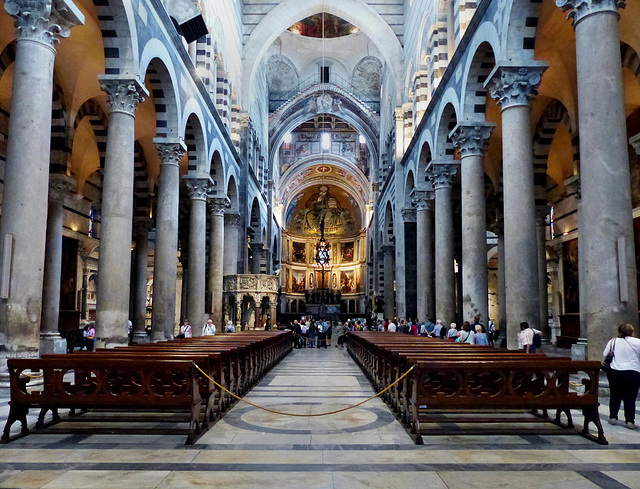

The construction of the "Duomo" began in 1064 by the architect Busketo, who with this structure set the model for the distinctive Pisan Romanesque style of architecture.
When the construction of this cathedral started, Pisa was on a height of political (and financial) power. Pisa was an important commercial centre controlling large parts of the Mediterranean merchant fleet and navy.
In 1017 Pisa had militarily supported the Sardinian "Giudicati" (regional kings) to defeat Saracen troops in the north of Sardinia. Between 1030 and 1035, Pisa defeated rival towns in Sicily. In 1051–1052 admiral Jacopo Ciurini conquered Corsica. In 1063 admiral Giovanni Orlando, coming to the aid of the Norman Roger I, took Palermo from the Saracen. The gold treasure taken from the Saracens in Palermo allowed the Pisans to start the building of the cathedral - and all other building of the "Piazza del Duomo".
But the victorious Pisans did not only bring gold back, when they looted an area. They dismantled complete buildings and shipped the marble home, to be used here.
Standing in the nave, facing east.
The five-aisle cathedral is about 100 m long and 30 m wide. The granite columns between the nave and the aisles came originally from the mosque of Palermo. The cathedral was severely damaged by a fire in 1595. The pulpit (left) and the large mosaic of the apse survived that blaze.
When the construction of this cathedral started, Pisa was on a height of political (and financial) power. Pisa was an important commercial centre controlling large parts of the Mediterranean merchant fleet and navy.
In 1017 Pisa had militarily supported the Sardinian "Giudicati" (regional kings) to defeat Saracen troops in the north of Sardinia. Between 1030 and 1035, Pisa defeated rival towns in Sicily. In 1051–1052 admiral Jacopo Ciurini conquered Corsica. In 1063 admiral Giovanni Orlando, coming to the aid of the Norman Roger I, took Palermo from the Saracen. The gold treasure taken from the Saracens in Palermo allowed the Pisans to start the building of the cathedral - and all other building of the "Piazza del Duomo".
But the victorious Pisans did not only bring gold back, when they looted an area. They dismantled complete buildings and shipped the marble home, to be used here.
Standing in the nave, facing east.
The five-aisle cathedral is about 100 m long and 30 m wide. The granite columns between the nave and the aisles came originally from the mosque of Palermo. The cathedral was severely damaged by a fire in 1595. The pulpit (left) and the large mosaic of the apse survived that blaze.
Bernadette has particularly liked this photo
- Keyboard shortcuts:
Jump to top
RSS feed- Latest comments - Subscribe to the comment feeds of this photo
- ipernity © 2007-2026
- Help & Contact
|
Club news
|
About ipernity
|
History |
ipernity Club & Prices |
Guide of good conduct
Donate | Group guidelines | Privacy policy | Terms of use | Statutes | In memoria -
Facebook
X

Sign-in to write a comment.