Dinesh

Dinesh club

Posted: 26 Oct 2024


Taken: 31 Aug 2024

0 favorites     4 comments    37 visits


Keywords

Excerpt
ONE LONG NIGHT
ANDREA PITZER
AUTHORESS
Fairuse
For Information only
Link


Authorizations, license

Visible by: Everyone
All rights reserved

37 visits


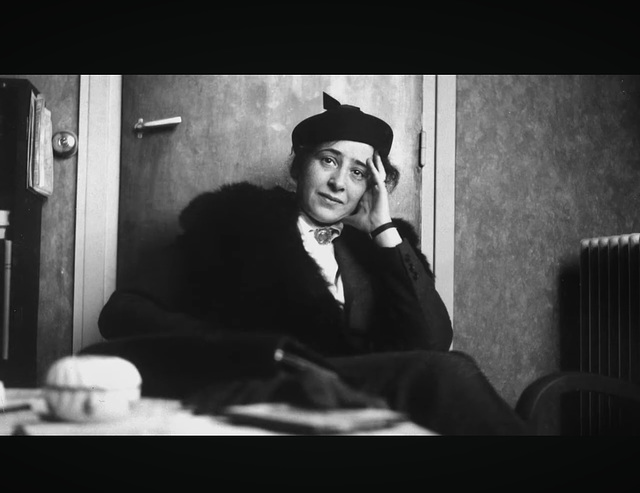
Hanna Arendt

Hanna Arendt
Translate into English

Comments
 Dinesh
Dinesh club
Political philosopher Hanna Arendt described concentration camps are divided into Purgatory, Hades, and Hell, moving from the netherland to internment to labor camps of the Gulag and Nazi death factories. But nearly all concentration camps share one feature: they extract people from one area to house them somewhere else. It sounds like a simple concept, but both elements are distinct and important. Camps require the removal of a population from a society with all its accompanying rights, relationships, and connections to humanity. This exclusion is followed by an involuntary assignment to some lesser condition or place, generally detention with other undesirables under armed guard. Of these afterworlds, Arendt write, “all these types have one thing in common: the human masses sealed off in them are treated as if they no longer existed, as if were happened to them were no longer of interest to anybody, as if they were already dead and some evil spirit gone made were amusing himself by stopping them for a while between life and death. ~ Page 7 ~ Introduction

As Hena Arendt once said of violence as a means to an end, the end sometimes shifts or is never attained. The use of concentration camps changes the world,, but going forward, the most predictable outcome of their use is a world with more camps. ~ Page 400

Keeping in mind Hanna Arendt’s theory that from a legal standpoint, concentration camp detainees are generally worse off than convicted criminals. One question to ask is whether most detainees would be better off if convicted. The answer since several captives there who entered plea bargains have been released long before many of their untried fellow prisoners, is a resounding yes. ~ Page 401

ONE LONG NIGHT
15 months ago. Edited 15 months ago.
 Dinesh
Dinesh club
. . . Although the Soviet Camps (Gulag) were initially more deadly, for example the KL later took a more radical turn and developed along far more lethal lines, culminating in the Auschwitz extermination complex, which had no equal in the USSR or anywhere else. NKVD prisoners were more likely to be released than to die, whereas the opposite was true for prisoners in the wartime SS concentration camps. In all, some ninety percent of inmates survived the Gulag; in the KL the figure among registered prisoners was less than half. As the philosopher Hanna Arendt put it in her pioneering study of totalitarianism, the Soviet camps purgatory, the Nazi ones pure hell.. . . Page 9

KL
2 months ago. Edited 2 months ago.
 Dinesh
Dinesh club
Perhaps the most trenchant thinker about the prospect of civilization was Hanna Arendt. Arendt, of course, was one of the most celebrated political thinkers of the twentieth century, and is often associated with her controversial views put forward in her journalistic work for the ‘New Yorker’ magazines, ‘Eichman in Jerusalem’. Yet she also developed far-reaching and often unusual ideas of civilization in the 1950s. First of all, she analyzed contemporary states (especially the United States) in relation to the Roman Empire. In a number of essays, Arendt approvingly identified the hallmark value of ancient Roman civilization as being a law-based republic that enabled it to integrate foreigners and the conquered into its imperial body politic, thus preserving the distinctiveness of thor own cultural identities ina “civital.” For her, this was the moral foundation of the American and French Revolutions, making possible the development of liberal civilization based on old Roman republican virtues that still needed to be defended. . . . . Page 206

RUIN AND RENEWAL
3 weeks ago. Edited 3 weeks ago.

Sign-in to write a comment.