

Winter rose
I sit on the rocks
Luggage
Autumn
Lady & her luggage
The Ballin Ceiling Mural
Suitcases
Forest
Negative geotropism
Tourism
Marlon Brando
Magellanic Clouds
For Sale (Maps)
Immanuel Kant
David Hume
To the Deck
Brahe
Chevy 10
SAMSON
What is evolution / Darwin and the Voyage of the B…
Door
Johannes Hevelius
The Usefulness of Useless Knowledge
Worm at the core
On the wall
Los Angeles
If I had a hammer...
"This is White"
See also...
Keywords
Authorizations, license
-
Visible by: Everyone -
All rights reserved
-
29 visits
Moth
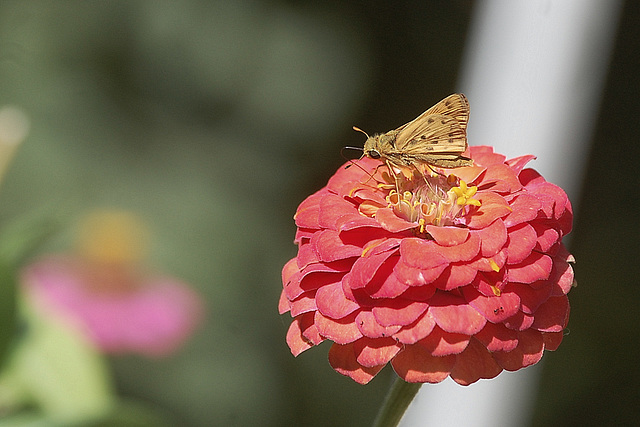

Butterflies typically have slender bodies, clubbed antennae, and hold their wings vertically when resting, while moths often have stout, fuzzy bodies, feathery or tapering antennae, and hold their wings in a tent-like fashion when at rest. Butterflies form hard chrysalises, while most moth caterpillars spin silk cocoons. While these are general rules, many exceptions exist, making features like antennae the most reliable indicators
- Keyboard shortcuts:
Jump to top
RSS feed- Latest comments - Subscribe to the comment feeds of this photo
- ipernity © 2007-2026
- Help & Contact
|
Club news
|
About ipernity
|
History |
ipernity Club & Prices |
Guide of good conduct
Donate | Group guidelines | Privacy policy | Terms of use | Statutes | In memoria -
Facebook
X

Butterflies: Generally have slender, streamlined bodies.
Moths: Often have a stout, more robust body that is frequently covered in fine hairs or scales.
Antennae
Butterflies: Have thin, filamentous antennae with a distinctive club-shaped tip at the end.
Moths: Possess feathery or tapering antennae that never have a clubbed tip.
Wing Position When at Rest
Butterflies: Tend to hold their wings vertically above their backs.
Moths: Often rest with their wings held in a tent-like position over their bodies, spread out at the sides, or wrapped around their bodies.
Activity & Life Cycle
Butterflies: Are diurnal, meaning they are primarily active during the day.
Moths: Are typically nocturnal, active at night, though there are many exceptions.
Pupal Stage: Butterfly caterpillars form a hardened, protective shell called a
chrysalis. Moth caterpillars spin a fibrous cocoon before their pupal stage.
Color
Butterflies: Are often colorful with dramatic patterns.
Moths: Tend to be plainer, with wings in shades of brown, gray, and white. However, some moths, like the Luna Moth or Tiger Moth, are quite striking and brightly colored.
Key Differences to Remember
Antennae: The most reliable distinguishing feature is the antennae; butterflies have clubbed antennae, while moths have feathery or tapering antennae.
Activity Time: While most butterflies are day-fliers and most moths are night-fliers, this is not a definitive rule as there are many diurnal moths and some nocturnal butterflies.
Exceptions: It is crucial to remember that there are exceptions for both color, activity, and wing position.
Sign-in to write a comment.