

Pano ~ Flower Conservatory
Magnolia
Golden Gate Bridge
Starter /Corn chips and Gauk
Thai Green curry / Salmon
Crispy Chicken Katsu
West Coast style grilled Salmon
View from Water Temple
Crystal lake, San Francisco, CA
Kim cương
A street scene
A display
Film One
Life in Hawaii
Salsa
Flower Conservatory
Helping hand
Dream bubble ~ dreaming with eyes wide open
At Pu'uhonua National Park
From archives
Dancers ~ Kona, Hawaii airport
Flower Conservatory
Golden Gate Bridge
Culture & illusion
By the sea side
Land that rose
Grand Ma & me R friends
Swami Dosa Grill
Sunset at Kona, Hawaii
Reflection
Chevrolet
On the Southern most point of USA
An evening on the rocks
Sunset
Tractor
James Cook shore
James Cook shore
James Cook shore
Fishing
Location
Lat, Lng:
You can copy the above to your favourite mapping app.
Address: unknown
You can copy the above to your favourite mapping app.
Address: unknown
See also...
Keywords
Authorizations, license
-
Visible by: Everyone -
All rights reserved
- Photo replaced on 03 Jan 2020
-
120 visits
Pitcher Plant
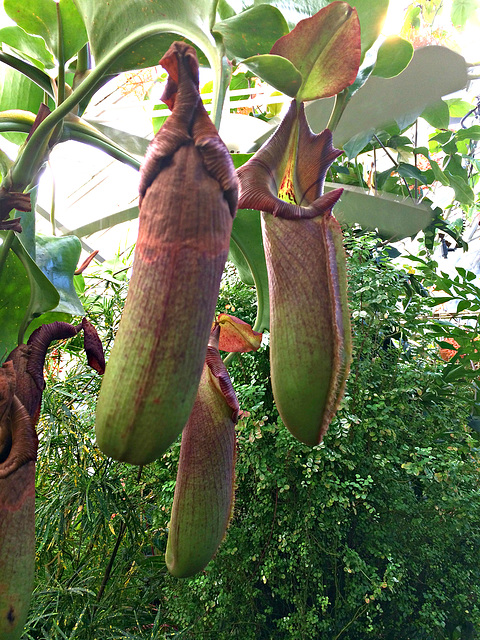

en.wikipedia.org/wiki/Pitcher_plant
. . . Jonathan Smith has pointed out, in Darwin’s books about botany, there is something about Darwin’s preoccupation with the ordinary that extends beyond realism. Darwin’s preoccupation with the aberrant and the unique and the grotesque (as traces of indicators of large movements and significances) extends in the botany books to the study of plants that are truly, as Smith put it, “macabre,”
plants that trapped, killed and ate insects;. . . bizarrely ornamented, gaudy colored, fantastically structured flowers that lured insects into unwittingly effecting cross-fertilization: and. . . species with various sexual forms and multiple reproductive possibilities. While these works also embodied a realistic spirit, the literature of the day that most looked like Darwin’s botany was not the realistic novel of Trollope and Eliot, but the “sensation fiction” that flourished in those same decades, the thrilling novels full of shocking crimes and illicit sexuality by Wilkie Collins, Mary Braddon, and others. ~ Page 127
. . . Jonathan Smith has pointed out, in Darwin’s books about botany, there is something about Darwin’s preoccupation with the ordinary that extends beyond realism. Darwin’s preoccupation with the aberrant and the unique and the grotesque (as traces of indicators of large movements and significances) extends in the botany books to the study of plants that are truly, as Smith put it, “macabre,”
plants that trapped, killed and ate insects;. . . bizarrely ornamented, gaudy colored, fantastically structured flowers that lured insects into unwittingly effecting cross-fertilization: and. . . species with various sexual forms and multiple reproductive possibilities. While these works also embodied a realistic spirit, the literature of the day that most looked like Darwin’s botany was not the realistic novel of Trollope and Eliot, but the “sensation fiction” that flourished in those same decades, the thrilling novels full of shocking crimes and illicit sexuality by Wilkie Collins, Mary Braddon, and others. ~ Page 127
- Keyboard shortcuts:
Jump to top
RSS feed- Latest comments - Subscribe to the comment feeds of this photo
- ipernity © 2007-2025
- Help & Contact
|
Club news
|
About ipernity
|
History |
ipernity Club & Prices |
Guide of good conduct
Donate | Group guidelines | Privacy policy | Terms of use | Statutes | In memoria -
Facebook
X

July to September, 1954
. . . We had been told we should find water in Padang Batu
(Ilir Talo, Seluma Regency, Bengkulu, Indonesia) buyt we looked about for it in vain, as we were exceedingly thirst. At last we turned to the pitcher-plants, but the water contained in the pitchers (about half a pint in each_ was full of insects and otherwise uninviting. On tasting, it however, we found it very palatable, though rather warm, and we all quenched our thirst from these natural jugs. . . . Page 25
Sign-in to write a comment.