

Nederland - Dwingeloo, Sint Nicolaaskerk
Nederland - Ruinen, De Zaandplatte
Nederland - De Wijk, Huize Dickninge
Nederland - Fochteloërveen
Nederland - Dwingeloo, Havezate Oldengaerde
Nederland - Noordoostpolder
Nederland - De Wijk, Landgoed Dickninge/tolhuis
Nederland - De Wijk, Reest
Nederland - Anna Paulowna, Poldertuin
Nederland - Anna Paulowna/Breezand
Nederland - Sint Maartensvlotbrug, Wildrijk
Nederland - Anna Paulowna, Poldertuin
Nederland - Bergen aan Zee, Noordhollands Duinrese…
Nederland - Sint Maartensvlotbrug, tulpen
Nederland - De Cruquius
Nederland - Callantsoog, Zwanenwater
Nederland - Roermond, Munsterkerk
Nederland - Santpoort, Kasteel Brederode
Nederland - Vechtdal
Switzerland - Basel Minster
Nederland - Torenmolen van Gronsveld
Germany - Oberstdorf, Söllereck
Nederland - Roermond, stadhuis
Nederland - Dwingelderveld
Nederland - Dwingelderveld
België - Brugge
België - Turnhout, begijnhof
Nederland - Oudenbosch, Kapel van Saint Louis
Nederland - Breda, Begijnhof
Nederland - Heusden, stadshaven
Nederland - Vaassen, Kasteel De Cannenburgh
Nederland - Breda, Grote Kerk
Nederland - Oisterwijk, Groot Aderven
Nederland - Oudenbosch, basiliek
Greece - Monastery of Panagia Elona
Germany - Potsdam, Alexander Nevsky Memorial Churc…
Germany- Stolberg
England - Hereford Cathedral
Switzerland - Basel, town hall
Greece - Nafplion
England - Kilpeck, Church of St Mary and St David
Switzerland - Wildhaus, Churfirsten
Greece - Nafplio
Nederland - Kasteel Ruurlo
England - Abbey Dore Court Gardens
Location
Lat, Lng:
You can copy the above to your favourite mapping app.
Address: unknown
You can copy the above to your favourite mapping app.
Address: unknown
See also...
Keywords
Authorizations, license
-
Visible by: Everyone -
All rights reserved
-
2 220 visits
Nederland - Veenhuizen
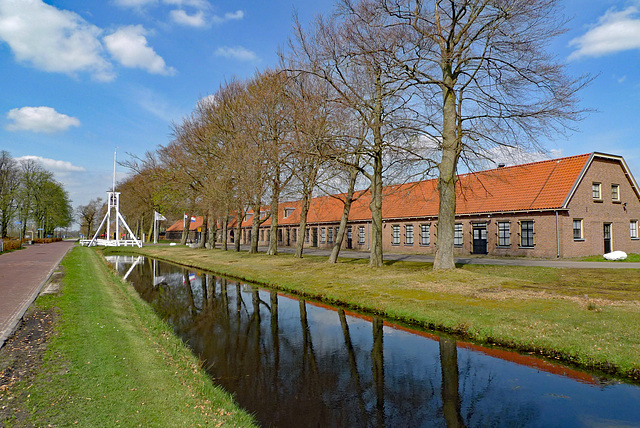

In 1818 things were not going very well in the Kingdom of the Netherlands, consisting of the current countries Netherlands, Belgium and Luxembourg. The kingdom had fought and lost several wars and trade was not at the levels it used to be. There was widespread poverty, particulary in the cities. Government and churches failed to solve the problems, so a group of people from more prosperous circles, under the leadership of a former army officer, set up an organisation in order to combat poverty: De Maatschappij van Weldadigheid (the Society of Benevolence.
Orphans, handicapped people, beggars, prostitutes, vagrants and others living in poverty did get a new change by working in a reform housing colony. The first one Frederiksoord was built in 1818. Families were given homes and a piece of land. Men grew their own crops on the land and women spinned yarn. Everything they received was in the form of a loan, which they repaid through work.
After a couple of ‘free’ colonies for the poor, the Society also set up unfree colonies for beggars, vagrants and orphans who did not wish to move to the countryside of their own free will. The residents were referred to as ‘patients’, but as a matter of fact they were prisoners..
Veenhuizen - built in 1823 - was the second ‘unfree’ settlement in the Netherlands. The settlement grew and grew and became a large institution. It was run differently and the the ‘patients’ were constantly monitored by guards. The settlement was built on reclaimed peatland. ‘Patients’ were on a tightly controlled daily schedule and work was a form of therapy. Compulsory attendance at a place of worship was also mandatory, no matter where - a catholic or protestant church or a synagoge.
In the 20th century the unfree colony inVeenhuizen was converted into an official prison. The colony still serves as a penal establishment with two prisons. One of the former buildings (main picture and PiP’s) nowadays houses the National Prison Museum. The museum also shows what life in the colony of Veenhuizen was like.
Orphans, handicapped people, beggars, prostitutes, vagrants and others living in poverty did get a new change by working in a reform housing colony. The first one Frederiksoord was built in 1818. Families were given homes and a piece of land. Men grew their own crops on the land and women spinned yarn. Everything they received was in the form of a loan, which they repaid through work.
After a couple of ‘free’ colonies for the poor, the Society also set up unfree colonies for beggars, vagrants and orphans who did not wish to move to the countryside of their own free will. The residents were referred to as ‘patients’, but as a matter of fact they were prisoners..
Veenhuizen - built in 1823 - was the second ‘unfree’ settlement in the Netherlands. The settlement grew and grew and became a large institution. It was run differently and the the ‘patients’ were constantly monitored by guards. The settlement was built on reclaimed peatland. ‘Patients’ were on a tightly controlled daily schedule and work was a form of therapy. Compulsory attendance at a place of worship was also mandatory, no matter where - a catholic or protestant church or a synagoge.
In the 20th century the unfree colony inVeenhuizen was converted into an official prison. The colony still serves as a penal establishment with two prisons. One of the former buildings (main picture and PiP’s) nowadays houses the National Prison Museum. The museum also shows what life in the colony of Veenhuizen was like.
Günter Klaus, Arlequin Photographie, , and 87 other people have particularly liked this photo
- Keyboard shortcuts:
Jump to top
RSS feed- Latest comments - Subscribe to the comment feeds of this photo
- ipernity © 2007-2026
- Help & Contact
|
Club news
|
About ipernity
|
History |
ipernity Club & Prices |
Guide of good conduct
Donate | Group guidelines | Privacy policy | Terms of use | Statutes | In memoria -
Facebook
X

Beautiful and interesting building!***
Happy weekend
HFF, Jaap!
Have a nice weekend
La photo est réussie !
Jaap van 't Veen club has replied to Tractacus clubHFF
La storia è molto interessante anche perché fa parte dell'evoluzione del modo di affrontare i problemi dei disadattati, cosa che penso non sia ancora molto ben affrontata al giorno d'oggi un po' ovunque ...
HFF for the first PIP (excellent) and HWE !
Jaap van 't Veen club has replied to Nora Caracci clubHave a nice weekend.
And again thank you for the note without which we would lose this history lesson, and social heart exemple.
Best regards, Doug
Have a lovely weekend
ciao, Silvy
Great work my friend. HFF to you and enjoy the weekend.
Have a nice weekend, Jaap!
Nicely composed picture, and very interesting story.
I like the idea of rounding up all the beggars, etc, and giving them some useful work to do.. Better than simply hand out government benefits!
Best Wishes, and a good weekend
Peter
The prison does have some appeal and I hope it serves it's purpose in reforming it's inmates.
HFF and have a wonderful weekend!
Best wishes
Füsun
Merci pour les commentaires
Was not such a bad idea. Would it work today? ;-)
Uitstekende foto,
Groeten uit België.
Edit: the snapshots of history are fascinating too, very worthwhile
;-)
Greetings from Italia, Anto & Pier
Walter
All the best
Fabio
Have a great Sunday, Jaap.
Groet, Marco
Thanks for the history!
Wünsche noch einen schönen Abend,ganz liebe Grüße Güni :))
Sign-in to write a comment.