

Greece - Didyma ‘craters’
Switzerland - Matterhorn
Wales: Hay-on-Wye
Germany - Externsteine
England - Abbey Dore Court Gardens
Nederland - Kasteel Ruurlo
Greece - Nafplio
Switzerland - Wildhaus, Churfirsten
England - Kilpeck, Church of St Mary and St David
Greece - Nafplion
Switzerland - Basel, town hall
England - Hereford Cathedral
Germany- Stolberg
Germany - Potsdam, Alexander Nevsky Memorial Churc…
Greece - Monastery of Panagia Elona
Nederland - Oudenbosch, basiliek
Nederland - Oisterwijk, Groot Aderven
Nederland - Breda, Grote Kerk
Nederland - Vaassen, Kasteel De Cannenburgh
Nederland - Heusden, stadshaven
Nederland - Breda, Begijnhof
Nederland - Oudenbosch, Kapel van Saint Louis
België - Turnhout, begijnhof
Nederland – Slochteren, reformed church
Nederland - Groningen, WinterWelVaart
Nederland - Zuidlaren, De Wachter
Nederland - Slochteren, Fraeylemaborg
Germany - Breese im Bruche
Wales - Brecon Beacons National Park, Twyn y Gaer
Greece - Epidaurus
Switzerland - Ascona
Chile - Easter Island, Ahu Tongariki
Germany - Oberstdorf, Fellhorn area
Greece - Crete, Arkadi Monastery
Nederland - Ransdorp
Germany - Lübeck, Salzspeicher
Italy - Desenzano del Garda
Wales - Brecon
België: Antwerpen-Centraal
Argentina - Salinas Grandes (Jujuy)
USA - New York, Manhattan - Central Park
Greece - Crete, Lake Kournas
Germany - Oberstdorf, Breitachklamm
Nederland - Harderwijk, Beekhuizerzand
Switzerland - Muottas Muragl
Location
Lat, Lng:
You can copy the above to your favourite mapping app.
Address: unknown
You can copy the above to your favourite mapping app.
Address: unknown
See also...
Keywords
Authorizations, license
-
Visible by: Everyone -
All rights reserved
- Photo replaced on 04 Jan 2018
-
2 383 visits
France - Strasbourg, Petite France
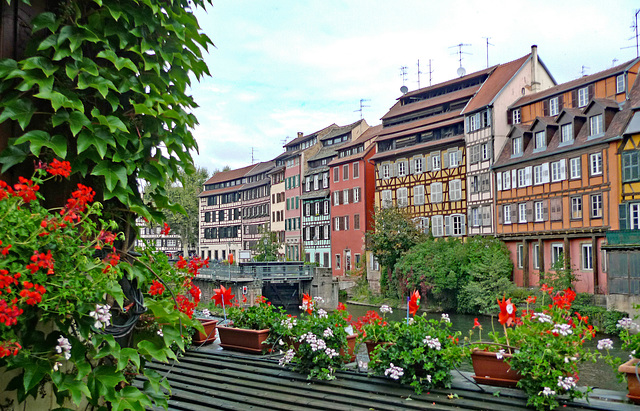

Petite France (also called Gerberviertel = “tanners district”) is the most charming, beautiful and best preserved parts of the historical centre of Strasbourg with its bridges, black and white timber-framed buildings and winding streets. It is considered being one of the most picturesque places in France.
In the early 12th century, Strasbourg began to expand southwards, extending the mediaeval ramparts right up to the delta formed by the river Ill. Petite France grew up around the four arms of the river. With houses built along narrow twisting streets the neighbourhood was markedly different to the much more bourgeois sector around the cathedral. The magnificent half-timbered houses date from the 16th and 17th centuries. Their sloping roofs open out onto lofts where hides were once dried.
The canals built in the Middle Ages brought in fishermen and small industries, including tanneries (the smell of which had to be kept away from the more patrician residences of the city), three flour mills and a lots of other trades.
The name Petite-France ("Little France") was not given for patriotic or architectural reasons. It comes from the Hospice des Vérolés, which was built in the late 15th century in the area, to cure persons with syphilis, then called Franzosenkrankheit ("French disease") in German.
Petite France is a part of the UNESCO World Heritage Site of Grande Île, designated in 1988.
In the early 12th century, Strasbourg began to expand southwards, extending the mediaeval ramparts right up to the delta formed by the river Ill. Petite France grew up around the four arms of the river. With houses built along narrow twisting streets the neighbourhood was markedly different to the much more bourgeois sector around the cathedral. The magnificent half-timbered houses date from the 16th and 17th centuries. Their sloping roofs open out onto lofts where hides were once dried.
The canals built in the Middle Ages brought in fishermen and small industries, including tanneries (the smell of which had to be kept away from the more patrician residences of the city), three flour mills and a lots of other trades.
The name Petite-France ("Little France") was not given for patriotic or architectural reasons. It comes from the Hospice des Vérolés, which was built in the late 15th century in the area, to cure persons with syphilis, then called Franzosenkrankheit ("French disease") in German.
Petite France is a part of the UNESCO World Heritage Site of Grande Île, designated in 1988.
Günter Klaus, Petar Bojić, ©UdoSm, Filippo Tosi and 67 other people have particularly liked this photo
- Keyboard shortcuts:
Jump to top
RSS feed- Latest comments - Subscribe to the comment feeds of this photo
- ipernity © 2007-2026
- Help & Contact
|
Club news
|
About ipernity
|
History |
ipernity Club & Prices |
Guide of good conduct
Donate | Group guidelines | Privacy policy | Terms of use | Statutes | In memoria -
Facebook
X

Wünsche noch einen schönen Nachmittag,ganz liebe Grüße Güni :))
Sign-in to write a comment.