


Birds of Alberta 11


24 Apr 2016
3 favorites
2 comments
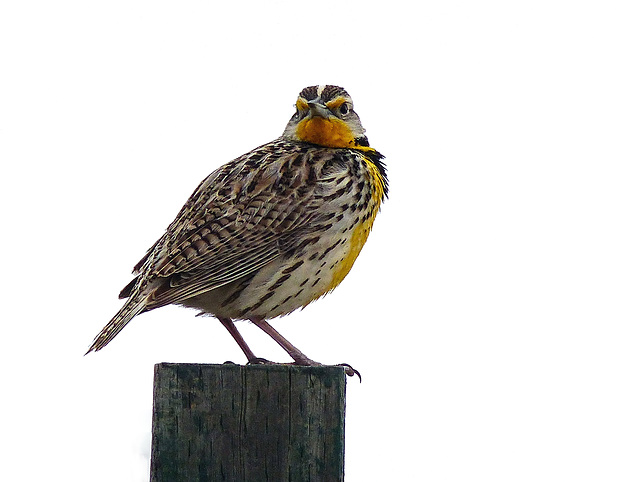
Western Meadowlark
Yesterday, 25 April 2016, I was out for the day, SE of Calgary around Frank Lake. Finally, after so much glorious, summer-like spring weather, the weather changed for the worse and we had a cool (needed gloves), very overcast day with light drizzle some of the time. Not good at all for taking photos. We also had a fair bit of desperately needed rain last night. I was especially disappointed with the shots I took of this beautiful Western Meadowlark. Usually, they fly even when they see you in the far distance, but this beauty let me slowly walk quite close to get a number of photos. The quality is awful, but I don't get a chance to photograph Meadowlarks very often, so will post at least one or two grainy images. If you've never heard the song of a Meadowlark, it might be worth listening on AllAboutBirds website.
Eight friends and I had a great day, despite the weather. This is one of my favourite areas amd I just haven't been getting time to drive there myself for quite a long time. We started off at the main gate and drove to the blind/hide area, stopping half way to search for very distant birds. While everyone else had their binoculars pointed over the water, I was slowly walking towards this Meadowlark, who was singing its beautiful song. You can hear them and they sound so close, but their song seems to carry a long way. It kept flying away but each time returned to the same post. I was amazed and delighted that this one let me get so close. If the sun had been shining, it would have been perfect!
As usual when we go to Frank Lake, almost all the birds are very distant and pretty impossible to photograph. I did catch the male Red-winged Blackbird in the next photo - the females have not yet returned here. The other amazing thing was when we had walked from the Frank Lake bird blind over to the water in the other direction, a flock of about 50 Tree Swallows were flying to and from a low tree/shrub, catching the many insects while in flight. Again, while everyone was searching over the water, I gradually made my way to within just a few feet of the bush. Quite a feeling to have so many Tree Swallows circling all the way around you. I have never ever seen so many of them acting like this, so it was a neat experience.
From this main area, we called in at the usual three other places around the lake. Two were rough roads that led to Basin 2 from the east and the west, and the third was the Ducks Unlimited location at the far southern edge of the lake, at Basin 3.
Thanks so much for a great day, Tony, and for the ride all day. I always look forward to the Frank Lake trips.
"The buoyant, flutelike melody of the Western Meadowlark ringing out across a field can brighten anyone’s day. Meadowlarks are often more easily heard than seen, unless you spot a male singing from a fence post. This colorful member of the blackbird family flashes a vibrant yellow breast crossed by a distinctive, black, V-shaped band. Look and listen for these stout ground feeders in grasslands, meadows, pastures, and along marsh edges throughout the West and Midwest, where flocks strut and feed on seeds and insects." From AllAboutBirds.
www.allaboutbirds.org/guide/Western_Meadowlark/id
en.wikipedia.org/wiki/Western_meadowlark
I will add our leader, Tony Timmons' list of species seen, adding that only 6 people walked as far as the Hudsonian Godwits - I was not one of them.
"Nine people were on the trip today to Frank Lake. Expected species were present in pretty fair numbers, with the best sighting being 15 Hudsonian Godwits at Basin 3.
A flock of 50 Tree Swallows hacking insects and using a small bush for a perch, made for an interesting scene.
We had 56 species for the trip
Horned Grebe
Eared Grebe
Western Grebe
Double-crested Cormorant
Great Blue Heron
White-faced Ibis (1 seen by Dan P.)
Canada Goose
Trumpeter Swan
Tundra Swan
Gadwall
American Wigeon
Mallard
Blue-winged Teal
Cinnamon Teal
Green-winged Teal
Northern Shoveler
Northern Pintail
Canvasback
Redhead
Ring-necked Duck
Lesser Scaup
Bufflehead
Common Goldeneye
Ruddy Duck
Northern Harrier
Swainson's Hawk
Red-tailed Hawk
Gray Partridge
American Coot
Killdeer
Black-necked Stilt
American Avocet
Lesser Yellowlegs
Willet
Hudsonian Godwit
Wilson's Snipe
Franklin's Gull
Bonaparte's Gull
California Gull
Rock Pigeon
Mourning Dove
Great Horned Owl
Black-billed Magpie
American Crow
Common Raven
Tree Swallow
Marsh Wren
American Robin
European Starling
Song Sparrow
Dark-eyed Junco
Red-winged Blackbird
Yellow-headed Blackbird
Western Meadowlark
Brewer's Blackbird
House Sparrow"
24 Apr 2016
2 favorites
1 comment
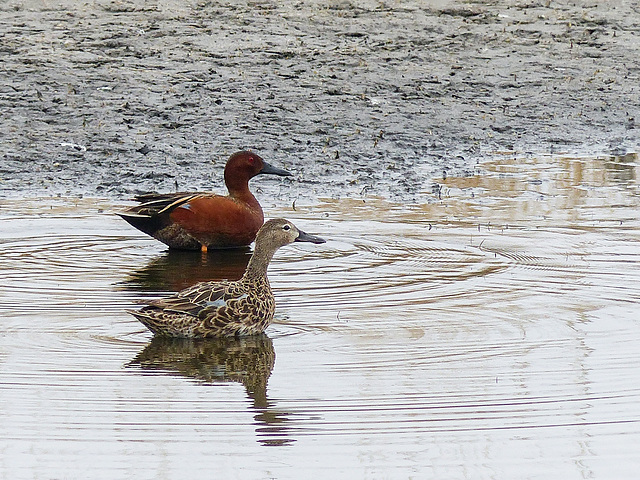
Cinnamon Teal pair
The day before yesterday, 24 April 2016, I was out for the day, SE of Calgary around Frank Lake. Finally, after so much glorious, summer-like spring weather, the weather changed for the worse and we had a cool (needed gloves), very overcast day, with light drizzle some of the time. Not good at all for taking photos. We also had a fair bit of desperately needed rain that night. I was especially disappointed with the shots I took of a beautiful Western Meadowlark. Usually, they fly even when they see you in the far distance, but this beauty let me slowly walk quite close to get a number of (very grainy) photos. The quality is awful, but I don't get a chance to photograph Meadowlarks very often, so I did post one yesterday.
Eight friends and I had a great day, despite the weather. This is one of my favourite areas amd I just haven't been getting time to drive there myself for quite a long time. We started off at the main gate and drove to the blind/hide area, stopping half way to search for very distant birds. While everyone else had their binoculars pointed over the water, I was slowly walking towards the Meadowlark, who was singing its beautiful song. You can hear them and they sound so close, but their song seems to carry a long way. It kept flying away but each time returned to the same post. I was amazed and delighted that this one let me get so close. If the sun had been shining, it would have been perfect!
As usual when we go to Frank Lake, almost all the birds are very distant and pretty impossible to photograph. I did catch a male Red-winged Blackbird perched on a sign - the females have not yet returned here. The other amazing thing was when we had walked from the Frank Lake bird blind over to the water in the other direction, a flock of about 50 Tree Swallows were flying to and from a low tree/shrub, catching the many insects while in flight. Again, while everyone was searching over the water, I gradually made my way to within just a few feet of the bush. Quite a feeling to have so many Tree Swallows circling all the way around you. I have never ever seen so many of them acting like this, so it was a neat experience. This pair of Cinnamon Teal was swimming in a very small slough near Frank Lake, along with a few other birds, including Black-necked Stilts and American Avocets.
From this main area, we called in at the usual three other places around the lake. Two were rough roads that led to Basin 2 from the east and the west, and the third was the Ducks Unlimited location at the far southern edge of the lake, at Basin 3.
Thanks so much for a great day, Tony, and for the ride all day. I always look forward to the Frank Lake trips.
I will add our leader, Tony Timmons' list of species seen, adding that only 6 people walked as far as the Hudsonian Godwits - I was not one of them.
"Nine people were on the trip today to Frank Lake. Expected species were present in pretty fair numbers, with the best sighting being 15 Hudsonian Godwits at Basin 3.
A flock of 50 Tree Swallows hacking insects and using a small bush for a perch, made for an interesting scene.
We had 56 species for the trip
Horned Grebe
Eared Grebe
Western Grebe
Double-crested Cormorant
Great Blue Heron
White-faced Ibis (1 seen by Dan P.)
Canada Goose
Trumpeter Swan
Tundra Swan
Gadwall
American Wigeon
Mallard
Blue-winged Teal
Cinnamon Teal
Green-winged Teal
Northern Shoveler
Northern Pintail
Canvasback
Redhead
Ring-necked Duck
Lesser Scaup
Bufflehead
Common Goldeneye
Ruddy Duck
Northern Harrier
Swainson's Hawk
Red-tailed Hawk
Gray Partridge
American Coot
Killdeer
Black-necked Stilt
American Avocet
Lesser Yellowlegs
Willet
Hudsonian Godwit
Wilson's Snipe
Franklin's Gull
Bonaparte's Gull
California Gull
Rock Pigeon
Mourning Dove
Great Horned Owl
Black-billed Magpie
American Crow
Common Raven
Tree Swallow
Marsh Wren
American Robin
European Starling
Song Sparrow
Dark-eyed Junco
Red-winged Blackbird
Yellow-headed Blackbird
Western Meadowlark
Brewer's Blackbird
House Sparrow"
24 Apr 2016
3 favorites
1 comment
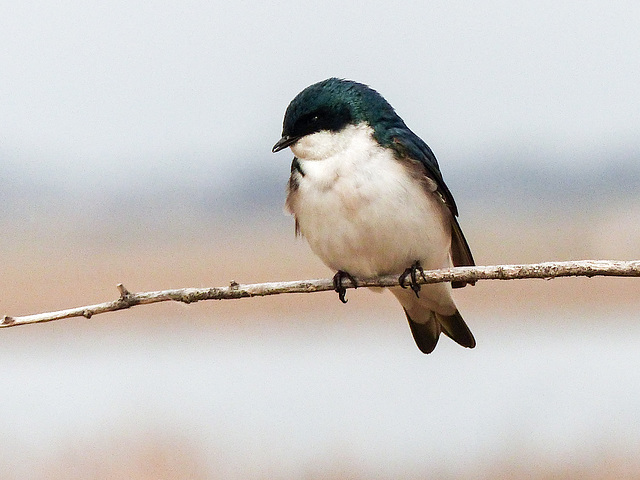
One of a crowd
The day before yesterday, 24 April 2016, I was out for the day, SE of Calgary around Frank Lake. Finally, after so much glorious, summer-like spring weather, the weather changed for the worse and we had a cool (needed gloves), very overcast day, with light drizzle some of the time. Not good at all for taking photos. We also had a fair bit of desperately needed rain that night. I was especially disappointed with the shots I took of a beautiful Western Meadowlark. Usually, they fly even when they see you in the far distance, but this beauty let me slowly walk quite close to get a number of (very grainy) photos. The quality is awful, but I don't get a chance to photograph Meadowlarks very often, so I did post one yesterday.
Eight friends and I had a great day, despite the weather. This is one of my favourite areas amd I just haven't been getting time to drive there myself for quite a long time. We started off at the main gate and drove to the blind/hide area, stopping half way to search for very distant birds. While everyone else had their binoculars pointed over the water, I was slowly walking towards the Meadowlark, who was singing its beautiful song. You can hear them and they sound so close, but their song seems to carry a long way. It kept flying away but each time returned to the same post. I was amazed and delighted that this one let me get so close. If the sun had been shining, it would have been perfect!
As usual when we go to Frank Lake, almost all the birds are very distant and pretty impossible to photograph. I did catch a male Red-winged Blackbird perched on a sign - the females have not yet returned here. The other amazing thing was when we had walked from the Frank Lake bird blind over to the water in the other direction, a flock of about 50 Tree Swallows were flying to and from a low tree/shrub, catching the many insects while in flight. Again, while everyone was searching over the water, I gradually made my way to within just a few feet of the bush. Quite a feeling to have so many Tree Swallows circling all the way around you. I have never ever seen so many of them acting like this, so it was a neat experience.
From this main area, we called in at the usual three other places around the lake. Two were rough roads that led to Basin 2 from the east and the west, and the third was the Ducks Unlimited location at the far southern edge of the lake, at Basin 3.
Thanks so much for a great day, Tony, and for the ride all day. I always look forward to the Frank Lake trips.
"Handsome aerialists with deep-blue iridescent backs and clean white fronts, Tree Swallows are a familiar sight in summer fields and wetlands across northern North America. They chase after flying insects with acrobatic twists and turns, their steely blue-green feathers flashing in the sunlight. Tree Swallows nest in tree cavities; they also readily take up residence in nest boxes. This habit has allowed scientists to study their breeding biology in detail, and makes them a great addition to many a homeowner’s yard or field." From allaboutbirds.
www.allaboutbirds.org/guide/tree_swallow/id
en.wikipedia.org/wiki/Tree_Swallow
I will add our leader, Tony Timmons' list of species seen, adding that only 6 people walked as far as the Hudsonian Godwits - I was not one of them.
"Nine people were on the trip today to Frank Lake. Expected species were present in pretty fair numbers, with the best sighting being 15 Hudsonian Godwits at Basin 3.
A flock of 50 Tree Swallows hacking insects and using a small bush for a perch, made for an interesting scene.
We had 56 species for the trip
Horned Grebe
Eared Grebe
Western Grebe
Double-crested Cormorant
Great Blue Heron
White-faced Ibis (1 seen by Dan P.)
Canada Goose
Trumpeter Swan
Tundra Swan
Gadwall
American Wigeon
Mallard
Blue-winged Teal
Cinnamon Teal
Green-winged Teal
Northern Shoveler
Northern Pintail
Canvasback
Redhead
Ring-necked Duck
Lesser Scaup
Bufflehead
Common Goldeneye
Ruddy Duck
Northern Harrier
Swainson's Hawk
Red-tailed Hawk
Gray Partridge
American Coot
Killdeer
Black-necked Stilt
American Avocet
Lesser Yellowlegs
Willet
Hudsonian Godwit
Wilson's Snipe
Franklin's Gull
Bonaparte's Gull
California Gull
Rock Pigeon
Mourning Dove
Great Horned Owl
Black-billed Magpie
American Crow
Common Raven
Tree Swallow
Marsh Wren
American Robin
European Starling
Song Sparrow
Dark-eyed Junco
Red-winged Blackbird
Yellow-headed Blackbird
Western Meadowlark
Brewer's Blackbird
House Sparrow"
04 Dec 2014
2 favorites
2 comments
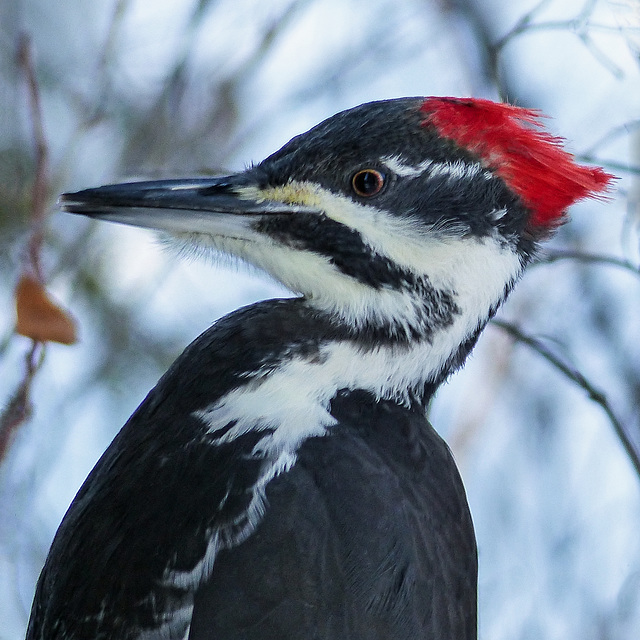
Pileated Woodpecker female
I'm not getting much time to get out and take photos and also the weather has been dull and sometimes rainy. So, once again, back to my archives.
This photo was taken on 4 December 2014, when I went for a short walk in Fish Creek Park. The weather had been beautiful that week, but we all knew that it was going to change back to “winter” before too long. Also, a short time in the park can (if you are lucky!) be simply amazing.
I happened to come across this female Pileated Woodpecker near the base of a tree. Almost impossible to get a sharp photo because she just didn’t stop banging her head against the tree. While I was trying to catch one split second when the action actually slowed down, a much smaller bird flew over my head and landed on the same tree, about 4’ higher. Couldn’t believe my eyes when I saw that it was a male Black-backed Woodpecker (rare in Alberta, just like the two American Three-toed Woodpeckers that I saw in a different part of the park, on two different days this week). Talk about being lucky!
I returned to the same area the next afternoon, thinking it would be nice to try and get some better shots. Well, there was no sign of either species, of course - in fact, very few birds of any kind. I did see a pair of Hairy Woodpeckers high up on two of the tallest trees, and there were a few ever-present Black-capped Chickadees.
“Pileated woodpeckers, the largest woodpeckers in North America, hammer their heads into trees with a force of 15 mph, 20 times a second. So how do their heads not turn to mush? Thick muscles, sponge-like bones, and a third eyelid keep bird brains intact. "If you get hit hard in the head, you can break blood vessels behind the eye or traumatize nerves behind eye," said University of California Davis ophthalmologist Ivan Schwab. ‘Seeing patients in car accidents and knowing what woodpeckers do made me wonder why these injuries don't happen in woodpeckers.’
Last fall, Schwab was honored with an Ig Nobel award, the irreverent version of the Nobel Prize, for his research on how woodpeckers avoid headaches, published in the British Journal of Ophthalmology.
Along with their straight-as-an-arrow strikes at the tree, which safeguards against head trauma, birds' bodies are designed to absorb the impact. One millisecond before a strike comes across the bill, dense muscles in the neck contract, and the bird closes its thick inner eyelid. Some of the force radiates down the neck muscles and protects the skull from a full blow. A compressible bone in the skull offers cushion, too. Meanwhile, the bird's closed eyelid shields the eye from any pieces of wood bouncing off the tree and holds the eyeball in place. The eyelid acts like a seat belt and keeps the eye from literally popping out of the head," Schwab told LiveScience. "Otherwise, acceleration would tear the retina." The outside portion of the eye itself is firm, filled with blood to support the retina from being jostled around.
Bird brains also remain rigid during head banging. Injuries to the human head make our brains bounce back and forth in the cerebral spinal fluid, bathing the organ, but woodpeckers have virtually none of this fluid. While scientists can't be certain that woodpeckers don't get headaches, Schwab pointed out that the birds are at least very tolerant of headaches.” From Science on NBC News, 1 August 2007.
www.nbcnews.com/id/16531772/ns/technology_and_science-sci...
24 Apr 2016
2 favorites
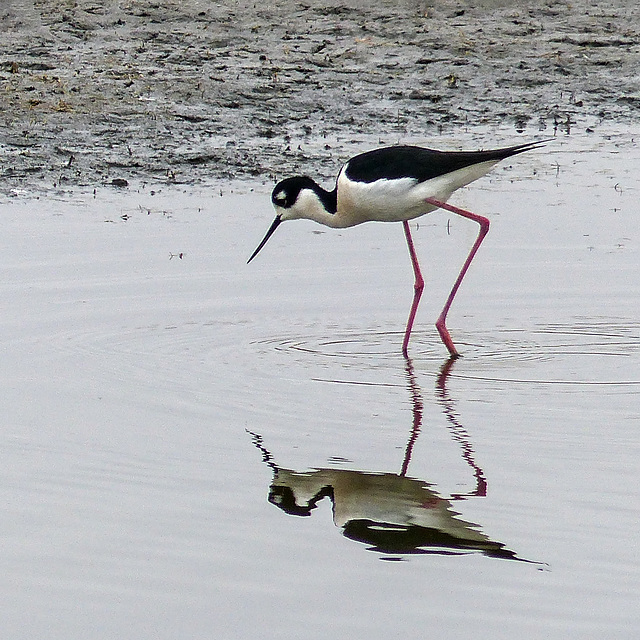
Black-necked Stilt
Four days ago, on 24 April 2016, I was out for the day, SE of Calgary around Frank Lake. Finally, after so much glorious, summer-like spring weather, the weather changed for the worse and we had a cool (needed gloves), very overcast day, with light drizzle some of the time. Not good at all for taking photos. We also had a fair bit of desperately needed rain that night. I was especially disappointed with the shots I took of a beautiful Western Meadowlark. Usually, they fly even when they see you in the far distance, but this beauty let me slowly walk quite close to get a number of (very grainy) photos. The quality is awful, but I don't get a chance to photograph Meadowlarks very often.
Eight friends and I had a great day, despite the weather. This is one of my favourite areas amd I just haven't been getting time to drive there myself for quite a long time. We started off at the main gate and drove to the blind/hide area, stopping half way to search for very distant birds. While everyone else had their binoculars pointed over the water, I was slowly walking towards the Meadowlark, who was singing its beautiful song. You can hear them and they sound so close, but their song seems to carry a long way. It kept flying away but each time returned to the same post. I was amazed and delighted that this one let me get so close. If the sun had been shining, it would have been perfect!
As usual when we go to Frank Lake, almost all the birds are very distant and pretty impossible to photograph. I did catch a male Red-winged Blackbird perched on a sign - the females have not yet returned here. The other amazing thing was when we had walked from the Frank Lake bird blind over to the water in the other direction, a flock of about 50 Tree Swallows were flying to and from a low tree/shrub, catching the many insects while in flight. Again, while everyone was searching over the water, I gradually made my way to within just a few feet of the bush. Quite a feeling to have so many Tree Swallows circling all the way around you. I have never ever seen so many of them acting like this, so it was a neat experience. Also saw several American Avocets and Black-necked Stilts that were closer.
"A striking black-and-white bird with very long, thin red legs, the Black-necked Stilt is found along the edges of shallow water in open country." From AllAboutBirds.
www.allaboutbirds.org/guide/Black-necked_Stilt/id
en.wikipedia.org/wiki/Black-necked_stilt
From this main area, we called in at the usual three other places around the lake. Two were rough roads that led to Basin 2 from the east and the west, and the third was the Ducks Unlimited location at the far southern edge of the lake, at Basin 3.
Thanks so much for a great day, Tony, and for the ride all day. I always look forward to the Frank Lake trips.
I will add our leader, Tony Timmons' list of species seen, adding that only 6 people walked as far as the Hudsonian Godwits - I was not one of them.
"Nine people were on the trip today to Frank Lake. Expected species were present in pretty fair numbers, with the best sighting being 15 Hudsonian Godwits at Basin 3.
A flock of 50 Tree Swallows hacking insects and using a small bush for a perch, made for an interesting scene.
We had 56 species for the trip
Horned Grebe
Eared Grebe
Western Grebe
Double-crested Cormorant
Great Blue Heron
White-faced Ibis (1 seen by Dan P.)
Canada Goose
Trumpeter Swan
Tundra Swan
Gadwall
American Wigeon
Mallard
Blue-winged Teal
Cinnamon Teal
Green-winged Teal
Northern Shoveler
Northern Pintail
Canvasback
Redhead
Ring-necked Duck
Lesser Scaup
Bufflehead
Common Goldeneye
Ruddy Duck
Northern Harrier
Swainson's Hawk
Red-tailed Hawk
Gray Partridge
American Coot
Killdeer
Black-necked Stilt
American Avocet
Lesser Yellowlegs
Willet
Hudsonian Godwit
Wilson's Snipe
Franklin's Gull
Bonaparte's Gull
California Gull
Rock Pigeon
Mourning Dove
Great Horned Owl
Black-billed Magpie
American Crow
Common Raven
Tree Swallow
Marsh Wren
American Robin
European Starling
Song Sparrow
Dark-eyed Junco
Red-winged Blackbird
Yellow-headed Blackbird
Western Meadowlark
Brewer's Blackbird
House Sparrow"
16 Apr 2013
3 favorites
1 comment
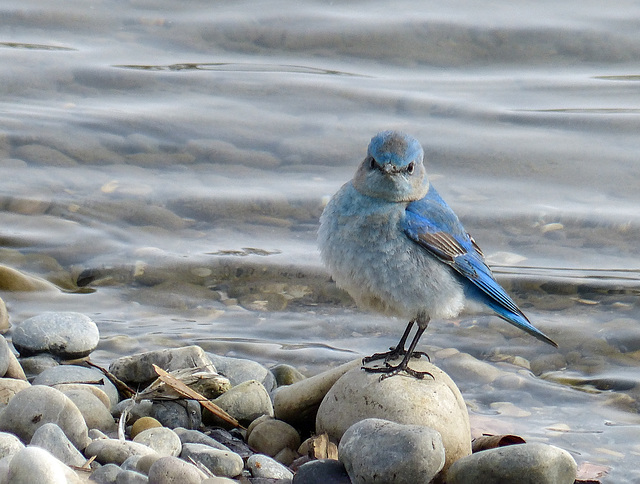
Mountain Bluebird from three years ago
This is a photo from way back in my archives. I was lucky enough to be with birding friends at Inglewood Bird Sanctuary on 16 April 2013, when about 10 beautiful Mountain Bluebirds (male and female) were flying over the Bow River and landing on the rocks not too far from where we were standing. They repeated this a number of times. Normally, one has to drive out of the city to see these birds, so it's always a treat to see one within city limits.
In Bluebirds, the blue colour is produced by the structure of the feather - there is no blue pigment. "Tiny air pockets in the barbs of feathers can scatter incoming light, resulting in a specific, non-iridescent color. Blue colors in feathers are almost always produced in this manner. Examples include the blue feathers of Bluebirds, Indigo Buntings, Blue Jay's and Steller's Jays."
www.allaboutbirds.org/guide/Mountain_Bluebird/id
www.jstor.org/discover/pgs/index?id=10.2307/4077277&i...
en.wikipedia.org/wiki/Mountain_Bluebird

20 Mar 2016
4 favorites
2 comments
An over-the-shoulder glance
After a long day out at Frank Lake on Saturday, 19 March 2016, and then checking the upcoming weather forecast, Sunday, 20 March, looked like it was going to be the only decent day of the coming week. Of course, we all know that weather forecasts can change. So, my alarm clocks were all set ridiculously early, though I still left home a bit later than I had intended, and I took myself NW of the city again to see if I could see an owl.
Just a handful of friends were there and we got a few moments of great views of this Great Gray Owl, including when it was down on the ground during a failed attempt to catch a Meadow Vole. I think it took all of us by surprise when it flew and landed near to us. During the rest of the time, I did see an owl fly off into the trees a couple of times, but the rest of the time was spent waiting and chatting with my friends. Patience .....
While we were waiting, someone spotted a beautiful male Mountain Bluebird way down the road. I am pretty sure I had caught a quick glimpse of another Bluebird on my drive to my destination. Also, I seem to remember catching a quick sight of another one recently, but can't for the life of me remember where or when. It's always such a thrill to see a Bluebird, especially the very first of the season. That flash of bright blue takes one's breath away. Two beautiful birds to see on this first day of spring!
"Although the Great Gray Owl is the tallest American owl with the largest wingspan, it is just a ball of feathers. It preys on small mammals and has relatively small feet. Both the Great Horned and Snowy owls weigh half again as much, and have larger feet and talons. The oldest recorded Great Gray Owl was at least 18 years, 9 months old and lived in Alberta." From AllAboutBirds.
www.allaboutbirds.org/guide/Great_Gray_Owl/lifehistory
en.wikipedia.org/wiki/Great_grey_owl
24 Apr 2016
3 favorites
3 comments
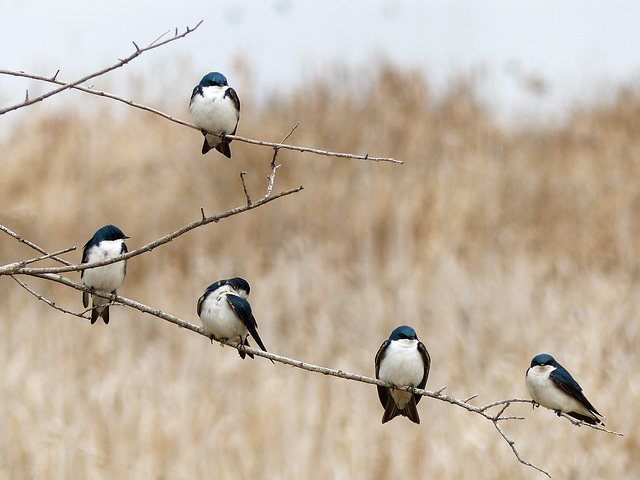
Gathering of the masses
A week ago, on 24 April 2016, I was out for the day, SE of Calgary around Frank Lake. Finally, after so much glorious, summer-like spring weather, the weather changed for the worse and we had a cool (needed gloves), very overcast day, with light drizzle some of the time. Not good at all for taking photos. We also had a fair bit of desperately needed rain that night. I was especially disappointed with the shots I took of a beautiful Western Meadowlark. Usually, they fly even when they see you in the far distance, but this beauty let me slowly walk quite close to get a number of (very grainy) photos. The quality is awful, but I don't get a chance to photograph Meadowlarks very often.
Eight friends and I had a great day, despite the weather. This is one of my favourite areas amd I just haven't been getting time to drive there myself for quite a long time. We started off at the main gate and drove to the blind/hide area, stopping half way to search for very distant birds. While everyone else had their binoculars pointed over the water, I was slowly walking towards the Meadowlark, who was singing its beautiful song. You can hear them and they sound so close, but their song seems to carry a long way. It kept flying away but each time returned to the same post. I was amazed and delighted that this one let me get so close. If the sun had been shining, it would have been perfect!
As usual when we go to Frank Lake, almost all the birds are very distant and pretty impossible to photograph. I did catch a male Red-winged Blackbird perched on a sign - the females have not yet returned here. The other amazing thing was when we had walked from the Frank Lake bird blind over to the water in the other direction, a flock of about 50 Tree Swallows were flying to and from a low tree/shrub, catching the many insects while in flight. Again, while everyone was searching over the water, I gradually made my way to within just a few feet of the bush. Quite a feeling to have so many Tree Swallows circling all the way around you. I have never ever seen so many of them acting like this, so it was a neat experience. Also saw several American Avocets and Black-necked Stilts that were closer.
From this main area, we called in at the usual three other places around the lake. Two were rough roads that led to Basin 2 from the east and the west, and the third was the Ducks Unlimited location at the far southern edge of the lake, at Basin 3.
Thanks so much for a great day, Tony, and for the ride all day. I always look forward to the Frank Lake trips.
"Handsome aerialists with deep-blue iridescent backs and clean white fronts, Tree Swallows are a familiar sight in summer fields and wetlands across northern North America. They chase after flying insects with acrobatic twists and turns, their steely blue-green feathers flashing in the sunlight. Tree Swallows nest in tree cavities; they also readily take up residence in nest boxes. This habit has allowed scientists to study their breeding biology in detail, and makes them a great addition to many a homeowner’s yard or field." From allaboutbirds.
www.allaboutbirds.org/guide/tree_swallow/id
en.wikipedia.org/wiki/Tree_Swallow
I will add our leader, Tony Timmons' list of species seen, adding that only 6 people walked as far as the Hudsonian Godwits - I was not one of them.
"Nine people were on the trip today to Frank Lake. Expected species were present in pretty fair numbers, with the best sighting being 15 Hudsonian Godwits at Basin 3.
A flock of 50 Tree Swallows hacking insects and using a small bush for a perch, made for an interesting scene.
We had 56 species for the trip
Horned Grebe
Eared Grebe
Western Grebe
Double-crested Cormorant
Great Blue Heron
White-faced Ibis (1 seen by Dan P.)
Canada Goose
Trumpeter Swan
Tundra Swan
Gadwall
American Wigeon
Mallard
Blue-winged Teal
Cinnamon Teal
Green-winged Teal
Northern Shoveler
Northern Pintail
Canvasback
Redhead
Ring-necked Duck
Lesser Scaup
Bufflehead
Common Goldeneye
Ruddy Duck
Northern Harrier
Swainson's Hawk
Red-tailed Hawk
Gray Partridge
American Coot
Killdeer
Black-necked Stilt
American Avocet
Lesser Yellowlegs
Willet
Hudsonian Godwit
Wilson's Snipe
Franklin's Gull
Bonaparte's Gull
California Gull
Rock Pigeon
Mourning Dove
Great Horned Owl
Black-billed Magpie
American Crow
Common Raven
Tree Swallow
Marsh Wren
American Robin
European Starling
Song Sparrow
Dark-eyed Junco
Red-winged Blackbird
Yellow-headed Blackbird
Western Meadowlark
Brewer's Blackbird
House Sparrow"

02 May 2016
One of ten Meadowlarks seen yesterday
Yesterday, 2 May 2016, I was incredibly fortunate to be able to witness about 30 (?) of these Grouse, mainly male with just a handful of females, displaying at their "lek" or communal dancing ground. On this particular day, five of us went to see this. There had been a couple of possible chances to get out there, but these had fallen through. Then out of the blue, friend Dorothy phoned me a few days ago, asking if I had been able to get to the lek yet. She said that if I hadn't been, that her husband Stephen would be willing to drive me there! This was such a wonderful surprise, though anyone who really knows this couple already knows what amazingly kind and generous people they are. I was so happy to get this unexpected chance and the three of us had a great morning, in good weather and in good company. Two young men also went, making their own way there. Delightful guys, highly respectful of not only the Grouse, but also of us, constantly moving form their seats to allow us to get our turn, and vice versa. They could so easily have left the 'hide/blind ahead of us when the Grouse had all left, but instead they waited till we were all packed up and then made sure that we were all able to safely get over the very awkward stile at the fence line. Having been out there last year, on 13 April 2015, I knew of this problem and had bought a three-step step ladder just in case I was able to go sometime this spring. This made so much difference, thank goodness, especially as I was really tired after staying up all night in order to leave at a very unearthly hour of the morning.
So glad we had a nice, sunny day - the day I went a year ago, the weather was overcast and not good for photos. Of course, the 'problem' of clumps of tall grass was exactly the same this year, lol, keeping the birds somewhat hidden, but every once in a while, a bird would come out into the open. Most of the time, they were quite dstant, but we were very lucky that several did give us a closer view. Such magnificent birds, with their yellowy orange 'eyebrows', purple patch below the side of the neck on the males, and glorious feather pattern. Their dance display to attract the females is so fascinating to watch.
Just after we got back to our cars, another car came along the road and stopped to talk with us. It turned out that this gentleman was indirectly connected to the lek. He voiced his huge concern at how many people had been out there this spring, feeling that this was not good for the Grouse. He said that hopefully no more people would be going, so that the Grouse would be undisturbed in their mating. We agreed with him and thought that maybe people should not be allowed to visit every year, but perhaps every two or three years. I will pass on his words and great concern to our Naturalist leader who organizes these visits.
After we left the lek, we travelled a few nearby backroads, hoping to see a Western Meadowlark. We saw 10! It had been so funny, while we sat in the blind at the lek, a Meadowlark was somewhere nearby and sang for us for about four hours! When we at last emerged into the sunlight, there was no sign of it anywhere. We did manage to get a few shots of two or three of them.
Thank you so much, Stephen and Dorothy, for offering to take me - so very kind and thoughtful of you, as always! The stop for having our sandwiches was great and the muffins you brought along with you ended the morning very nicely.
If you have time, the following 2:30 minute YouTube video by the Alberta Conservation Association is very good for showing the action of these birds. There are several still shots first and then the video starts. Pretty amazing! The birds remind me of a child's wind-up toy : )
youtu.be/vRUVIU4UfYo
I came across an excellent brochure (pdf file) about Sharp-tailed Grouse on the Internet and will use some of the information from it, instead of using my own words to describe what goes on at a lek. I had seen females of this species before, on Christmas Bird Counts, but not a male and not at breeding time.
www.ab-conservation.com/downloads/educational_materials/b...
"Sharp-tailed grouse perform spring courtship displays on communal “dancing grounds” called leks. Here, males compete for breeding opportunities by displaying their "dancing” ability to females. Most activity on the lek occurs in the early morning just before sunrise and for a few hours afterwards. The males’ energetic display includes fluttering wings, rapid foot stomping and spinning in tight circles - reminiscent of wind-up toys. The most dominant males court females with low cooing sounds and by strutting around them with inflated air sacs on their neck and fanned tail feathers. It is nearly a winner-take-all form of competition, as only a few of the males are selected as mates by the females.
Leks are found in areas with dry open ground, where dancing activity keeps the vegetation well-trampled. Leks are used over several weeks beginning in late March and are often used for years, even decades. They are an important part of sharp-tailed grouse life, and the loss of suitable lek habitat can be a limiting factor for sharp-tailed grouse in Alberta.
Male sharp-tailed grouse gather on the lek in late March. In April the females arrive, sparking increased displaying by the males. Peak attendance by females on the lek occurs between mid to late April in much of Alberta. Once they have selected a male, hens breed once and then seek out a place to nest, usually in late April to early May.
Leks are an integral part of the lifecycle of prairie grouse. Active leks should never be approached, as any disturbance to the birds may disrupt breeding activities and result in the abandonment of the lek. The locations of active and historical leks are of great interest to grouse biologists.
Native North Americans called the sharp-tailed grouse “Fire Bird” because of their reliance on fires to keep their habitat open in wooded areas. Suppression of natural fire in parkland and boreal areas reduces the amount of open grassland available to sharp-tailed grouse.
Sharp-tailed grouse were an important food source for native North Americans and they continue to be a popular game bird for hunters today.
In Alberta, the sharp-tailed grouse is listed as “Sensitive.”
While exact population numbers are not known, there is a feeling that sharp-tailed grouse have decreased significantly in numbers over the past 40 years. This trend is supported by lek counts, hunter surveys, aerial counts and Breeding Bird Survey data. Declining numbers are the result of a reduction in the quality and quantity of sharp-tailed grouse habitat, particularly the loss of quality nesting and brood-rearing habitat." From www.ab-conservation.com .
www.ab-conservation.com/downloads/report_series/Use-Habit...
Jump to top
RSS feed- Latest items - Subscribe to the latest items added to this album
- ipernity © 2007-2026
- Help & Contact
|
Club news
|
About ipernity
|
History |
ipernity Club & Prices |
Guide of good conduct
Donate | Group guidelines | Privacy policy | Terms of use | Statutes | In memoria -
Facebook
X
