


Kananaskis, 19 August 2014


19 Aug 2014
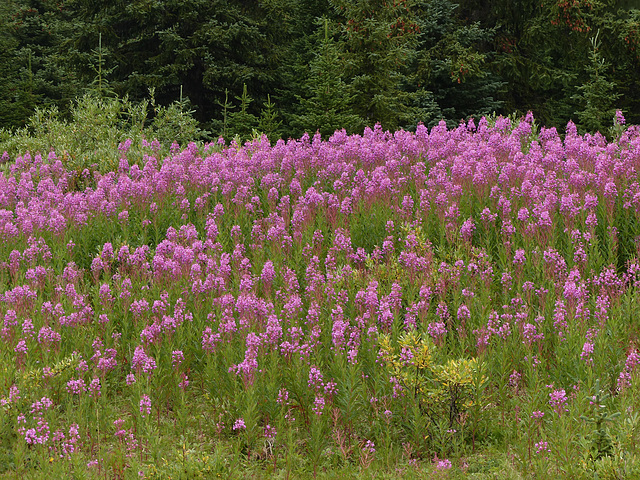
The joy of vibrant Fireweed
Will have to wait till I get home later, after my volunteer shift, to add more information about yesterday's 18-hour trip. For now, I'll just say that the day started and ended on a great note. The little Pika in the previous photo started our day off with such delight, but wait till you hear about the day's ending (no photos taken, though).
This was one of several huge displays of beautiful, vibrant Fireweed that we saw yesterday, on our drive through Kananaskis.
19 Aug 2014
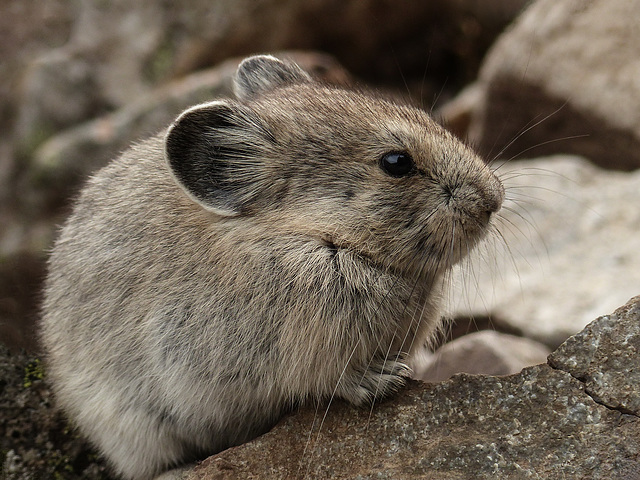
What could be cuter?
Yesterday, I was lucky enough to have the chance to try and photograph a couple of these absolutely adorable little creatures : ) After a while, I was beginning to despair of ever getting any decent shots at all. These tiny Pikas, also known as Rock Rabbits, hardly ever remain still and they are extremely fast! Imagine a mountain hillside covered in sharp, jagged rocks of all sizes and then try to picture how difficult it is to find in the viewfinder the single rock on which one of these Pikas might happen to sit for a second or two, lol! As time passed, I managed to take quite a lot of photos, though many will need to eventually be deleted. Came home with too many photos to go through when I got home (at midnight!) and this morning I have to get ready to go to my volunteer shift. So, basically, I grabbed a single shot to post today - hope you don't get tired of seeing these little guys, but they are just so very cute. This is a zoomed capture and at this point, the Pika was very close. They are about 15 to 23 centimetres (5.9 to 9.1 in) in body length, so really are pretty small. And, no, I didn't put one in my pocket to bring home with me - just kidding!
Will have to wait till I get home later, to add more information about yesterday's 18-hour trip. For now, I'll just say that the day started and ended on a great note. This little Pika started our day off with such delight, but wait till you hear about the day's ending (no photos taken, though).
en.wikipedia.org/wiki/Pika

19 Aug 2014
1 favorite
Fine old vehicle
Two days ago, I spent a wonderful 18-hour day with friends Cathy and Terry, driving part way along Highway 40 in Kananaskis and then along the Smith-Dorrien Trail. We called in at the Peter Lougheed Visitor Centre, where we ate our packed lunches, and noticed this rather fine old automobile parked nearby. I know nothing about classic car models, but this one makes me think of a Ford Model-T.
19 Aug 2014
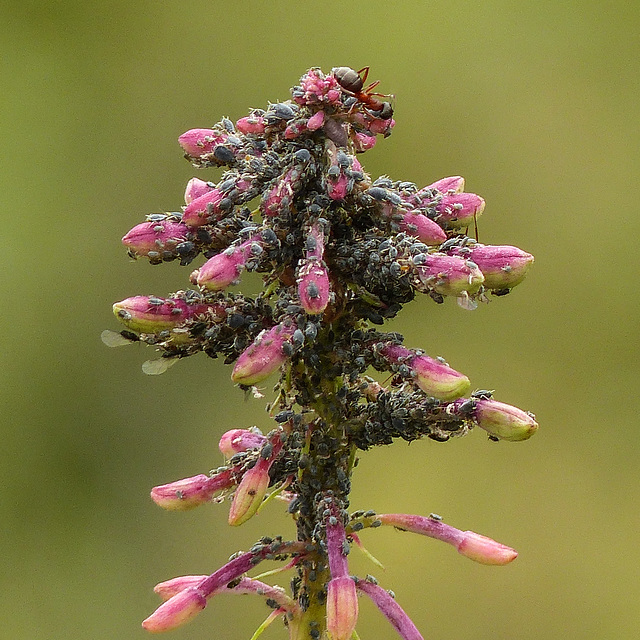
Aphids on Fireweed
"Certain types of aphids live in colonies where they are used as a food source by a neighbouring colony of ants. The ants have been known to bite the wings off the aphids in order to stop them from getting away and depriving the ants of one of their staple foods: the sugar-rich sticky honeydew which is excreted by aphids when they eat plants. (They don't eat the actual Aphids). Chemicals produced in the glands of ants can also sabotage the growth of aphid wings." From ScienceDaily.
www.sciencedaily.com/releases/2007/10/071009212548.htm
en.wikipedia.org/wiki/Aphid
en.wikipedia.org/wiki/Chamerion_angustifolium
19 Aug 2014
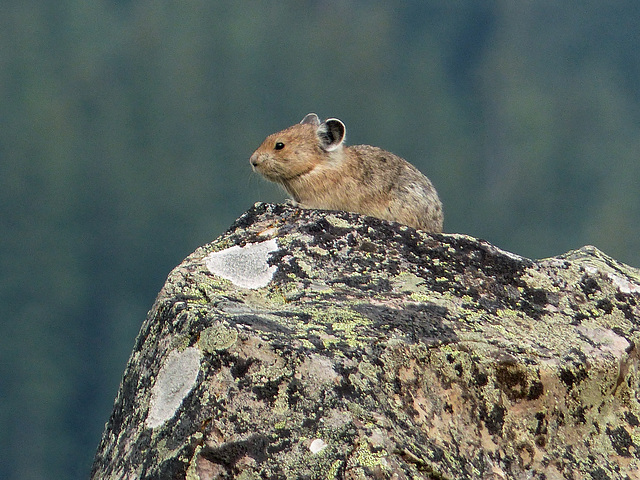
A quick, two-second rest
Two days ago, 19 August 2014, I was lucky enough to have the chance to try and photograph a couple of these absolutely adorable little creatures : ) After a while, I was beginning to despair of ever getting any decent shots at all. These tiny Pikas, also known as Rock Rabbits, hardly ever remain still and they are extremely fast! Imagine a mountain hillside covered in sharp, jagged rocks of all sizes and then try to picture how difficult it is to find in the viewfinder the single rock on which one of these Pikas might happen to sit for a second or two, lol! The rock in my photo was a particularly nice one, standing out because it was bigger than the rocks immediately around it and it was covered in various Lichens. This little Pika made a quick, two-second stop on it several times, surveying the grasses and plants around it before dashing to gather a huge mouthful of "fresh greens" and then bounding up the rocky mountain slope to add its collection to a little cave among the rocks. They rely on existing spaces between the rocks for their homes - they don't dig a burrow, though they can dig to make their home bigger. Because the Pikas are a similar colour to the surrounding rocks, it is difficult to see them - unless you happen to catch sight of some movement or you see a mouthful of green moving at top speed over the rocks.
As time passed, I managed to take quite a lot of photos, though many will need to eventually be deleted. Came home with too many photos to go through when I got home (at midnight!) and yesterday evening finally had a chance to take a better look. Hopefully today, I'll have a chance to add a bit more info about our great day out! Hope you don't get tired of seeing these little guys, but they are just so very cute. They are about 15 to 23 centimetres (5.9 to 9.1 in) in body length, so really are pretty small. And, no, I didn't put one in my pocket to bring home with me!
"The American Pika is a generalist herbivore. It eats a large variety of green plants, including different kinds of grasses, sedges, thistles and fireweed. Although pikas can meet their water demands from the vegetation they eat, they do drink water if it is available in their environment. Pikas have two different ways of foraging: they directly consume food (feeding) or they cache food in haypiles to use for a food source in the winter (haying). The pika feeds throughout the year while haying is limited to the summer months. Since they do not hibernate, pikas have greater energy demands than other montane mammals. In addition, they also make 13 trips per hour to collect vegetation when haying, up to a little over 100 trips per day." From Wikipedia.
en.wikipedia.org/wiki/American_pika
Link to a video that someone has posted on YouTube, to see and hear these little Rock Rabbits:
youtu.be/W4U9IxhQSTc
WHERE IS SUMMER???
Yesterday and today (21 August 2014) have been cold and wet! It is 11°C as I type (shortly before 1:00 p.m.), and it's raining. Looks like next week will be warmer.
"Thermometers have been plummeting all week in Alberta, with below-seasonal temperatures making it feel more like fall than summer across the province ... The province can expect temperatures to remain below-seasonal for the remainder of the week, although slightly increasing on the weekend." From the WeatherNetwork.
My youngest daughter's NEAR-ADVENTURE yesterday. Some of you may have seen on the News yesterday evening that a man climbed into a city bus that was idling while the driver took a break, and took it for a joy-ride! My daughter was the only person on the bus while it was idling, and the man told her to get off, before he drove off in the bus! I'm so thankful (so is she!) that she didn't have to stay on the bus till the Police managed to catch up with the bus and get the guy.
19 Aug 2014
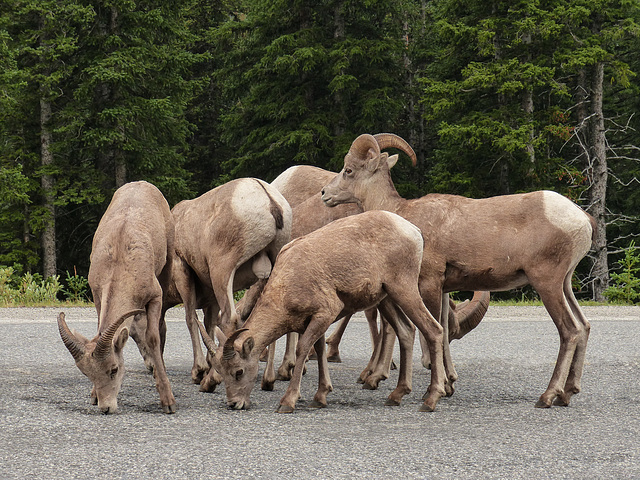
Licking the salt
Friends, Cathy and Terry, and I, had a great day out in the mountains on 19 August 2014. Our trip was part way along Highway 40 and then along the Smith-Dorrien/Spray Lakes Trail. The weather forecast was not good for this day, but we were so lucky that, apart from a few raindrops, the rain stayed away. The sun actually came out at two locations we stopped at for a short while.
This group of Bighorn Sheep was licking the salt from the road. We had just started taking a few photos when a car came from the opposite direction. The driver barely slowed down, which of course scattered the animals. It's always a treat to see them, no matter how many times one has seen them before.
en.wikipedia.org/wiki/Bighorn_sheep
19 Aug 2014
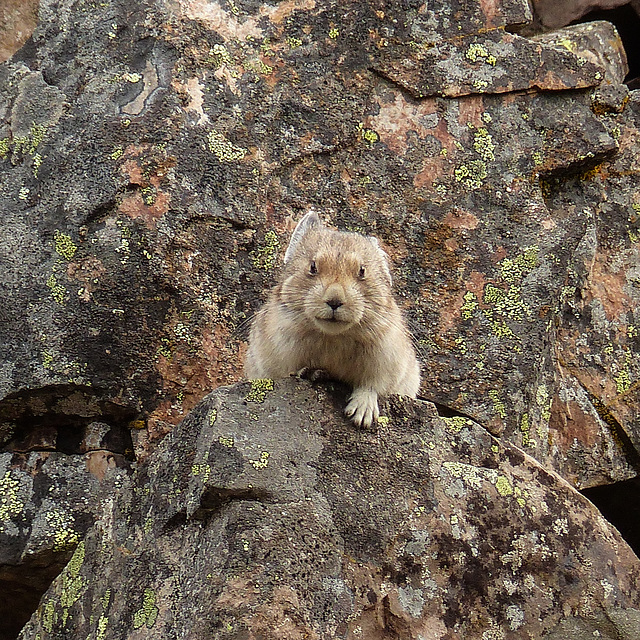
Oh, so cute
Three days ago, 19 August 2014, I was lucky enough to have the chance to try and photograph a couple of these absolutely adorable little creatures : ) After a while, I was beginning to despair of ever getting any decent shots at all. These tiny Pikas, also known as Rock Rabbits, hardly ever remain still and they are extremely fast! Imagine a mountain hillside covered in sharp, jagged rocks of all sizes and then try to picture how difficult it is to find in the viewfinder the single rock on which one of these Pikas might happen to be sitting for a second or two, lol! By the time you find the rock, the Pika is long gone. This little Pika had just made another trip to its small cave among the rocks, with yet another huge mouthful of grasses and plants. They rely on existing spaces between the rocks for their homes - they don't dig a burrow, though they can dig to make their home bigger. Because the Pikas are a similar colour to many of the surrounding rocks, it is so difficult to see them - unless you happen to catch sight of some movement or you see a bunch of greenery moving at top speed over the rocky mountain side.
As time passed, I managed to take quite a lot of photos, though many will need to eventually be deleted. Came home with too many photos to go through when I got home at midnight that night, but yesterday, I finally had a chance to take a better look. I still haven't added a bit more information about a few of the things we saw on our drive. Maybe today? Hope you don't get tired of seeing these little guys, but they are just so very cute. They are about 15 to 23 centimetres (5.9 to 9.1 in) in body length, so really are pretty small. And, no, I didn't put one in my pocket to bring home with me!
"The American Pika is a generalist herbivore. It eats a large variety of green plants, including different kinds of grasses, sedges, thistles and fireweed. Although pikas can meet their water demands from the vegetation they eat, they do drink water if it is available in their environment. Pikas have two different ways of foraging: they directly consume food (feeding) or they cache food in haypiles to use for a food source in the winter (haying). The pika feeds throughout the year while haying is limited to the summer months. Since they do not hibernate, pikas have greater energy demands than other montane mammals. In addition, they also make 13 trips per hour to collect vegetation when haying, up to a little over 100 trips per day." From Wikipedia.
en.wikipedia.org/wiki/American_pika
Link to a video that someone has posted on YouTube, to see and hear these little Rock Rabbits:
youtu.be/W4U9IxhQSTc
WHERE IS SUMMER???
Yesterday and today (22 August 2014) have been cold and wet! It is 10°C as I type (shortly before 11:00 a.m.), and it's raining lightly. Looks like next week will be warmer and drier.
"Thermometers have been plummeting all week in Alberta, with below-seasonal temperatures making it feel more like fall than summer across the province ... The province can expect temperatures to remain below-seasonal for the remainder of the week, although slightly increasing on the weekend." From the WeatherNetwork.
A quick note about my youngest daughter's NEAR-ADVENTURE two days ago! Some of you may have seen on the News in the evening that a man climbed into a city bus that was idling while the driver took a break, and took it for a joy-ride! My daughter was the only person on the bus while it was idling - she had just got off work - and the man told her to get off, before he drove off in the bus! I'm so thankful (so is she!) that she didn't have to stay on the bus till the Police managed to catch up with the bus and catch the guy.
19 Aug 2014
1 comment
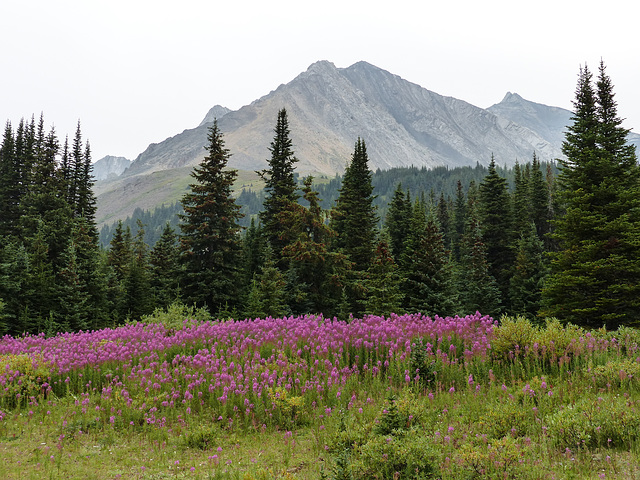
A beautiful display of Fireweed
Fireweed was nicely in bloom when I went with friends, Cathy and Terry, for a great day out in the mountains on 19 August 2014. Our trip was part way along Highway 40 and then along the Smith-Dorrien/Spray Lakes Trail. We passed maybe three or four large, dense patches of Fireweed that were absolutely beautiful. Wish I could say the same about the sky - as you can tell from my photo, it was far from blue. The weather forecast was not good for this day, but we were so lucky that, apart from a few raindrops, the rain stayed away. The sun actually came out at two locations we stopped at for a short while.
19 Aug 2014
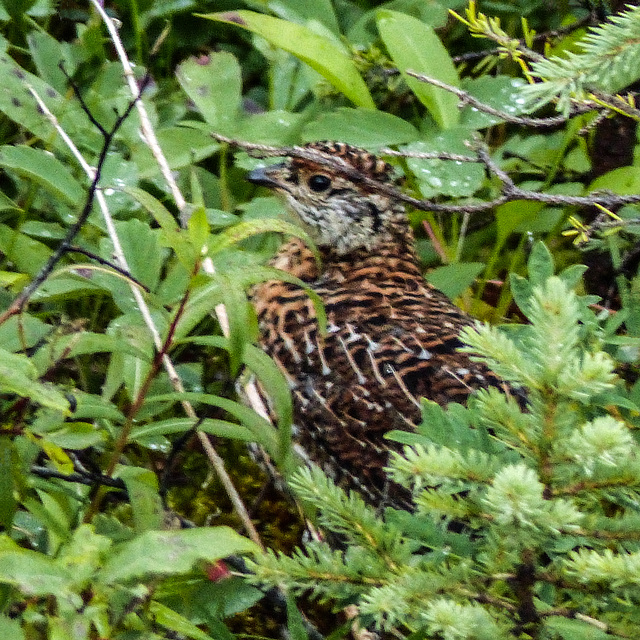
Juvenile Spruce Grouse
A really bad photo, but friends Cathy and Terry, and I, were just in time to see an adult, followed by two young ones, disappearing into the plants and trees at the edge of the road. Taken in Kananaskis (either Highway 40 or the Smith-Dorrien/Spray Lakes Trail) on 19 August 2014. Can't decide if they were a Ptarmigan or a Grouse speces, and haven't had any luck with any of the searches I've done online. Hopefully, someone will be able to tell the ID from this very poor shot.
Many thanks to Bryant Olsen for the correct ID!
www.allaboutbirds.org/guide/Spruce_Grouse/id
en.wikipedia.org/wiki/Spruce_grouse
Jump to top
RSS feed- Latest items - Subscribe to the latest items added to this album
- ipernity © 2007-2026
- Help & Contact
|
Club news
|
About ipernity
|
History |
ipernity Club & Prices |
Guide of good conduct
Donate | Group guidelines | Privacy policy | Terms of use | Statutes | In memoria -
Facebook
X
