

slgwv's photos
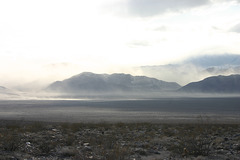
Dust storm in Eureka Valley
| |
|
|
|
Death Valley National Park, California, USA. Off the road from Big Pine to the north end of Death Valley proper.
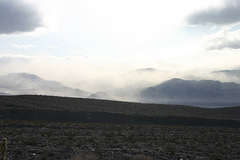
IMG_7925
| |
|
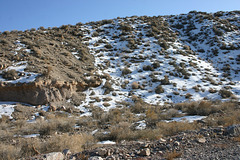
IMG_7922
| |
|
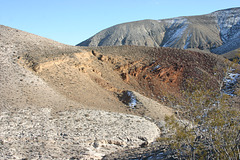
IMG_7921
| |
|
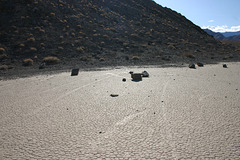
IMG_7898
| |
|
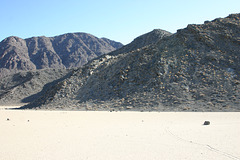
IMG_7892
| |
|
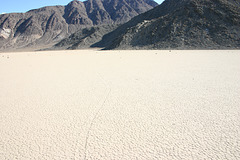
IMG_7885
| |
|
Racetrack Playa
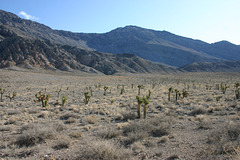
IMG_7856
| |
|
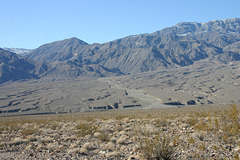
IMG_7849
| |
|
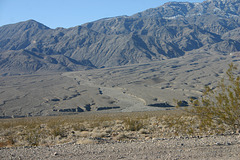
IMG_7848
| |
|
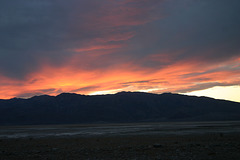
Sunset over the Panamints
| |
|
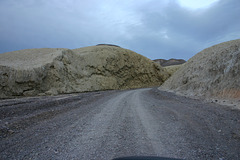
IMG_7835
| |
|
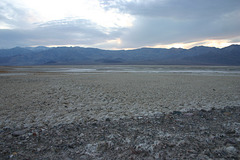
IMG_7834
| |
|

Borax wagons
| |
|
|
|
Harmony Borax works, Death Valley National Park, California, USA. Used to carry the partly refined borax to the railhead. The wagons are the source of the "20-mule team borax" logo.
Harmony Borax Works
| |
|
|
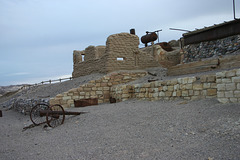
Death Valley National Park, California, USA. Borax was the first big mining boom in Death Valley, in the latter 19th century, out of the evaporite deposits on the valley floor. It was one of a number of short-lived borax booms in desert basins in California and Nevada. Most of the deposits were surficial and quickly exhausted. The object that looks like a cannon at lower left is a pipe.

Harmony Borax Works
| |
|
Death Valley National Park, California, USA. The raw ore (containing ulexite, a calcium-sodium borate; a.k.a. "cottonball," from a common habit) was dissolved in hot water in these pans, and borax (a pure sodium borate) was precipitated. Sometimes soda ash (Na2CO3, sodium carbonate) was added if there wasn't enough Na in the solution already. The water would have been heated in the boiler visible at upper right. It presumably was fired by wood gathered from the forests in the Panamint Mountains on the west side of the valley.

IMG_7826
| |
|
