

slgwv's photos
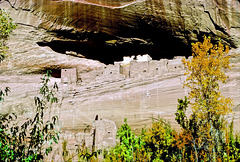
White House
| |
|
|
|
No, not _that_ White House! This is a Paleo-pueblo ruin in Canyon de Chelly, Arizona, in the eponymous national monument in the middle of the Navajo Reservation. It's built in an alcove under an overhanging cliff of de Chelly sandstone. According to tree-ring and C-14 data, construction began in the 1070s CE and the site was abandoned around 1300 CE (http://shouldbedigging.com/white-house-ruin-canyon-de-chelly/).
The reasons for abandonment are unclear, but it's widely thought to be protracted drought as many Paleo-pueblo ruins were abandoned around this time. The Navajo are themselves latecomers to the area, one of several Athabascan groups arriving out of the north after the ruins were abandoned. The Paleo-pueblo peoples were traditionally called the Anasazi, from a Navajo phrase for "old ones," but that term is now out of favor because there's no love lost between the modern Pueblo tribes, thought to be the descendants of the Paleo-pueblos, and the Navajo.
Btw, "de Chelly" is pronounced "de shay." It's an Anglo mispronunciation of a Spanish attempt to transliterate "tséyí", "canyon" in Navajo.

04-hogan_in_cyn_de_chelly-fall-75_adj
| |
|
4-07-horn_adj
| |
|
IMG_7266
| |
|

IMG_7265
| |
|
IMG_7264
| |
|
IMG_7263
| |
|
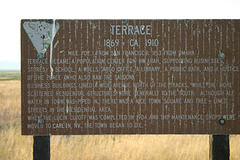
Silhouetted interpretive sign!
| |
|
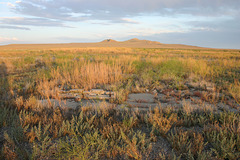
Old foundation, site of Terrace, Utah
| |
|
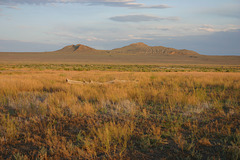
Site of Terrace, Utah
| |
|
As many as several thousand people lived here in the late 19th century. Looking south; the Lake Bonneville shorelines visible on the butte were the "terraces" that led to the name.
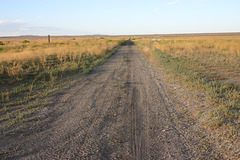
Railroad grade east.
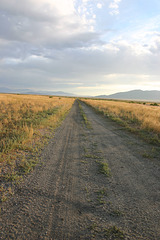
Railroad grade west

Terrace site
| |
|
IMG_7255
| |
|
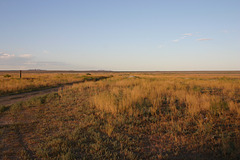
Looking back
| |
|
View from the Terrace site looking northeast along the old transcontinental railroad grade.
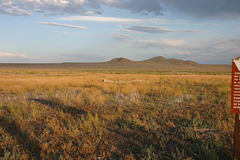
Terrace, Utah, Site
| |
|
|
|
Not much left...
Per the interpretive sign, Terrace was the biggest town on the transcontinental railroad in Utah, with workshops, a roundhouse, and a switchyard. At its peak several thousand people may have lived here. All water was imported, which made the town's existence precarious. When the Lucin Cutoff was built in 1904, which re-routed the railroad across the Great Salt Lake, it was the beginning of the end. Pretty much everyone had left by 1910.
The name "Terrace" comes from the prominent shorelines from ancient Lake Bonneville on nearby buttes, which look like terraces. The map location is approximate.
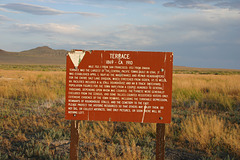
Terrace site
| |
|
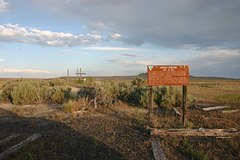
Terrace cemetery
| |
|
