Alan H's photos
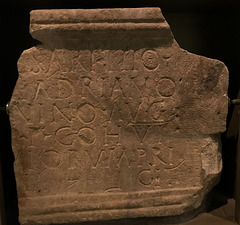
Inscription
| |
|
|
Commemorating the building of their headquarters by the 6th Cohort of Nervians:
[IMP CA]ESARI TITO
[AELIO] HADRIANO
[ANTO]NINO AVG
[PIO] PP COH VI
[NER]VIORVM PRI
[NCI]PIA FECIT
In the National Museum of Scotland, Edinburgh.
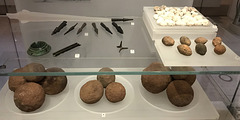
Roman Ballistics
| |
|
1: Catapult spring washer and rachet (centre left).
2, 3: Iron bolts which were fired from mechanised catapults (top left).
4: Lead hand-held slingshot projectiles (centre right).
5: Clay hand-held slingshot projectiles (top right).
6: Stone balls for use with mechanised slingshot machines (bottom).
7: Caltrop - devices such as these were scattered over the ground to cripple enemy horses (centre).
In the National Museum of Scotland, Edinburgh.
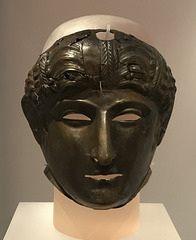
Roman Cavalry Helmet
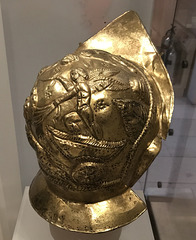
Roman Cavalry Helmet
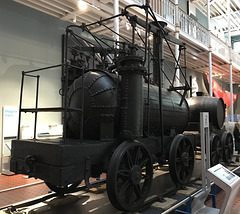
Wylam Dilly Locomotive
| |
|
|
|
This is one of the world's two oldest surviving steam locomotives. Built in 1813 it was used to pull coal along the Wylam Waggonway to the river near Newcastle-upon-Tyne in Northeast England.
In the National Museum of Scotland, Edinburgh.
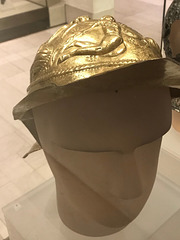
Roman Cavalry Helmet
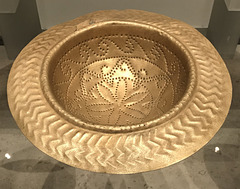
Wine Strainer
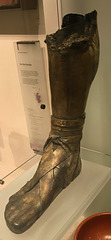
Statue Leg
| |
|
From a larger than life Roman statue.
In the National Museum of Scotland, Edinburgh.

Inscription
| |
|
|
This commemorates the building the most eastern part of the Antonine Wall, which cut Scotland in two.
In the National Museum of Scotland, Edinburgh.
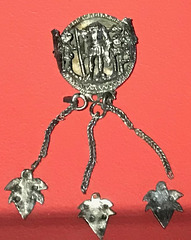
Quintus Sollonius Brooch
| |
|
It is a dona militaria or military award for valour. Quintus Sollonius not doubt served in a legion. The design of the brooch, showing the god Mars, with the shields/standards either side resemble the Dacians shield on Trajan’s Column at Rome and suggest that he served in Trajan’s Dacian wars, for which reinforcements were certainly sent from Britain.
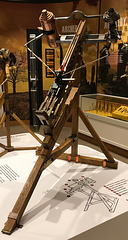
Manuballista (Replica)
| |
|
This was basically an early crossbow, a "catapult with bolts", used by the Roman Army.
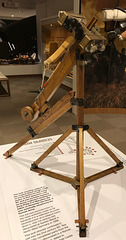
Scorpio (Replica)
| |
|
The scorpio was a smaller catapult-type weapon, more of a sniper weapon than a siege engine, operated by one man. The scorpio was basically an early crossbow, a "catapult with bolts", probably first invented by the Greeks, then later adopted and used on a larger scale by the Roman legions. This catapult used a system of torsion springs to propel the bolts.
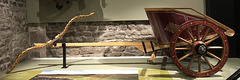
Replica Chariot
| |
|
|
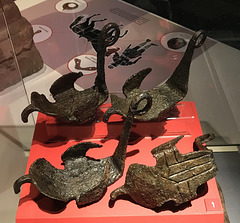
Horse Shoes
| |
|
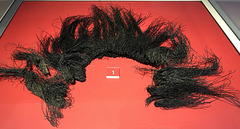
Helmet Crest
| |
|
Made from hair moss, this is thought to be the only surviving example from Roman times.
Lockdown
Edinburgh Xmas Market