

Tali's favorite photos


70 favorites
Snow Confetti - Happy New Year 2026
Larchmont, NY
At about 6:00 AM a strong snow squall moved into my neighborhood ahead of a cold front that coated the ground in about 3/4" of snow.
CoPilot AI (Microsoft) merged the New Year's Balloon from my living room into the outdoor photo.

3 favorites
Duck looking at you
Male duck stands in the snow looking straight at the camera.


By Mikus
30 favorites
HWW: Reflexionen
Mit dem Alter fühlt es sich an, als würde die Zeit schneller vergehen. Früher, als Kinder, hofften wir, dass sie rascher vergeht. Komisch, wie sich die Perspektive im Laufe der Jahre verändert ;-))
Wünsche allen einen guten Rutsch ins neue Jahr 2026. Viel Gesundheit und einen positiven Ausblick auf die folgende Zeit. HWW

26 favorites
2 0 2 6
Wünsche Allen einen guten Rutsch in ein neues und gesundes Jahr 2026 !
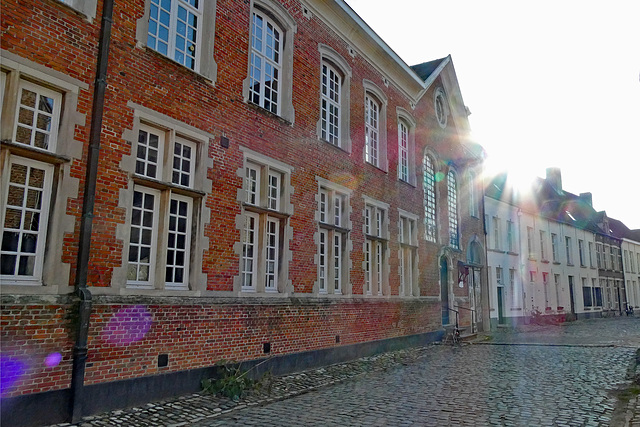
België - Lier, Begijnhof
The Begijnhof (Beguinage) was founded in 1258 and formed a separate parish. The beguinage is spread over 11 narrow streets and counts 95 houses. The front doors of the houses bear the name of a saint or a biblical scene. Some façades have panels depicting the Stations of the Cross. The current buildings date mainly from the 17th century.
The beguinage is like a village in the middle of the city, surrounded by brick walls and accessible through four gates. At the centre of the beguinage stands the baroque Sint-Margaretakerk (St Margaret's Church). Construction started in the 17th century, and it was not until a century later that the upper part of the façade and the bell tower were completed.
The Beguinage was restored in the 1990s and was recognised as a UNESCO World Heritage Site in 1998.


Kormoran
Das Verbreitungsgebiet der Art umfasst große Teile Europas, Asiens und Afrikas, außerdem Australien und Neuseeland sowie Grönland und die Ostküste Nordamerikas. Die Nahrung besteht wie bei allen Vertretern der Gattung Phalacrocorax fast ausschließlich aus Fisch. Kormorane sind zu allen Jahreszeiten gesellig, die Brutkolonien liegen an Küsten oder größeren Gewässern. Bestand und Verbreitung der Art wurden in Europa durch menschliche Bejagung stark beeinflusst, im mitteleuropäischen Binnenland war die Art zeitweise fast ausgerottet. In den letzten Jahrzehnten ist eine deutliche Bestandserholung zu verzeichnen. Der Kormoran war in Deutschland und Österreich Vogel des Jahres 2010. de.wikipedia.org/wiki/Kormoran_(Art)
Interessant sieht immer aus, wenn die Vögel ihre Flügel ausbreiten um die Federn zu trocknen. Das Gefieder des Kormorans nimmt aufgrund seiner Struktur Wasser auf, was den Auftrieb verringert, so dass der Vogel sehr tief im Wasser liegt. Wenn ein Kormoran das Wasser verlässt, schüttelt er zunächst sein Gefieder aus. Dann breitet er die Flügel aus, damit seine nassen Gefiederteile schneller trocknen.
Jump to top
RSS feed- Latest favorites - Subscribe to the favorite docs of Tali
- ipernity © 2007-2026
- Help & Contact
|
Club news
|
About ipernity
|
History |
ipernity Club & Prices |
Guide of good conduct
Donate | Group guidelines | Privacy policy | Terms of use | Statutes | In memoria -
Facebook
X
