
Helena Ferreira's favorite photos


Winter
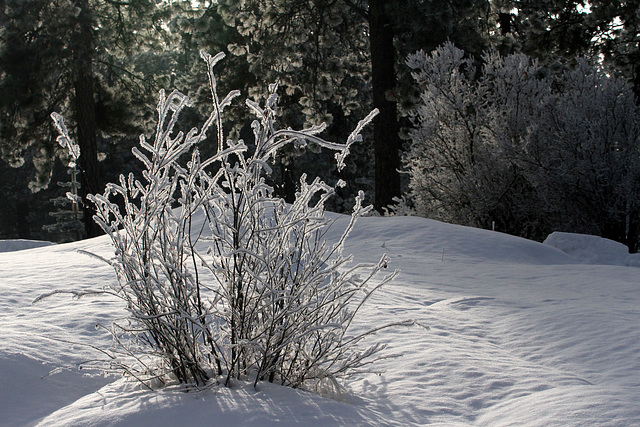
Taken on a walk near our home, this is typical of what winter has brought for us, lots of snow and frost, low temperatures and no signs of spring yet.
Winter
We have had a long and hard winter. It began late November with a blizzard that brought over 60 cm of snow and we have had snow on the ground ever since. We had snow twice last week, about 30 cm the first time and 5 cm the second time. We've also had very cold temperatures part of the winter and a lot of freezing fog. These photos were taken on one of my daily walks near home and with my old 7D which I've been using since I wrecked my camera.

By RHH
13 favorites
Large-flowered Brodiaea
Another spring wildflower from our area, this is the Large-flowered Brodiaea.
Yellow Bells
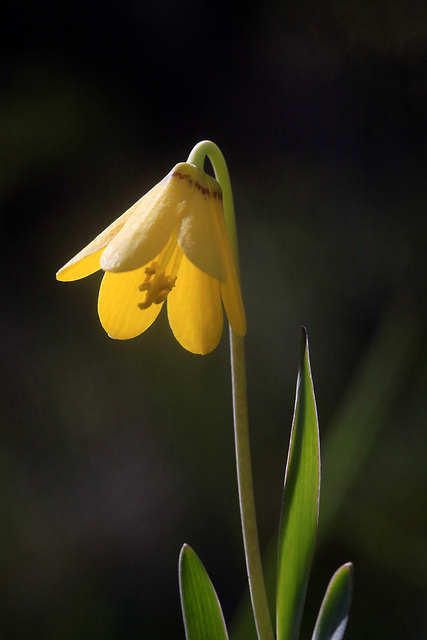
One of the first wildflowers to bloom in the spring, this is Fritillaria pudica, Yellow Bells. We have seen no signs of spring yet and are waiting eagerly the first wildflowers.
Mount Rainier
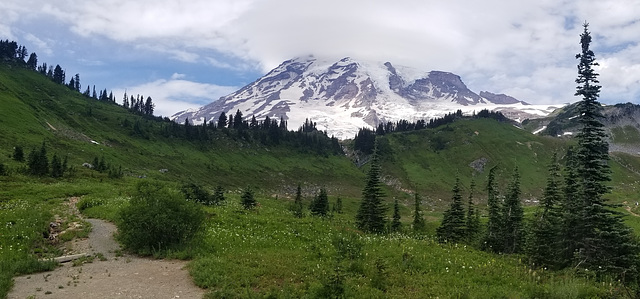
This was Mount Rainier last summer when we were there on a family holiday. We all hiked together to Myrtle Falls, when this photo was taken.
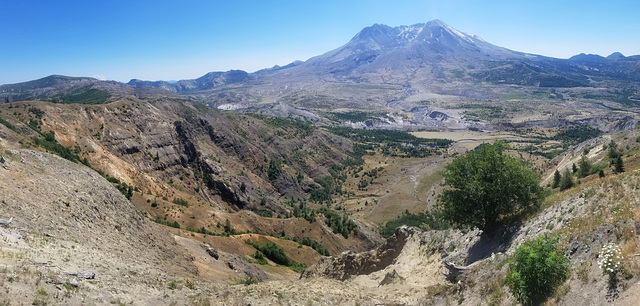
Mount St. Helens
Last summer we spent our family holiday near Packwood, Washington, just south of Mount Rainier National Park. We rented a house there for twenty of us and spent a good part of the time in the park, but did go for a day to Mount St. Helens and to the Johnson Observatory there. This is the view of Helens from the observatory. We are planning another family holiday for this summer, this time, if everyone makes it for thirty of us. We've rented a big house this year near Glacier National Park.
By @ngélique ❤️
54 favorites
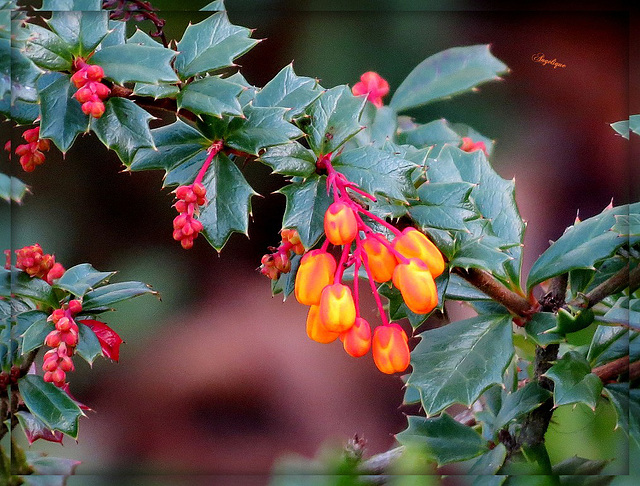
Épine-vinette de Darwin.....Belle semaine à tous❤️
Le Berberis darwinii, ou Vinettier de Darwin, fait partie de ces arbustes tout-terrain de stature modeste et sans exigences, parfaits pour donner un peu de luxuriance, de couleur et une structure persistante aux jardin, même les plus petits. On l'adoptera pour sa floraison brillante, printanière mais aussi automnale, en grappes pendantes de petites fleurs jaune-orangées et son petit feuillage de houx d'un vert sombre et brillant. Au jardin, c'est une plante sans soucis, rustique et dotée de grandes capacités d'adaptation. Tolérant toutes les expositions et une gamme de sols très étendue, cet arbuste épineux constitue une excellente alternative au pyracantha. Il est incontournable dans un jardin naturel ou dans une haie défensive.
merci de votre fidélité mes ami(e)s
By cammino
45 favorites
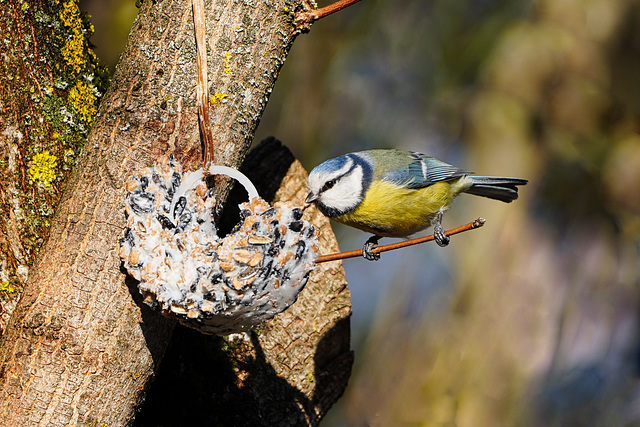
Die Blaumeisen werden wieder häufig - The blue tits are becoming frequent again
Die Blaumeise (Cyanistes caeruleus) ist ein häufig in Deutschland und Mitteleuropa vorkommender Brutvogel, der "kinderleicht" zu erkennen ist. Sie kommt, vielleicht auch bedingt durch die Winterfütterung, sehr zahlreich in Gärten und Parks vor und beeindruckt in der Brutzeit, mit welcher Geschwindigkeit Insekten (v.a. Raupen) zur Fütterung der Jungen gefangen werden. In den vergangenen Jahren hat ein Blaumeisensterben, wohl bedingt durch eine Bakterium, einen großen Teil der Population vernichtet. Die Blaumeisenbestände haben sich mittlerweile wieder gut erholt.
de.wikipedia.org/wiki/Blaumeise
Blaumeisensterben
The Blue Tit (Cyanistes caeruleus) is a common breeding bird in Germany and Central Europe that you can recognise easily. It occurs in great numbers in gardens and parks, perhaps also due to winter feeding, and impresses in the breeding season with the speed with which insects (especially caterpillars) are caught to feed the young. In recent years, a huge mortality rate, probably caused by a bacterium, destroyed a large part of the blue tit population in Germany, see: mystery bird illness . In the meantime, the blue tit population has recovered well.
By WiePet
25 favorites
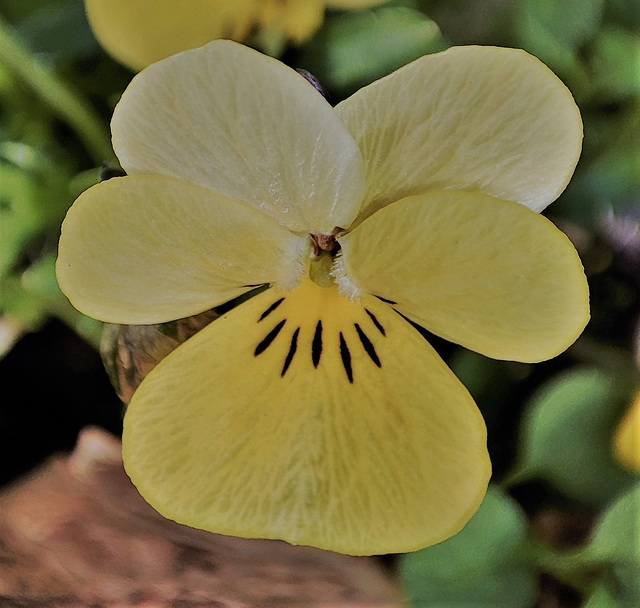
Macro Mondays: Thema "Erste Frühlingsboten"
Dieses kleine Hornveilchen hat tatsächlich in einem Blumenkübel in einer geschützten Ecke unserer Terrasse überwintert und blüht jetzt, trotz nächtlicher Temperaturen von minus 7 °C in der letzten Woche!
Im PiP eine andere Ansicht.
In freier Natur ist vom Frühling noch nicht viel zu sehen. Im kalten Nordosten kommt alles immer etwas später.
Wünsche allen einen schönen Start in die Woche!
Jump to top
RSS feed- Latest favorites - Subscribe to the favorite docs of Helena Ferreira
- ipernity © 2007-2026
- Help & Contact
|
Club news
|
About ipernity
|
History |
ipernity Club & Prices |
Guide of good conduct
Donate | Group guidelines | Privacy policy | Terms of use | Statutes | In memoria -
Facebook
X
