


France

Folder: Overseas
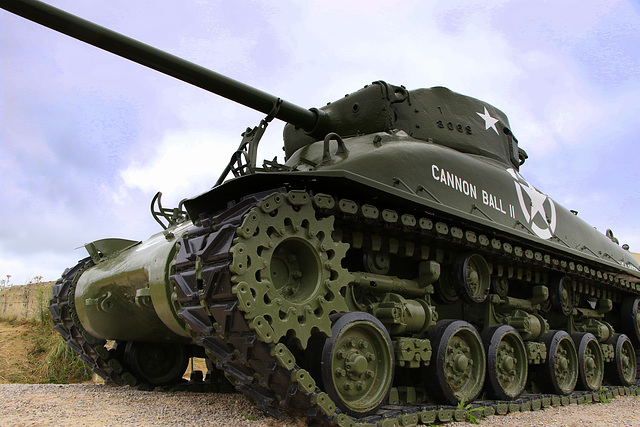

Cannon Ball II
This restored M4a1 Sherman Tank with the name Cannon Ball II is not the tank, also named "Cannon Ball" that landed at Utah Beach on June 6, 1944. That tank was later destroyed in battle. This tank did not land in France until December, 1944, in time for the Battle of the Bulge.
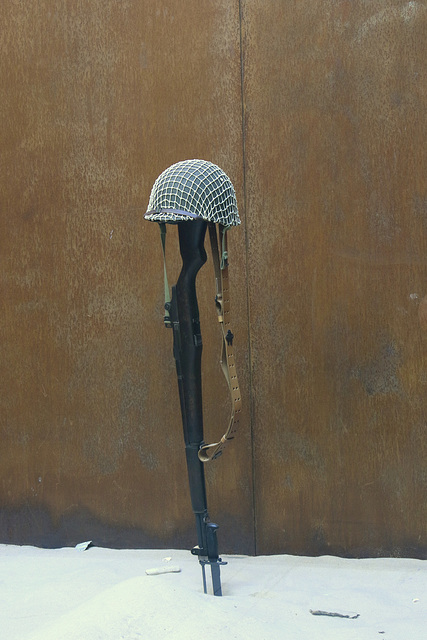
Grave
Many soldiers killed on D-Day and thereafter were often first buried with their rifle and helmet as a grave marker. When time allowed they were later reburied in one of the many cemeteries in Normandy and the rest of France. This example is in the visitors' center at the American Cemetery near Omaha Beach.
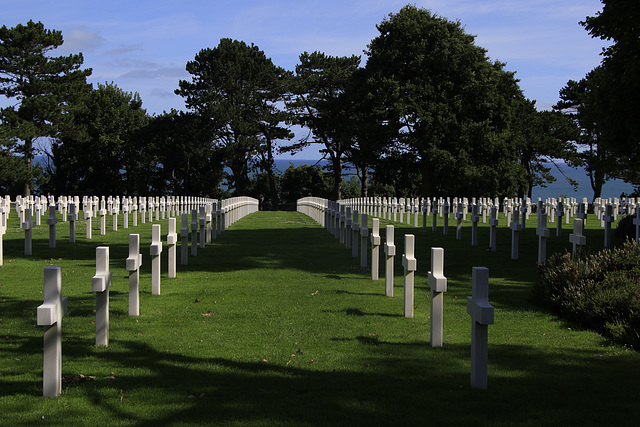
Normandy American Cemetery
The Normandy-American Cemetery near Colleville-sur-Mer has 9,388 burials, many of soldiers killed after D-day. The cemetery is beautifully kept and overlooks Omaha Beach.
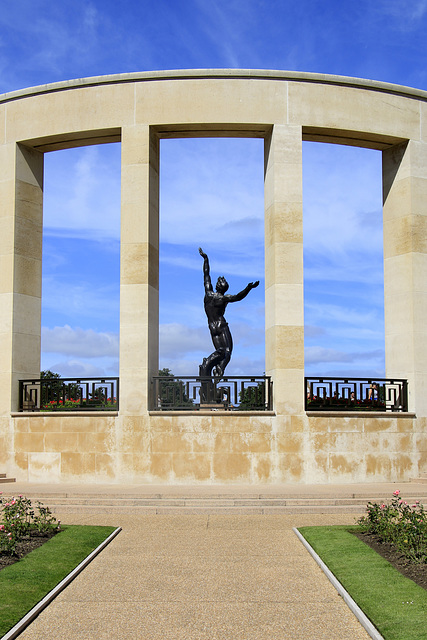
Spirit of Youth
This sculpture by Donald de Lue is at the Normandy American Cemetery overlooking Omaha Beach. The title of the sculpture is "Spirit of American Youth Rising from the Waves." It is at the east end of the reflecting pool that is part of the cemetery ground.
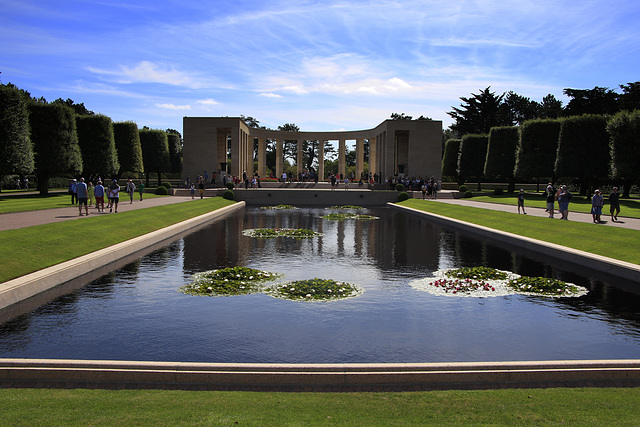
Reflecting Pool
This is the reflecting pool that is part of the memorial at the Normandy American Cemetery near Omaha Beach. The statue, shown in the inset photo, that is part of the memorial is just visible at the other end of the pool, which lies between the visitors' center and the chapel.
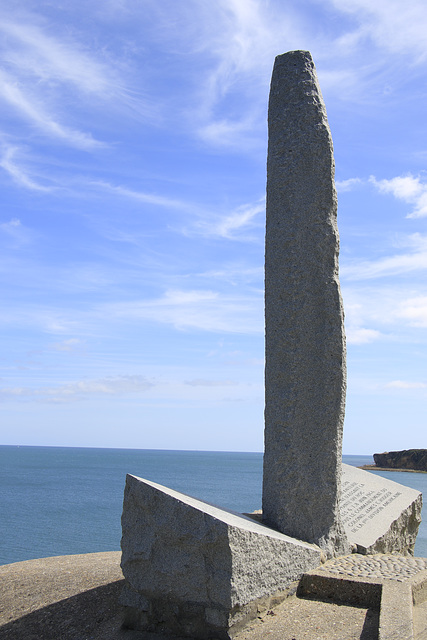
Pointe du Hoc Memorial
Pointe du Hoc is a promontory at Omaha Beach, sometimes known as Bloody Omaha, one of the American Beaches on D-Day. The American troops who landed there on D-Day were pinned down and were suffering many casualties because they were unable to scale the 35 metre cliffs above the beaches. After landing parts of two Army Ranger Battalions under the command of Lt. Col. James Rudder made it to the top of the cliffs with ropes and ladders and made it possible for the landings to advance. The memorial is supposed to represent a Ranger dagger thrust through the top of a bunker on the cliffs.
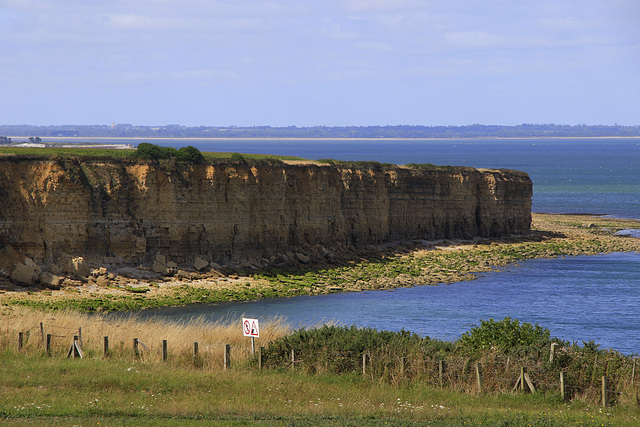
Omaha Beach from Pointe du Hoc
Omaha Beach, also known as Bloody Omaha for the many American casualties suffered there, was on its eastern end guarded by 35 metre cliffs and other fortifications. The American landings there stalled and were unable to advance until the Army Rangers scaled the cliffs at Point du Hoc and attacked the defenses there. The photos shows the cliffs to the west of Pointe du Hoc.
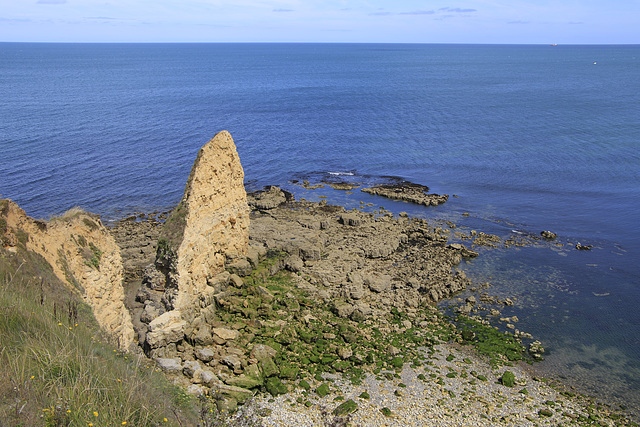
Pointe du Hoc
Here is the part of Omaha Beach below Pointe du Hoc, the place where the US Army Rangers scaled the cliffs to attack the fortifications above after the landings at Omaha Beach had stalled.
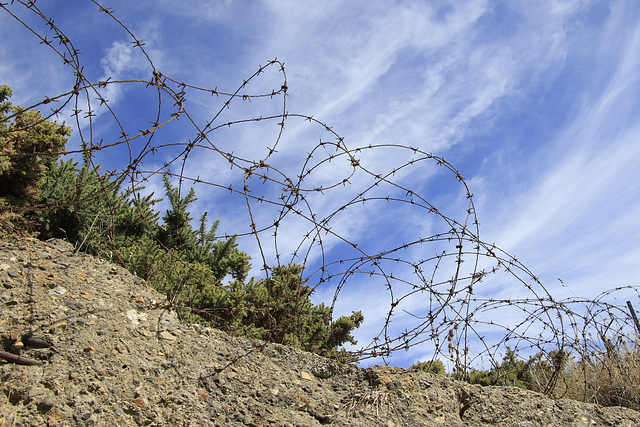
Pointe du Hoc
The area above Omaha Beach near Pointe du Hoc has been left as it was after the D-Day landings. Pointe du Hoc is a promontory which was taken by the US Army Rangers on D-Day who scaled 35 metre cliffs to take the fortifications there after the landings had stalled. The barbed wire in the photo was protecting a gun emplacement.
Jump to top
RSS feed- Latest items - Subscribe to the latest items added to this album
- ipernity © 2007-2026
- Help & Contact
|
Club news
|
About ipernity
|
History |
ipernity Club & Prices |
Guide of good conduct
Donate | Group guidelines | Privacy policy | Terms of use | Statutes | In memoria -
Facebook
X
